

Walking on a leash is one of the most valuable skills a dog can learn. A well-trained dog can enjoy walks safely, explore the environment confidently, and develop better communication with its owner. While some dogs naturally adapt to wearing a leash, many need guidance and practice before they feel comfortable walking calmly beside their handler.
Leash training is not about forcing a dog to walk in a specific way. Instead, it focuses on teaching your dog to pay attention, move comfortably, and enjoy the experience of walking together.
Why Is Leash Training a Dog Important?
Leash training provides both safety and freedom. A dog that understands leash manners is less likely to run into traffic, approach unfamiliar animals unexpectedly, or become difficult to control in busy environments.
Proper leash training also helps:
- Improve communication between you and your dog
- Make daily walks more enjoyable
- Reduce pulling and frustration
- Build confidence in new environments
- Encourage positive social experiences
Whether you have a puppy or an adult dog, leash training creates a foundation for successful outdoor adventures.
How To Train Your Dog To Walk on a Leash
Successful leash training happens gradually. Breaking the process into smaller steps makes learning easier and more enjoyable for your dog.
1. Build Your Relationship
Before introducing formal leash training, focus on developing trust and engagement. Dogs learn best when they enjoy interacting with their owners and are motivated to pay attention.
Spend time playing, practicing simple commands, and rewarding your dog for checking in with you. When your dog sees you as a source of guidance and rewards, training becomes much smoother.
Keep training sessions positive and short. Consistent encouragement helps create enthusiasm for learning.
2. Get the Right Gear
Choosing appropriate equipment can make a significant difference during training.
Harness
A properly fitted harness provides comfort and control while reducing pressure on your dog’s neck. Many owners prefer harnesses because they help distribute force more evenly if a dog pulls.
Make sure the harness fits securely without restricting movement.
Head Halter
Some dogs benefit from a head halter, particularly those that are strong pullers. This type of equipment allows owners to guide a dog’s direction more effectively.
A head halter should be introduced gradually so the dog becomes comfortable wearing it.
Leash
Select a sturdy leash that gives your dog enough room to move while allowing you to maintain control. Standard training leashes are often preferred because they provide consistent communication between dog and handler.
Avoid equipment that may encourage excessive pulling or create confusion during the learning process.
Bag
Carrying waste bags during walks helps you stay prepared and responsible. Having supplies readily available ensures a more enjoyable outing for everyone.
Marker
A marker helps your dog understand exactly when it has performed the desired behavior. Some owners use a clicker, while others use a consistent word such as “Yes.”
The marker should always be followed by a reward so the dog learns to associate it with success.
3. Set Up Your Training Environment
The environment can greatly influence your dog’s ability to learn. Begin training in a quiet location with minimal distractions. A living room, backyard, or calm outdoor area often works well for early sessions.
As your dog becomes more confident and responsive, gradually introduce more challenging environments. This progression helps your dog learn to focus even when interesting sights, sounds, and smells are present.
Keeping distractions manageable allows your dog to succeed more frequently.
4. Start Off-Leash
Before attaching a leash, encourage your dog to follow you naturally. Move around your training area and reward your dog whenever it chooses to stay close, pay attention, or move with you. This teaches the concept of walking together without the added challenge of leash pressure.
Practice changing directions, stopping, and moving again. Reward your dog for responding to your movements. These exercises help build awareness and engagement before introducing equipment.
5. Introduce the Harness and Leash
Once your dog is comfortable working with you, begin introducing the harness and leash.
Allow your dog to investigate the equipment at its own pace. Reward calm behavior around the harness and leash to create positive associations.
After fitting the harness, let your dog wear it briefly indoors. Once the dog appears relaxed, attach the leash and allow it to drag lightly under supervision or walk with you in a familiar area.
Keep sessions short and positive. The goal is for your dog to feel comfortable wearing the equipment rather than viewing it as something unusual or stressful.
6. Practice Walking With the Harness and Leash
With the equipment in place, begin practicing short walks. Reward your dog for staying near you and maintaining a loose leash. Whenever your dog chooses to walk beside you or check in with you, provide praise, treats, or another reward.
If your dog pulls ahead, avoid turning the walk into a tug-of-war. Instead, stop moving or redirect your dog back toward you before continuing. Consistency is important. Over time, your dog will learn that staying connected with you leads to progress and rewards.
Keep training sessions enjoyable and end on a positive note whenever possible.
7. Practice Away From Home
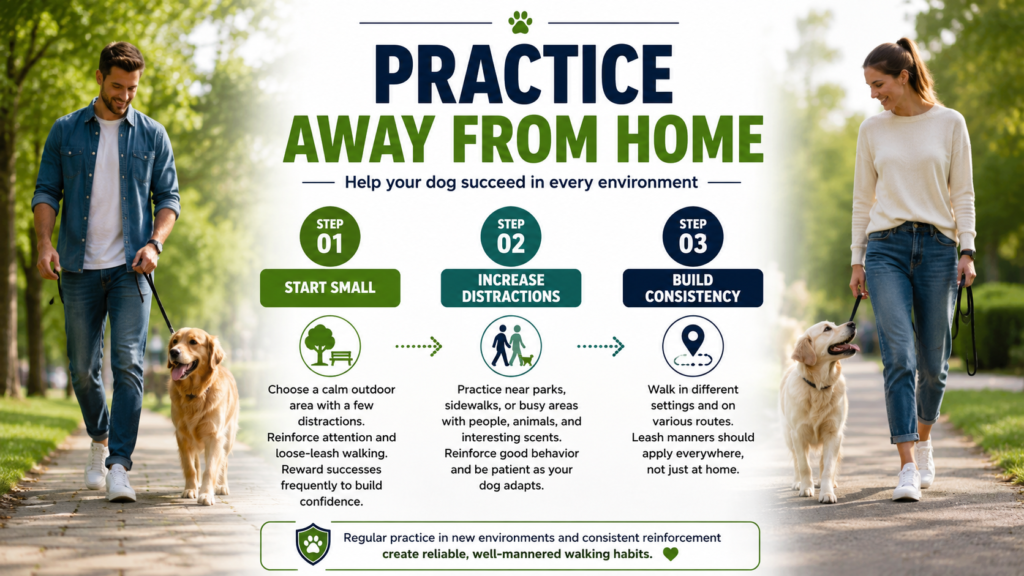
After your dog demonstrates good behavior in familiar environments, begin practicing in new locations.
Step 1
Choose a relatively calm outdoor area with a few distractions. Allow your dog to explore while continuing to reinforce attention and loose-leash walking. Reward successful behavior frequently to build confidence.
Step 2
Gradually increase the level of distraction. Practice near parks, sidewalks, or other areas where people, animals, and interesting scents may be present.
Continue reinforcing desired behavior and remain patient as your dog adjusts to the new environment.
Step 3
Work toward walking comfortably in a variety of settings. Practice different routes and situations so your dog learns that leash manners apply everywhere, not just in one location. Regular exposure and consistent training help strengthen reliable walking habits.
FAQs About Training Leash for Dogs
What is the best age to start leash training a dog?
Leash training can begin as soon as a puppy arrives home. Early training helps puppies become comfortable with wearing a harness and leash while developing good walking habits from the start. Adult dogs can also learn leash skills successfully with consistent practice.
How long does it take to leash train a dog?
The timeline varies depending on the dog’s age, temperament, and previous experience. Some dogs learn basic leash manners within a few weeks, while others may need several months of regular training and reinforcement.
Why does my dog pull on the leash?
Dogs often pull because they want to reach interesting sights, smells, or destinations more quickly. Pulling can also occur when a dog has not yet learned that walking on a loose leash is the desired behavior.
Should I use a harness or a collar for leash training?
Many trainers recommend a properly fitted harness because it provides better control and reduces pressure on the dog’s neck. The best choice depends on your dog’s size, behavior, and training needs.
How can I stop my dog from pulling during walks?
When your dog pulls, stop moving and wait for the leash to become loose before continuing. Reward your dog for walking calmly beside you and maintaining attention throughout the walk.
What type of leash is best for training?
A standard leash is often the preferred option for training because it offers consistent control and communication. It allows dogs enough freedom to move while helping owners guide behavior effectively.
Can older dogs learn leash training?
Yes. Dogs of any age can learn leash manners. Older dogs may require additional patience and consistency, but they are fully capable of developing good leash-walking habits.
How often should I practice leash training?
Short daily sessions are usually more effective than occasional long sessions. Regular practice helps reinforce good behavior and allows dogs to build confidence gradually.
What should I do if my dog is afraid of the leash?
Introduce the leash slowly and create positive associations by using treats, praise, and gentle encouragement. Allow your dog to become comfortable with the equipment before beginning formal walking exercises.
Is it normal for leash training to take time?
Yes. Leash training is a skill that develops through repetition and experience. Progress may be gradual, but consistent training and positive reinforcement typically lead to long-term success.
Conclusion
Leash training is a process that requires patience, consistency, and positive reinforcement. By building a strong relationship, choosing appropriate equipment, and progressing through training step by step, you can help your dog become a confident and enjoyable walking companion.
Remember that dogs benefit from having opportunities to explore their surroundings while still responding to guidance. Teaching loose-leash walking and walking beside you when needed creates a balance between freedom and control, making every walk safer and more rewarding for both of you.