

Bringing home a new puppy is an exciting experience. Those tiny paws, playful moments, and endless curiosity can quickly fill your home with joy. At the same time, raising a puppy comes with responsibilities. Without proper guidance, even the sweetest puppy can develop habits that become difficult to manage later.
Training is not about controlling your dog. It is about helping your puppy understand the world, learn appropriate behavior, and build a strong bond with you. The first few months of a puppy’s life are especially important because this is when they absorb information most rapidly.
This step-by-step puppy training guide will walk you through the most important stages of early development and help you create a solid foundation for a happy, confident, and well-behaved dog.
The Critical First 16 Weeks
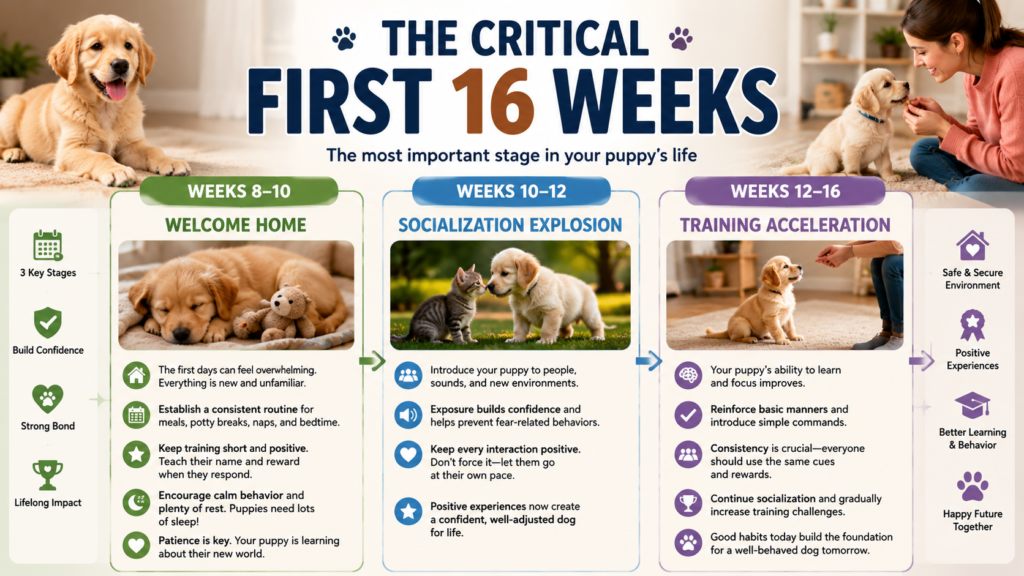
The first sixteen weeks are often considered the most influential period in a puppy’s life. Experiences during this stage can shape how your dog responds to people, animals, and new environments for years to come.
Weeks 8–10: Welcome Home
The first days in a new home can feel overwhelming for a young puppy. Everything is unfamiliar, from the smells and sounds to the people around them.
During this period, focus on helping your puppy feel safe and secure. Establish a consistent routine for meals, potty breaks, naps, and bedtime. Puppies thrive when they know what to expect.
Keep training sessions short and positive. Begin teaching your puppy their name and reward them whenever they respond to it. Encourage calm behavior and provide plenty of opportunities for rest, as young puppies need a significant amount of sleep.
Patience is essential during this stage. Your puppy is learning about their new world one day at a time.
Weeks 10–12: Socialization Explosion
This stage is one of the best opportunities to introduce your puppy to a variety of experiences.
Allow your puppy to meet different people, hear everyday sounds, and encounter new environments in a controlled manner. Exposure to these experiences helps build confidence and reduces the likelihood of fear-related behaviors later in life.
Keep every interaction positive. If your puppy appears nervous, do not force the situation. Instead, allow them to observe at their own pace while offering encouragement and rewards.
Positive experiences during this period can have a lasting impact on your puppy’s development.
Weeks 12–16: Training Acceleration
As your puppy grows, their ability to learn and focus improves. This is an excellent time to reinforce basic manners and introduce simple commands. Consistency becomes increasingly important. Every family member should use the same cues and reward desired behaviors in the same way.
Continue socialization while gradually increasing training challenges. Keep sessions fun and engaging to maintain your puppy’s enthusiasm. The habits formed during these weeks often become the foundation for future behavior.
House Training: The Golden Rules
House training is one of the first major lessons every puppy must learn. Success depends on consistency, supervision, and patience. Take your puppy outside frequently, especially after waking up, eating, drinking, playing, and before bedtime. Puppies have limited bladder control and need many opportunities to succeed.
When your puppy eliminates in the correct location, immediately offer praise and a reward. Positive reinforcement helps your puppy understand exactly what behavior is desired. Accidents are a normal part of the learning process. If one occurs, clean it thoroughly and continue with your routine. Punishment can create confusion and slow progress.
Consistency is often the key factor that determines how quickly house training succeeds.
The “Go Potty” Cue
Teaching a specific potty cue can make bathroom breaks easier in the future. Choose a simple phrase and say it calmly whenever your puppy begins to eliminate. Over time, your puppy will associate the cue with the action. With repetition and rewards, many puppies learn to respond to the cue and understand what is expected when taken outside.
Crate Training: Your Puppy’s Safe Space
A crate can become one of the most valuable training tools when introduced properly.
Rather than viewing the crate as a place of confinement, your puppy should learn to see it as a comfortable and secure space. Feed meals near the crate, place soft bedding inside, and encourage exploration with treats and toys. Begin with short periods inside the crate and gradually increase the duration as your puppy becomes more comfortable.
Avoid using the crate as punishment. The goal is to create positive associations so your puppy willingly enters and relaxes inside. A properly introduced crate can support house training, encourage independence, and provide a safe resting area.
Basic Commands
Teaching basic commands improves communication and helps your puppy understand expectations.
1. Sit
Sit is often one of the easiest commands for puppies to learn. Hold a treat above your puppy’s nose and slowly move it backward. As their head follows the treat, their rear naturally lowers to the ground. The moment they sit, offer praise and a reward. Repeated practice helps your puppy understand the connection between the command and the action.
2. Come (Recall)
A reliable recall can be one of the most important skills your dog learns. Begin in a distraction-free area. Call your puppy’s name followed by the recall cue in an enthusiastic voice. When your puppy comes to you, reward generously with praise, treats, or play. Make coming to you a positive experience every time.
3. Stay
Stay teaches patience and self-control. Ask your puppy to sit, then briefly pause before rewarding them for remaining in position. Gradually increase the duration and distance over multiple training sessions. Progress slowly and reward success frequently.
4. Down
The down command encourages calm behavior. Guide your puppy into a lying position using a treat and reward them once they are fully settled. Keep sessions positive and avoid forcing the position. With practice, most puppies learn to respond confidently.
5. Leave It
Leave It teaches your puppy to ignore something they want. Present a treat while preventing access to it. Reward your puppy when they stop trying to reach the item and redirect their attention to you. This command can help prevent many unwanted behaviors and improve safety.
6. Drop It
Drop It teaches your puppy to release an object willingly. Offer a reward in exchange for the item your puppy is holding. Once they release it, provide praise and the reward. Practicing regularly helps prevent resource guarding and encourages cooperation.
Socialization: The 100-Person Challenge
Socialization is more than simply meeting people. It involves helping your puppy feel comfortable around a wide variety of individuals, environments, sounds, and situations.
Introducing your puppy to different ages, appearances, and personalities can broaden their understanding of the world. The goal is not to overwhelm your puppy but to create positive experiences that build confidence. Each interaction should be calm, safe, and rewarding.
Before Full Vaccination
Even before vaccinations are complete, socialization remains important. You can safely expose your puppy to new sights, sounds, and experiences without placing them in high-risk situations. Car rides, observing people from a distance, and controlled introductions can all provide valuable learning opportunities. Always prioritize your veterinarian’s guidance regarding safe exposure during this period.
Biting and Mouthing
Puppies naturally explore the world with their mouths. While this behavior is normal, it must be guided appropriately. Provide suitable chew toys and redirect your puppy whenever they begin mouthing hands, clothing, or household items. Consistency helps puppies learn which objects are acceptable and which are not. Avoid encouraging rough play that may increase biting behavior.
Teaching Bite Inhibition
Bite inhibition refers to a puppy’s ability to control the pressure of their bite. During play, if your puppy bites too hard, calmly end the interaction for a brief moment. This teaches them that excessive biting causes playtime to stop. Over time, puppies learn to use their mouths more gently and develop better control.Patience and consistency are essential throughout this process.
Months 4–6: The Juvenile Period
As puppies enter the juvenile stage, they become more energetic, independent, and curious.
You may notice periods of selective listening where previously learned commands seem forgotten. This is a normal part of development and not a sign that training has failed.
Continue practicing basic skills daily while gradually introducing more distractions and challenges.Focus on consistency, positive reinforcement, and regular mental stimulation.
Training should remain enjoyable and rewarding. Dogs that associate learning with positive experiences are often more motivated and engaged.
This period is an opportunity to strengthen the foundation established during the first months of life and prepare your puppy for adulthood.
What is the best age to start puppy training?
The best time to start puppy training is as soon as your puppy arrives home, usually around 8 weeks of age. Young puppies learn quickly and are highly receptive to new experiences. Early training helps establish good habits, improves socialization, and prevents unwanted behaviors from becoming long-term problems.
How long should puppy training sessions be?
Puppy training sessions should be short and engaging. Most puppies benefit from sessions lasting 5 to 10 minutes several times throughout the day. Brief training periods help maintain focus, reduce frustration, and allow puppies to learn effectively without becoming tired or overwhelmed.
How do I house train a puppy successfully?
Successful house training requires consistency and patience. Take your puppy outside frequently, especially after eating, drinking, sleeping, or playing. Reward them immediately when they use the correct potty area. Maintaining a regular schedule helps puppies understand where and when they should eliminate.
What commands should I teach my puppy first?
The first commands most puppies should learn are sit, come, stay, down, leave it, and drop it. These foundational commands improve communication, encourage good manners, and help keep your puppy safe. Start with simple exercises and use positive reinforcement to encourage success.
How important is puppy socialization?
Puppy socialization is extremely important because it helps dogs become confident and comfortable in different situations. Introducing puppies to people, sounds, environments, and experiences during early development can reduce fear and anxiety later in life while encouraging balanced behavior.
Is crate training good for puppies?
Yes, crate training can be very beneficial when introduced properly. A crate provides a safe and comfortable space where your puppy can rest and relax. It also supports house training and helps prevent destructive behavior when your puppy cannot be supervised directly.
How can I stop my puppy from biting?
Puppy biting is a normal part of development, but it should be redirected appropriately. Provide chew toys and calmly redirect your puppy whenever they bite hands or clothing. Consistent guidance helps puppies learn acceptable chewing habits and develop better bite control over time.
How often should I train my puppy each day?
Most puppies respond well to multiple short training sessions spread throughout the day. Training two to five times daily allows puppies to practice new skills without becoming bored. Regular repetition helps reinforce learning and improves long-term retention of commands and behaviors.
Why does my puppy ignore commands sometimes?
Puppies may ignore commands because they are distracted, excited, tired, or still learning. Consistent practice in low-distraction environments helps strengthen understanding. As your puppy gains confidence and experience, gradually introduce more challenging situations while continuing to reward successful responses.
How long does it take to fully train a puppy?
The timeline varies depending on the puppy’s breed, personality, and training consistency. Basic skills can often be learned within a few weeks, while advanced manners and reliability may take several months. Ongoing training throughout adolescence helps reinforce good behavior and strengthen obedience.
Conclusion
Successful puppy training is not about achieving perfection overnight. It is a gradual process built on patience, consistency, and positive experiences. By focusing on early socialization, house training, crate training, basic commands, and proper behavior management, you can help your puppy develop into a confident and well-mannered companion.
Every puppy learns at their own pace. Celebrate small victories, remain consistent with your training approach, and enjoy the journey together. The effort you invest during the early months can create a lifelong bond and set your dog up for a happy, successful future.