

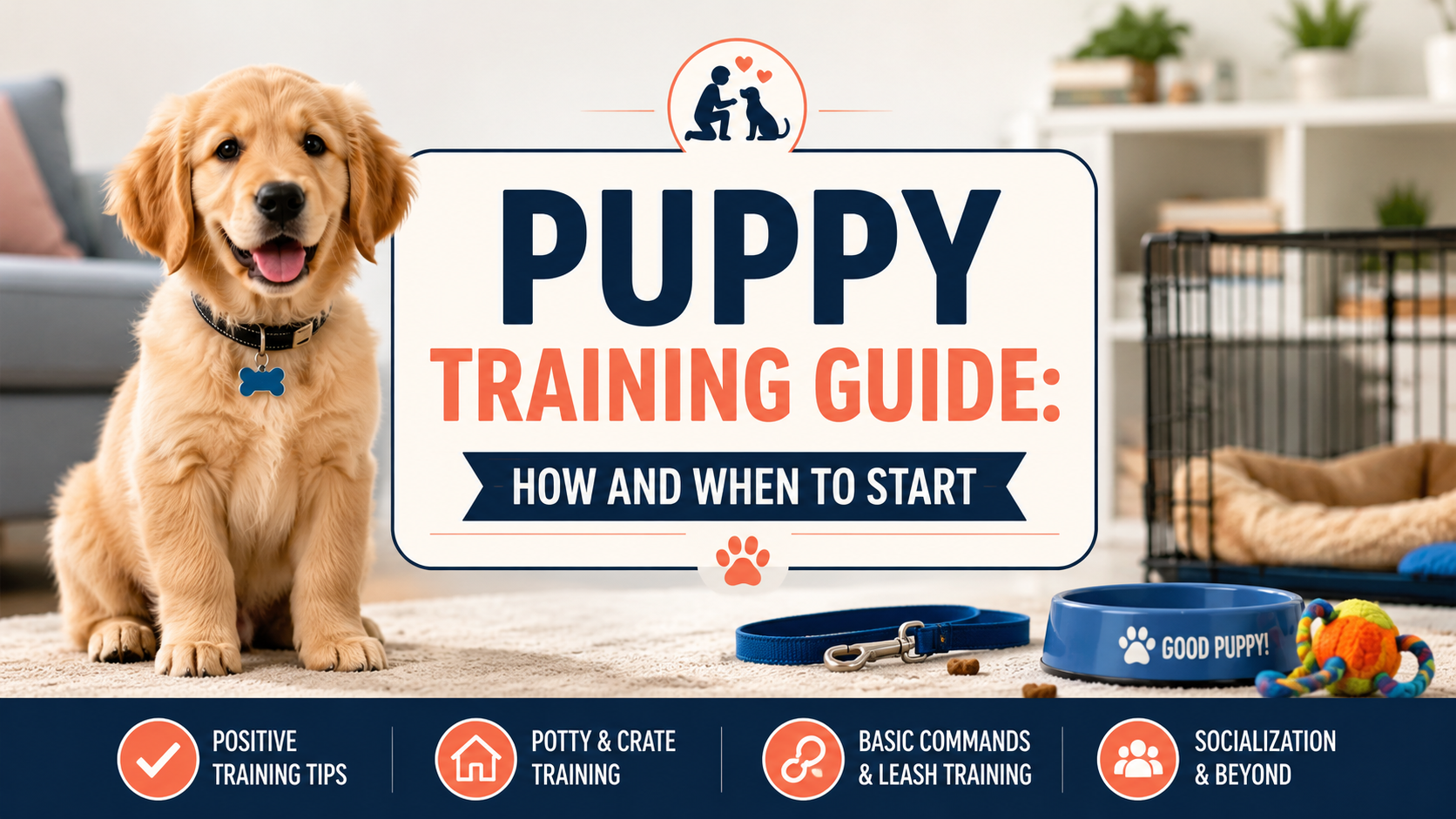
When to Start Training a Puppy
Many new dog owners wonder when puppy training should begin. The answer is simple: training starts from day one. Puppies are constantly learning from their surroundings, whether you are actively teaching them or not. Early training helps establish routines, prevent unwanted behaviors, and create a strong foundation for future learning.
Young puppies may have short attention spans, but they are capable of learning simple rules, routines, and commands. Starting early allows them to develop confidence and understand what is expected of them.
Puppy Training Tips
Use Positive Reinforcement
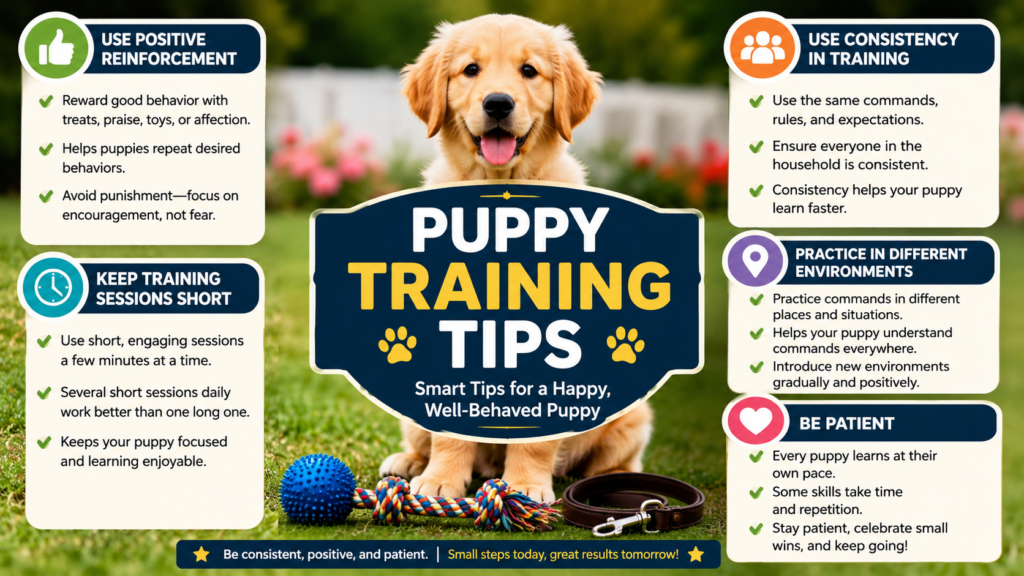
Reward-based training encourages puppies to repeat desired behaviors. Treats, praise, toys, and affection can all be used as rewards. When a puppy associates good behavior with positive outcomes, learning becomes faster and more enjoyable.
Avoid punishment-based methods, as they can create fear, confusion, and stress. Instead, focus on rewarding the behaviors you want to see more often.
Keep Training Sessions Short
Puppies learn best through short, engaging sessions. A few minutes of focused training several times a day is often more effective than a long session that causes boredom or frustration.
Short sessions help maintain your puppy’s attention and keep learning fun.
Use Consistency When Training Your Puppy
Consistency is one of the most important aspects of training. Everyone in the household should use the same commands, rules, and expectations.
For example, if one family member allows the puppy on the couch while another does not, the puppy may become confused. Clear and consistent rules make learning easier.
Practice in Different Environments
A puppy that follows commands at home may struggle in a busy park or around distractions. Practicing skills in different locations helps your puppy understand that commands apply everywhere, not just in one setting.
Gradually introduce new environments while keeping training positive and rewarding.
Be Patient
Every puppy learns at a different pace. Some skills may develop quickly, while others require additional practice. Patience helps create a positive learning experience and builds trust between you and your puppy.
Celebrate small improvements and remain consistent throughout the training process.
How to Train a Puppy
Potty training is often one of the first priorities for new puppy owners. Establishing a regular schedule can help puppies learn where and when to eliminate.
Take your puppy outside frequently, especially after eating, drinking, sleeping, or playing. Reward successful bathroom trips immediately to reinforce the behavior.
Accidents are a normal part of the learning process. Clean them thoroughly and continue following a consistent routine.
Crate Training
Crate training can provide puppies with a secure and comfortable place to rest. Learning the basics of crate training a puppy can help create a positive experience and establish healthy routines from an early age.
Make the crate inviting by using comfortable bedding and positive rewards. Encourage your puppy to enter voluntarily and gradually increase the amount of time spent inside.
The crate should never be used as a form of punishment.
Basic Cues (Sit, Stay, Come)
Basic commands create a foundation for communication and safety.
- Sit is often one of the easiest commands to teach and can help manage excitement.
- Stay teaches patience and self-control.
- Come is an essential safety command that encourages your puppy to return when called.
Use rewards and repetition to build reliable responses over time.
Leash Training
Leash training helps puppies learn how to walk calmly beside their owners. Begin in a quiet environment with minimal distractions.
Allow your puppy to become comfortable wearing a collar or harness before introducing the leash. Reward calm walking and stop moving when pulling occurs.
Consistent practice helps create pleasant walks and better leash manners.
Socialization
Socialization introduces puppies to new people, animals, environments, sounds, and experiences. Positive exposure during early development can help puppies become more confident and adaptable.
Introduce new experiences gradually and ensure interactions remain safe and positive. Well-socialized puppies are often more comfortable in a variety of situations throughout life.
Puppy Training FAQs
How Long Does It Take to Train a Puppy?
Training is an ongoing process rather than a single event. Some basic skills can be learned within days or weeks, while advanced behaviors may take months of consistent practice. Progress depends on the puppy’s age, personality, and training routine.
When Should I Start Puppy Training Classes?
Many puppies can begin training classes after receiving guidance from a veterinarian regarding vaccinations and health considerations. Early classes can provide opportunities for learning, socialization, and skill development.
What Is the First Thing You Should Teach Your Puppy?
Many trainers recommend starting with foundational skills such as responding to their name, coming when called, and basic household routines. These early lessons help establish communication and prepare puppies for more advanced training.
Final Thoughts
Puppy training is one of the most rewarding parts of dog ownership. By starting early, using positive reinforcement, and remaining consistent, you can help your puppy develop important life skills and good habits. Training takes time and patience, but the effort invested today can lead to a confident, well-behaved companion for years to come.