

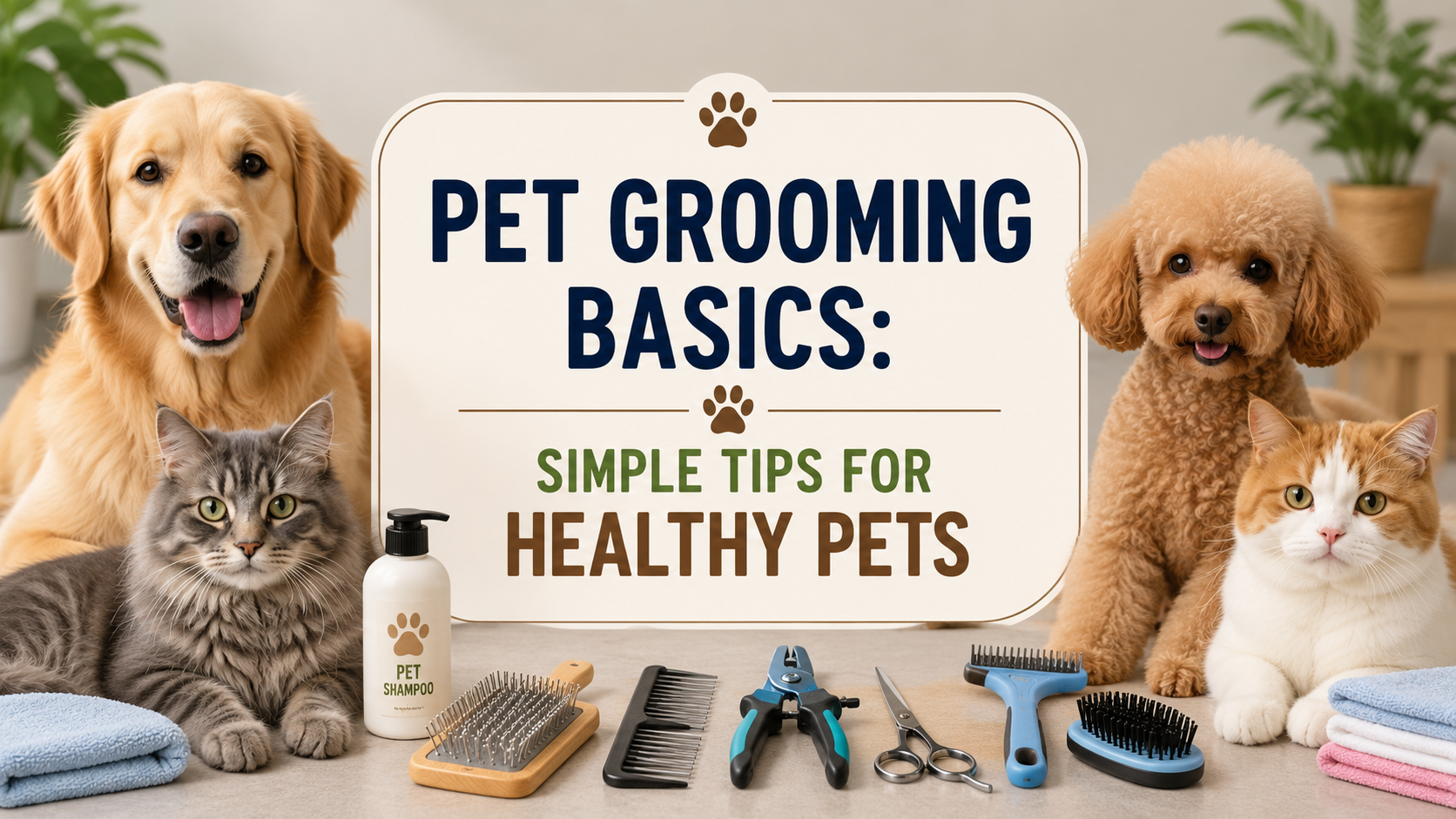
Pet grooming keeps your pet clean, healthy, and comfortable. Regular brushing, bathing, nail trimming, and checking skin, ears, and teeth help prevent common problems and detect issues early, ensuring your pet stays happy and well cared for every day.
The Complete Guide to Pet Grooming
People often only look into pet grooming when they suddenly notice a problem—matting, a persistent odor after a bath, the sound of nails on the floor, or redness inside the ears. If these little things go unnoticed for too long, they can turn into skin problems, ear infections, cracked paw pads, or serious dental problems.
Good grooming isn’t just about looking good—it’s about regular body checkups. It’s important to touch the fur, check the skin, and stick to a routine. Here’s what to do at home, what to avoid, and when to take your pet to the vet or a professional groomer.
Why Grooming Is Important (Not Just for Beauty)
Grooming removes excess hair, dirt, dead skin, and tiny grass seeds. It prevents tangles, which can pull on the skin and cause pain.It’s also a time when new problems are easier to spot—like lice, sores, hair loss, insects, redness between the toes, or changes in the eyes and ears.
Understand what you are grooming: coat, skin and tolerance
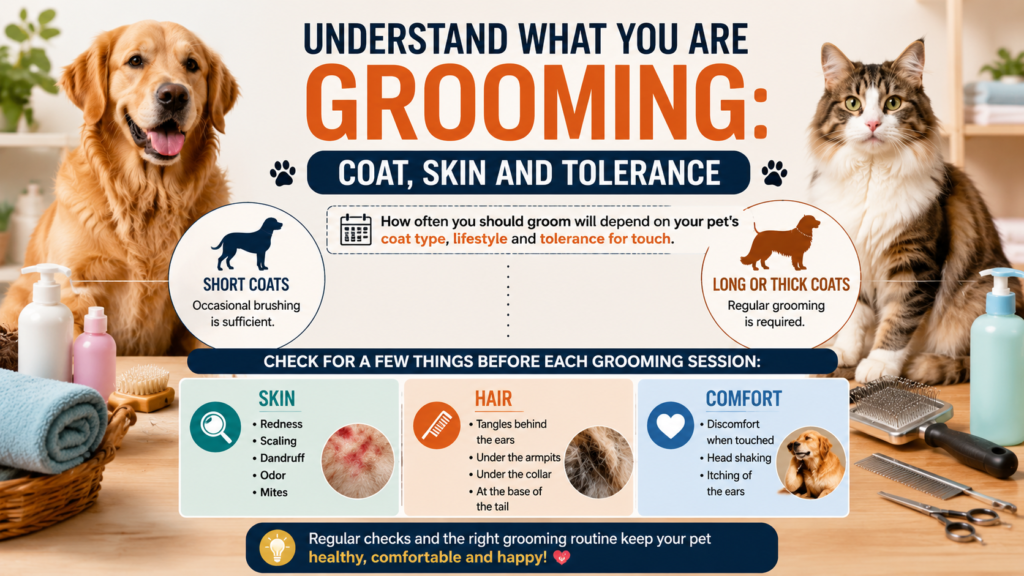
How often you should groom will depend on your pet’s coat type, lifestyle and tolerance for touch.
Occasional brushing is sufficient for short coats, but regular grooming is required for long or thick coats.
Check for a few things before each grooming session:
- Skin: redness, scaling, dandruff, odor or mites
- Hair: tangles behind the ears, under the armpits, under the collar or at the base of the tail
- Comfort: discomfort when touched, head shaking or itching of the ears
Choosing the right equipment
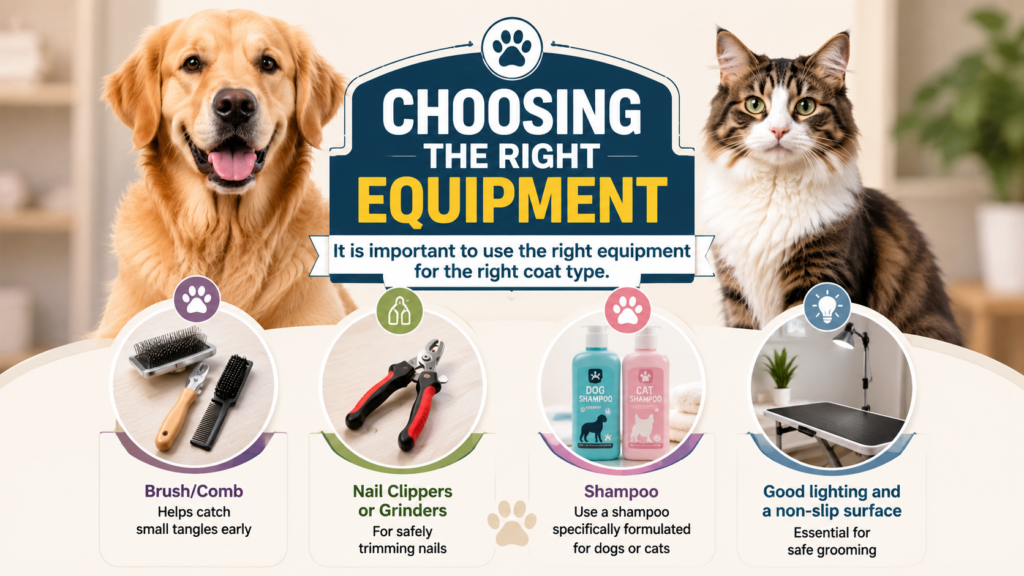
It is important to use the right equipment for the right coat type.
- Brush/Comb: Helps catch small tangles early
- Nail Clippers or Grinders: For safely trimming nails
- Shampoo: Use a shampoo specifically formulated for dogs or cats
- Good lighting and a non-slip surface: Essential for safe grooming
Creating a Calm Environment
Choose a calm, well-lit area. Use a towel or non-slip mat. Have everything ready so you don’t have to stop halfway through. If your pet is restless, take short breaks and work slowly.
Brushing according to the coat
- Short hair: Regular light brushing keeps the coat clean and spreads natural oils.
- Coarse or tangle-prone hair: This type of hair tangles quickly. Work in small sections. First find the tangles with a comb, then gently untangle them with a brush.
If the tangles stick to the skin or are large, it is better to seek professional help rather than trying to cut them yourself.
Safe Brushing Methods
- Brush in the direction of the hair
- Hold the tangles gently with your hands when detangling
- Stop if the skin becomes red or the pet becomes restless
Bathing: The Right Method and Products
The purpose of bathing is to remove dirt and odors. Over-bathing can dry out the skin.
Bathing Steps
- Brush first
- Use lukewarm water
- Avoid eyes and ears
- Rinse thoroughly
- Dry with a towel
Nail trimming: Slowly and carefully
Long nails can alter walking posture and break. Cut little by little, so as not to injure the sensitive inner parts.
Safe method
- Start when the pet is calm
- Cut a small section
- Be more careful if the nail is black
- If in doubt, go to the vet
Foot and pad care
The foot pads can accumulate dirt, grass or small thorns. Clean regularly and check the gaps between the toes. If they are swollen, licking or walking with a scratching sound, then take them to the vet.
Dental care
Dental problems in pets are very common. Many times they are not noticeable, because the problem starts below the gums. If you have bad breath, red gums or difficulty eating, you should definitely go to the vet.
Warning about cleaning teeth without anesthesia
This method cannot clean the area below the gums and does not detect the real problem.
Ear and eye care
Healthy ears do not need regular cleaning. However, if they are shaking, itchy, or smelly, see a vet. The eyes should be normally clear and bright. If they are red or watery, take action immediately.
If the vet tells you to clean the ears:
- Use a specific cleaner
- Do not insert anything into the ears
- Wipe them clean from the outside
Home grooming vs. professional grooming
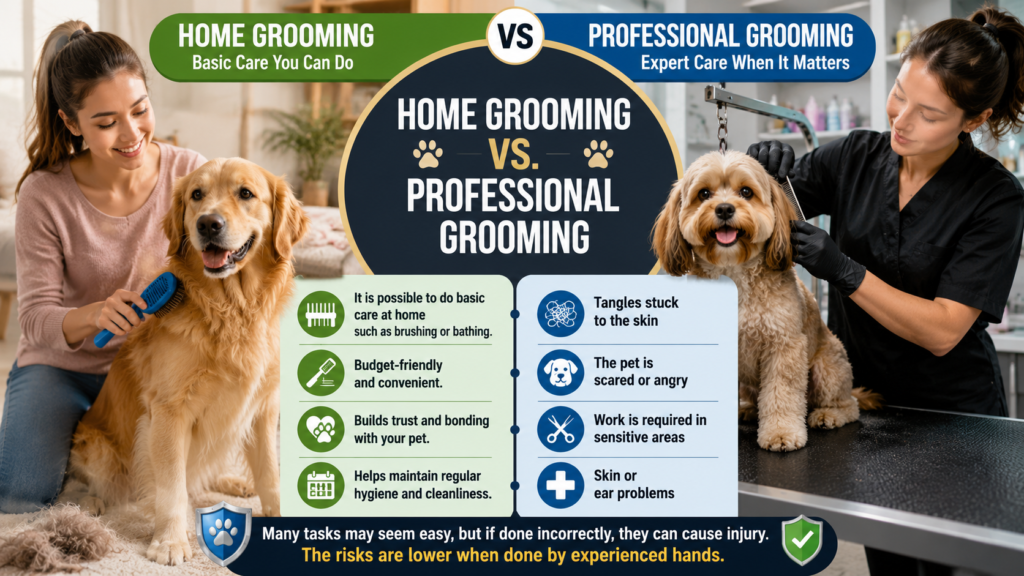
It is possible to do basic care at home, such as brushing or bathing. However, in some cases, it is better to seek professional help:
- Tangles stuck to the skin
- The pet is scared or angry
- Work is required in sensitive areas
- Skin or ear problems
Many tasks may seem easy, but if done incorrectly, they can cause injury. The risks are lower when done by experienced hands.
FAQs: Pet Grooming
How often should pet grooming be done?
This depends on the type of fur, lifestyle and health of the pet. Generally, short hair requires less grooming, while long or thick hair requires regular grooming.
Can I groom my pet at home?
Yes, regular brushing, bathing and minor care can be done at home. However, it is better to seek professional help for complex problems.
Can human shampoo be used on pets?
No, human shampoo is not suitable for pet skin and can cause irritation or problems. Always use shampoo made for pets.
What should you do if your pet’s fur is tangled?
If it is light, gently brush it out with a brush. But if it is stuck to the skin, do not try to cut it yourself and go to the groomer.
How often should you bathe your pet?
Excessive bathing can dry out the skin. So it is better to bathe as needed, such as when there is dirt or bad odor.
Is it necessary to trim a pet’s nails?
Yes, long nails can cause walking problems and can break. So the nails need to be trimmed regularly.
Why is pet dental care important?
Dental problems are often not noticeable, but they can gradually develop into major diseases. Therefore, regular care and vet checkups are essential.
Should pet ears be cleaned regularly?
Healthy ears do not need regular cleaning. However, if there is an odor, itching, or redness, cleaning or treatment is necessary.
When should you go to a professional groomer?
When there are a lot of tangles, the pet becomes restless, or sensitive areas need to be worked on, it is safe to go to a professional.
Is grooming just for beauty?
No, grooming is very important for the health of your pet. It helps in early detection of various problems.
Pet Grooming & Health Care: Complete Care
Pet grooming is an essential part of overall pet health care. Regular brushing, bathing, nail trimming, and checking skin, ears, and teeth help prevent problems early. A consistent routine keeps your pet clean, comfortable, and healthy, while also allowing you to notice changes and ensure proper care at the right time.