

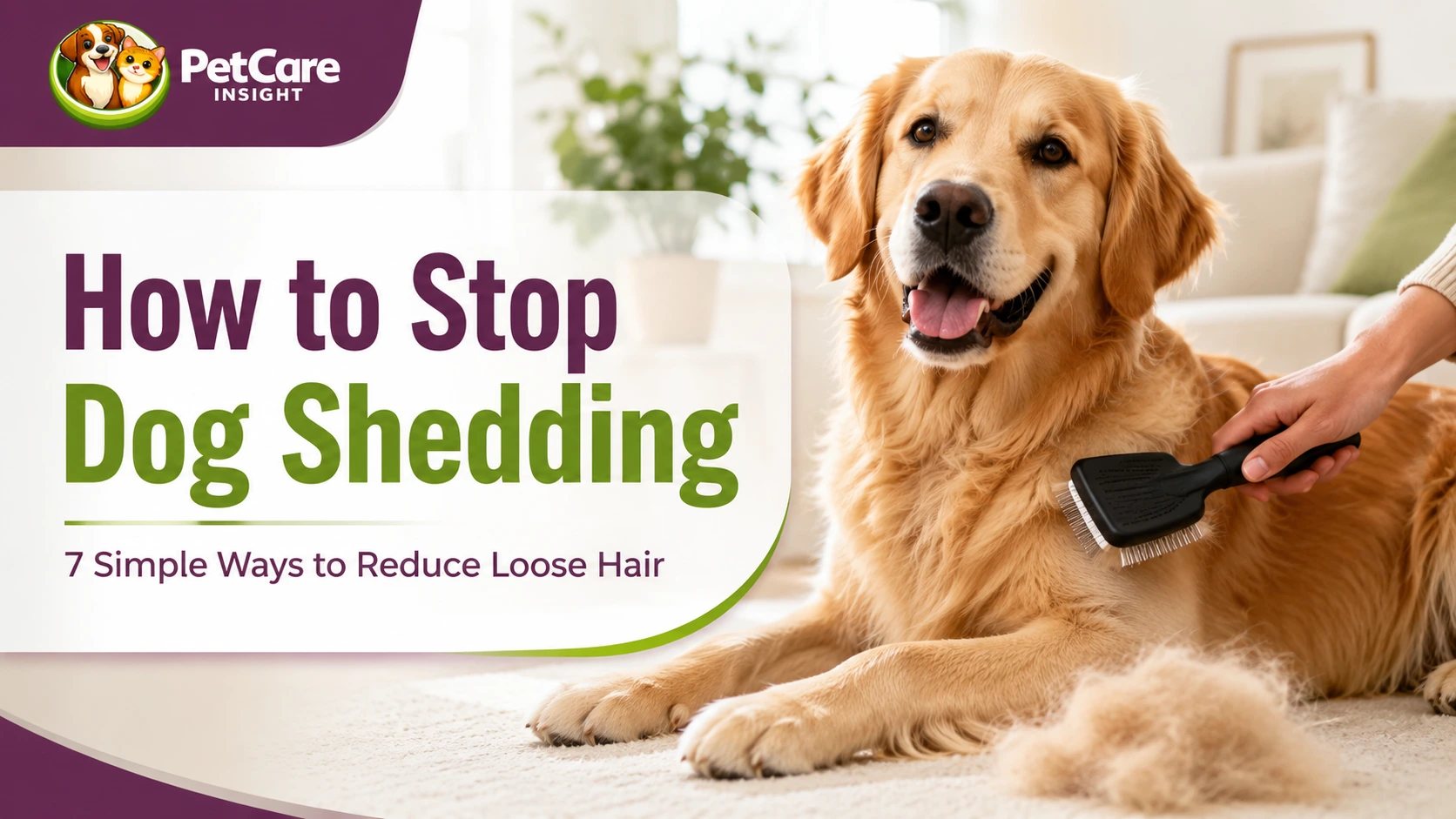
If you are searching for how to stop dog shedding, there is one important thing to know first: normal shedding cannot be completely stopped.
Dogs naturally lose old or damaged hair as their coat renews itself. What you can do is catch more of that loose fur before it reaches your clothes and furniture, keep the skin and coat healthy, and notice when shedding no longer looks normal.
For most healthy dogs, consistent brushing with the right tool makes the biggest difference.
Why Do Dogs Shed?
Shedding is part of the normal hair-growth cycle. How much hair a dog loses depends heavily on genetics and coat type.
Some dogs shed fairly steadily throughout the year. Others, particularly double-coated dogs, can shed much more heavily during seasonal coat changes. Spring and fall (autumn) are common peak periods, although climate and indoor living can affect the pattern.
Common factors that influence shedding include:
- Breed and coat type
- Seasonal changes
- Age and life stage
- Grooming routine
- Overall nutrition
- Allergies, parasites or skin disease
So if you are wondering why is my dog shedding so much, compare what you are seeing with your dog’s usual pattern rather than judging by the amount of hair on the floor alone.
How to Tell If Your Dog Is Shedding Too Much
Normal shedding should not leave obvious bald areas or unhealthy-looking skin.
| Usually Normal | May Need Attention |
|---|---|
| Hair sheds fairly evenly | Bald or noticeably thin areas |
| Skin looks healthy | Red, flaky or irritated skin |
| Follows the dog’s usual pattern | Sudden unexplained increase |
| Coat remains reasonably full | Coat becomes thin or patchy |
| No persistent itching | Frequent scratching or licking |
| Dog otherwise seems well | Appetite, weight or energy also changes |
Hair loss with bald patches, inflammation or persistent itching can have causes beyond normal shedding and deserves veterinary attention.
For more general warning signs, see our Pet Health Care Guide.
7 Ways to Reduce Dog Shedding
1. Brush Regularly With the Right Tool
Brushing removes hair that is already loose before it spreads around your home. It can also prevent tangles and matting.
The right dog shedding brush depends on the coat:
| Coat Type | Useful Tool | Typical Approach |
| Short, smooth | Grooming glove or bristle brush | Brush regularly and increase during heavier shedding |
| Medium or long | Slicker brush + comb | Brush several times a week as needed |
| Thick double coat | Slicker brush + undercoat rake | Groom regularly; more often during coat blow |
| Heavy seasonal shedder | Suitable de-shedding tool | Use mainly when loose undercoat is heavy |
Heavy shedders may need brushing several times per week or even daily during peak periods. De-shedding tools should be used gently rather than pressed aggressively against the skin.
2. Bathe When Your Dog Actually Needs It
Bathing can loosen dead hair and make it easier to remove, but more bathing is not automatically better.
Use a shampoo made for dogs and rinse thoroughly. Bathing frequency varies with coat type, activity and skin condition. Washing too often can dry the skin, and human shampoo is not formulated for canine skin.
3. Dry and Groom the Coat Properly
Thick coats can hold a surprising amount of loose hair after a bath.
Towel-dry gently and allow the coat to dry properly. Once appropriate for the coat, gentle brushing can remove undercoat loosened during bathing.
Avoid pulling aggressively through wet mats or tangles.
4. Feed a Complete, Balanced Diet
Normal skin and hair growth depend on adequate nutrition.
Your dog’s main food should provide complete and balanced nutrition for the correct life stage. Protein, fats, vitamins and minerals all contribute to normal skin and coat function.
The nutritional adequacy statement on the food label is a useful place to check whether a diet is complete and balanced.
If your dog also struggles with digestion, our Best Dog Foods for Sensitive Stomach guide explains what to look for when comparing complete diets.
5. Don’t Reach for Supplements Automatically
Fish oil and other coat supplements are often marketed for shedding, but a healthy dog eating a complete and balanced diet may not need extra nutrients.
Adding supplements unnecessarily can also push certain nutrients beyond appropriate levels. If you think your dog needs an omega-3, vitamin or other supplement, discuss it with your veterinarian first.
6. Check the Skin While You Groom
Use brushing time as a quick skin check.
Look for:
- Redness
- Flaking
- Bald spots
- Sores
- Fleas or other parasites
- Unusual odor
- Persistent scratching or licking
Allergies, parasites, infections and other skin conditions can cause abnormal hair loss that looks different from ordinary shedding.
7. Increase Grooming During Shedding Season
During heavier dog shedding season, temporarily increasing brushing can make a noticeable difference around the home.
This is especially useful for double-coated breeds when loose undercoat builds up. Some dogs may shed heavily in spring and fall, while dogs living in warmer or highly controlled indoor environments may follow a less obvious seasonal pattern.
Common Shedding Mistakes to Avoid
Trying too hard to stop shedding can sometimes create a different coat or skin problem.
| Avoid | Why |
| Shaving a double coat just to reduce fur | It does not stop the natural shedding cycle and removes protective coat layers |
| Aggressive de-shedding | Too much pressure or overuse can irritate skin and damage hair |
| Over-bathing | Frequent washing can dry or irritate the skin |
| Human shampoo | It is not formulated for canine skin |
| Random supplements | They may be unnecessary and excessive nutrients can be harmful |
| Constantly changing food | It can upset digestion without identifying the real cause |
Double coats contain both an undercoat and protective outer coat, so shaving should not be used as a routine shedding-control shortcut.
A Practical 30-Day Shedding Routine
You do not need a complicated routine or a new product every week.
| Time | What to Do |
| Day 1 | Check the skin and coat, identify the coat type and note the current shedding pattern |
| Week 1 | Start consistent, gentle brushing with the appropriate tool |
| Week 2 | Continue brushing; bathe only if your dog genuinely needs one |
| Week 3 | Keep the routine consistent and review diet, skin condition and parasite care |
| Week 4 | Compare loose hair and coat condition with Day 1 and adjust grooming frequency if needed |
| Any time | Contact a vet if bald patches, persistent itching, inflamed skin or sudden hair loss appears |
What to expect: consistent grooming can reduce the amount of loose fur ending up around your home, but it will not stop the natural shedding cycle.
When Dog Shedding Needs a Vet Check
Speak with a veterinarian if shedding suddenly changes or appears alongside:
- Bald or thinning patches
- Persistent itching or licking
- Red, scaly or inflamed skin
- Sores or unusual odor
- Significant appetite or weight changes
- Unusual tiredness
Abnormal hair loss can be linked to parasites, infections, allergies, hormonal problems and other conditions. A veterinary examination is the right next step when the coat is visibly thinning or the skin looks unhealthy.
Final Verdict
The answer to how to stop dog shedding is not a miracle shampoo or supplement. Healthy shedding is part of a dog’s normal coat cycle.
For most dogs, the practical solution is to use the right brush, groom consistently, bathe appropriately, provide complete nutrition and pay attention to the skin underneath the coat.
During periods of heavier seasonal shedding in dogs, increase grooming as needed. If the pattern suddenly changes or you notice bald patches, itching or unhealthy skin, speak with a veterinarian.
FAQs
How can I reduce dog shedding at home?
Regular brushing with a tool suited to your dog’s coat is the most practical starting point. Bathing when needed and maintaining healthy skin and nutrition can also help manage loose fur.
Why is my dog shedding so much?
Breed, coat type and seasonal changes can all cause heavy shedding. A sudden increase accompanied by itching, bald areas or irritated skin is more concerning.
What months do dogs shed the most?
Many seasonal shedders lose more undercoat in spring and fall (autumn), although climate, coat type and indoor living can change the pattern.
How often should I brush my dog?
It depends on the coat. Lighter shedders may need regular weekly grooming, while heavy double-coated dogs can need brushing several times per week or daily during peak shedding.
Does shaving a dog stop shedding?
No. Shaving does not stop the normal hair-growth cycle. Double-coated dogs should not be shaved simply to reduce loose fur because the coat also protects the skin.