

Training is one of the most important responsibilities of dog ownership. A well-trained dog is easier to live with, safer in different environments, and more confident when facing new situations. Training is not simply about teaching commands. It is a way of creating clear communication between you and your dog.
Many owners believe training should only begin when a problem appears. In reality, successful training starts from the moment a dog enters your home. Whether you have a young puppy, an adopted rescue, or an older companion, consistent guidance can help shape positive behavior and strengthen your relationship.
This guide covers the foundations of dog training, common behavioral challenges, training tools, breed differences, and advanced activities that help dogs thrive.
How Dogs Learn: The Science Every Owner Should Know
Understanding how dogs learn makes training more effective and less frustrating.
Dogs learn through associations and consequences. When a behavior leads to a positive outcome, the dog is more likely to repeat that behavior in the future. Likewise, behaviors that do not produce rewarding results tend to decrease over time.
The Role of Positive Reinforcement
Positive reinforcement is one of the most effective training methods available. It involves rewarding a desired behavior immediately after it occurs.
Rewards may include:
- Treats
- Praise
- Toys
- Play sessions
- Physical affection
For example, if a dog sits when asked and receives a reward, the dog begins to associate sitting with something positive.
Timing Matters
Dogs live in the moment. Rewards should be delivered immediately after the desired behavior occurs. Delayed rewards can create confusion and make learning slower.
Consistency Creates Success
Every family member should follow the same rules and commands. Mixed messages often cause dogs to become uncertain about expectations.
Motivation Drives Learning
Different dogs value different rewards. Some are highly food-motivated, while others respond better to toys, praise, or interactive games. Identifying what motivates your dog can significantly improve training results.
The 5 Foundational Behaviors Every Dog Must Know
Certain skills create the foundation for good manners and safety.
Sit
Sit is often the first command dogs learn. It teaches self-control and can be used before meals, greetings, and other activities.
Training tips:
- Hold a treat above the dog’s nose.
- Slowly move it backward.
- Reward as soon as the dog sits.
Stay
Stay teaches patience and impulse control.
Training tips:
- Ask for a sit.Use a clear stay cue.
- Take a small step back.
- Reward success and gradually increase distance.
Come
A reliable recall command can prevent dangerous situations.
Training tips:
- Use a cheerful voice.
- Reward generously when the dog comes.
- Practice in low-distraction environments before progressing.
Leave It
This command helps prevent dogs from picking up dangerous or unwanted items.
Training tips:
- Present a low-value item.
- Reward the dog for ignoring it.
- Gradually increase difficulty.
Loose-Leash Walking
Walking politely on a leash makes daily outings more enjoyable.
Training tips:
- Reward your dog for staying near you.
- Stop moving when pulling occurs.
- Continue walking once the leash becomes loose.
Common Behavior Problems: Evidence-Based Solutions
Behavior challenges are common, but most can be improved with consistent training.
Excessive Barking
Dogs bark for many reasons, including boredom, excitement, fear, and alerting behavior.
Solutions:
- Increase physical exercise.
- Provide mental stimulation.
- Reward quiet behavior.
- Identify and manage triggers.
Jumping on People
Jumping often develops because dogs receive attention when they do it.
Solutions:
- Ignore jumping.
- Reward four paws on the floor.
- Ask visitors to follow the same approach.
Chewing
Chewing is normal, especially for puppies.
Solutions:
- Provide appropriate chew toys.
- Supervise when necessary.
- Redirect unwanted chewing immediately.
Separation-Related Stress
Some dogs struggle when left alone.
Solutions:
- Practice short departures.
- Create positive associations with alone time.
- Avoid dramatic arrivals and departures.
Pulling on the Leash
Leash pulling is common among energetic dogs.
Solutions:
- Reward loose-leash walking.
- Change direction when pulling occurs.
- Practice regularly in different environments.
Reading Your Dog: Body Language Basics
Dogs communicate constantly through body language. Understanding these signals can help prevent misunderstandings and improve training.
Signs of Relaxation
A relaxed dog may display:
- Soft eyes
- Loose posture
- Neutral tail position
- Calm movements
Signs of Stress
A stressed dog may show:
- Lip licking
- Yawning
- Avoiding eye contact
- Pacing
- Trembling
Signs of Fear
Fearful dogs often display:
- Lowered body posture
- Tucked tail
- Flattened ears
- Attempts to escape
Signs of Excitement
Excited dogs may show:
- Fast tail wagging
- Play bows
- Energetic movements
- Increased vocalization
Recognizing these signals allows owners to adjust training and provide appropriate support.
Choosing a Dog Trainer: Red Flags and Green Flags
The quality of a trainer can significantly influence your dog’s learning experience.
Green Flags
Look for trainers who:
- Use reward-based methods
- Explain training clearly
- Encourage owner participation
- Focus on humane techniques
- Continue their education
Red Flags
Be cautious of trainers who:
- Rely heavily on punishment
- Promise instant results
- Use intimidation techniques
- Discourage owner involvement
- Ignore individual differences between dogs
A good trainer should prioritize both effectiveness and welfare.
Training Tools: What’s Safe and What Causes Harm
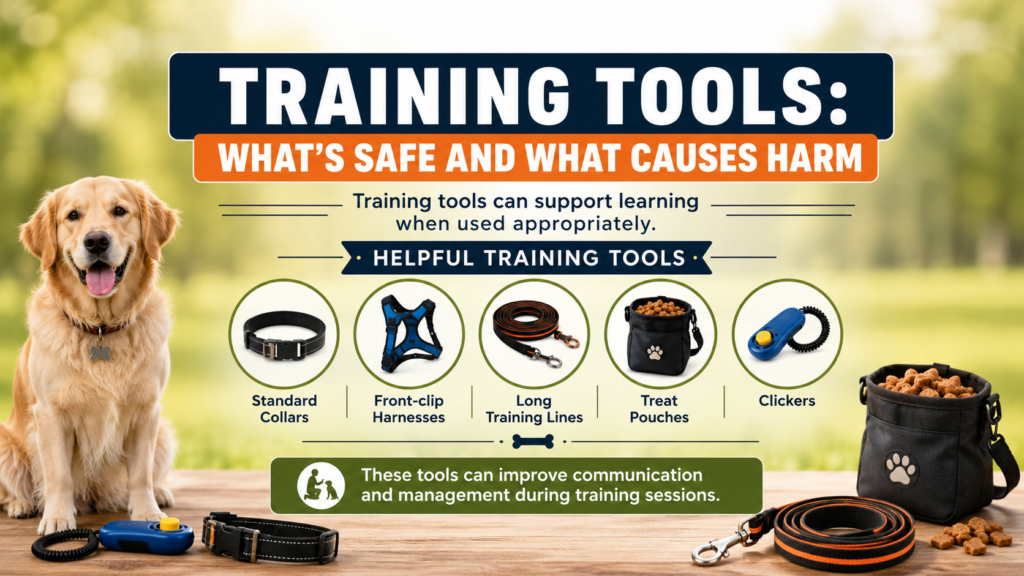
Training tools can support learning when used appropriately.
Helpful Training Tools
Useful tools include:
- Standard collars
- Front-clip harnesses
- Long training lines
- Treat pouches
- Clickers
These tools can improve communication and management during training sessions.
Using Tools Responsibly
No tool can replace consistent training. Owners should focus on teaching desired behaviors rather than depending solely on equipment.
Understanding Potential Risks
Some training tools may cause discomfort or stressed if misused. Before introducing any training equipment, owners should understand its purpose, proper use, and potential effects on behavior.
Training Across Breeds and Temperaments
Every dog is an individual, but breed tendencies and temperament can influence training.
Working Breeds
Working breeds often enjoy structured tasks and mental challenges.
Training recommendations:
- Provide advanced exercises
- Offer problem-solving activities
- Maintain consistent routines.
Herding Breeds
These dogs are often highly intelligent and energetic.
- Use engaging activities.
- rovide regular exercise.
- Prevent boredom through enrichment.
Companion Breeds
Companion dogs typically thrive on social interaction.
Training recommendations:
- Use positive reinforcement.
- Keep sessions fun and short.
- Encourage social experiences.
Individual Personality Matters
Even within the same breed, dogs can vary greatly. Successful training plans should be adjusted according to each dog’s confidence, energy level, and learning style.
Beyond the Basics: Sports, Advanced Skills, and Mental Enrichment
Once foundational skills are established, training can become an enjoyable lifelong activity.
Advanced Obedience
Advanced obedience builds stronger reliability and focus.
Examples include:
- Longer stays
- Distance commands
- Off-leash control in safe environments
Dog Sports
Sports provide physical exercise and mental stimulation.
Popular activities include:
- Agility
- Rally
- Scent work
- Tracking
- Obedience competitions
Trick Training
Teaching tricks is an excellent way to strengthen communication.
Examples include:
- Spin
- Shake hands
- Roll over
- Bow
Mental Enrichment Activities
Mental exercise can be just as important as physical activity.
Ideas include:
- Puzzle toys
- Food-dispensing games
- Scent searches
- Interactive training sessions
A mentally stimulated dog is often calmer and more satisfied.
All Resources
Successful dog training combines patience, consistency, communication, and ongoing learning.
Helpful resources may include:
- Professional trainers
- Training classes
- Educational books
- Online learning materials
- Community training groups
Owners who continue learning often achieve better long-term results with their dogs.
FAQs
How long does it take to train a dog?
Training timelines vary depending on age, temperament, consistency, and the specific behavior being taught. Some skills can be learned within days, while others require months of practice.
Can older dogs still be trained?
Yes. Dogs of all ages can learn new behaviors when training methods are consistent and motivating.
How often should training sessions occur?
Short sessions conducted daily are generally more effective than occasional long sessions.
What is the best reward for training?
The best reward depends on the individual dog. Food, toys, praise, and play can all be effective motivators.
Why does my dog listen at home but not outside?
Distractions make training more challenging. Gradually practicing skills in different environments helps improve reliability.
Conclusion
A dog training guide helps owners build good behavior, strengthen communication, and create a positive relationship with their dogs. Through consistent practice, patience, and positive reinforcement, dogs can learn essential skills and manners. Following a reliable dog training guide supports long-term success and helps dogs become confident, well-adjusted companions.