

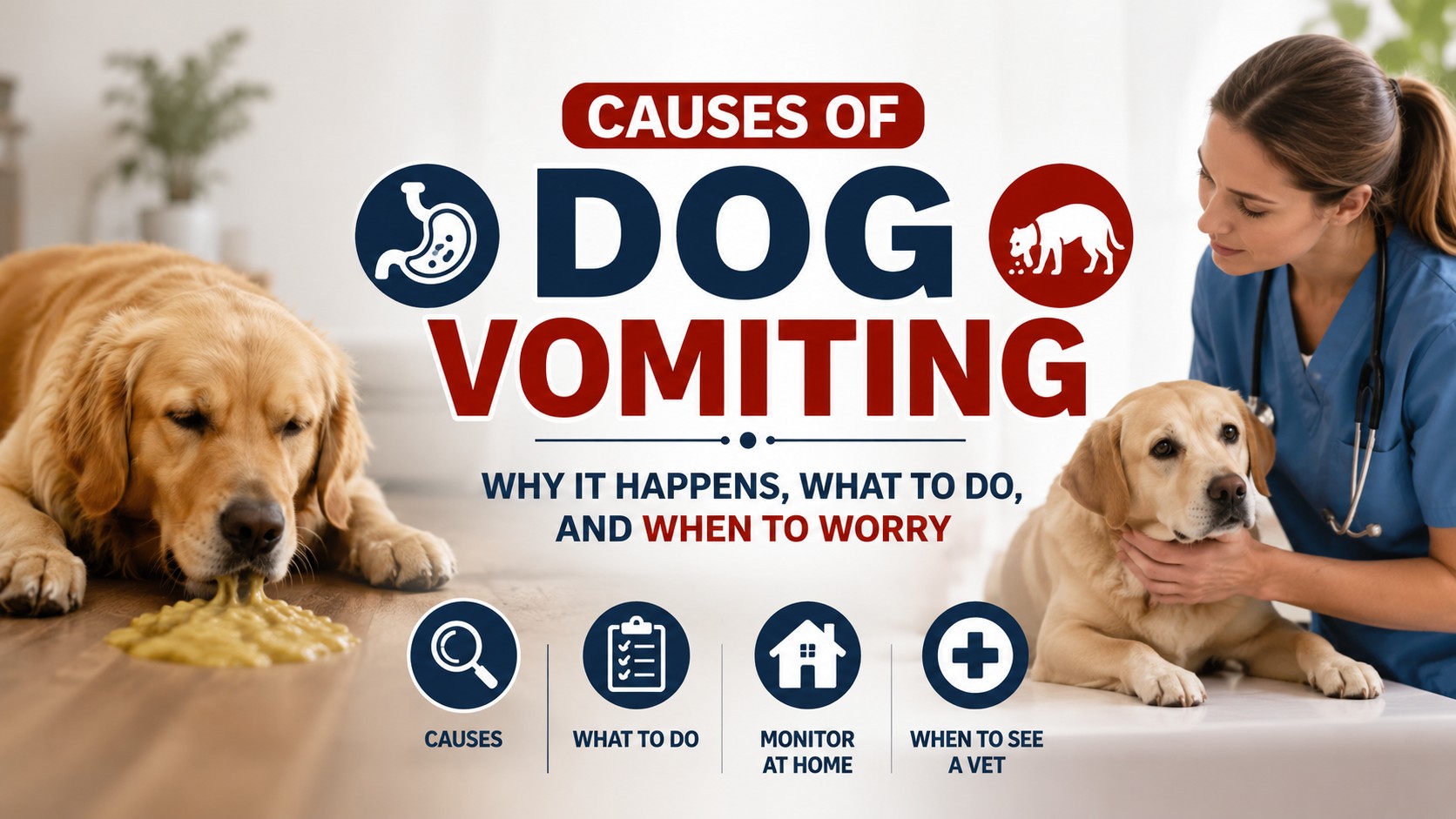
Dog Vomiting is a problem that occurs in almost all pets at some point. Sometimes it is temporary and not that serious, but in some cases it can be a sign of a complex disease going on inside the body. So there is no need to panic if a dog vomits once, but it is important to carefully monitor the type, amount of vomiting, and the dog’s overall physical condition.
Knowing why dogs vomit, what type of vomiting indicates, when to monitor at home, and when to take them to the vet quickly—many problems can be identified early on.
What is vomiting in dogs?
Vomiting is the forced expulsion of food and liquid from the stomach or sometimes the small intestine through the mouth. It is a protective reaction of the body. The body often vomits to get rid of harmful foods, toxins, or anything that the body cannot tolerate.
However, not all vomiting is the same. Sometimes it is caused by mild indigestion, and sometimes it can indicate a variety of more complex problems, including infection, intestinal obstruction, poisoning, pancreatitis, liver or kidney disease.
Vomiting once and vomiting repeatedly—these two conditions have completely different significance. So it is not just whether vomiting has occurred; what type of vomiting has occurred and whether the dog has any other symptoms are equally important.
Different types of dog vomit
The color, consistency, and what is in it—these things often give important clues about the possible cause. Although the color of the vomit alone cannot be definitively diagnosed, it is still helpful in the initial assessment.
Yellow vomit
Yellow vomit usually contains bile. This type of vomiting can occur if the stomach is empty for a long time or if there is no food in the stomach. Some dogs vomit yellow on an empty stomach in the morning, and in many cases it can also be a sign of a digestive problem.
If this happens once in a while and the dog is eating and playing normally, then the situation can be monitored. However, if yellow vomit is repeated, you should seek medical advice.
White foamy vomit
White foamy or foamy vomit is usually made up of a mixture of stomach fluid and saliva. It can be seen on an empty stomach, with mild stomach irritation, or with minor digestive problems.
If the dog has a decreased appetite, vomits repeatedly, or is lethargic, it can also be an indication of a more serious problem.
Clear liquid vomit
Clear or watery vomit can often occur after drinking too much water. Dogs can also vomit such clear liquid in the pre-vomiting stage.
If this type of vomiting occurs repeatedly or is accompanied by other symptoms, a veterinarian should be consulted.
Vomiting with mucus
Thick, slimy, or mucus-filled vomit is often caused by inflammation of the stomach lining. Mucus may also be present after prolonged vomiting.
If it is accompanied by diarrhea, fever, or loss of appetite, it is important to quickly determine the cause.
Vomiting with blood
If bright red blood or dark blood like coffee grounds is seen in the vomit, it should never be considered normal.
This could be a sign of bleeding in the stomach or digestive tract, ulcers, severe inflammation, poisoning, or other serious problems. In such a situation, you should go to the veterinarian as soon as possible.
Brown Vomit
Brown vomit can sometimes be caused by partially digested food. However, in some cases, it can also be related to intestinal problems or serious complications of the digestive system.
If it is accompanied by severe weakness, abdominal bloating, or repeated vomiting, then you should seek medical attention without delay.
Grass-Based Vomiting
Many dogs vomit after eating grass. It is not always clear why they eat grass. Some may eat grass because of stomach discomfort, and sometimes it can be normal behavior.
However, if your dog often vomits after eating grass, or shows signs of another illness, it is necessary to find out the cause behind it.
Symptoms of Dog Vomiting
It is not always possible to understand the situation just by looking at the vomit. In many cases, other symptoms appear before or after vomiting, which can give an idea of the severity of the problem.
Watch out for the following symptoms—
- Repeated vomiting
- Refusal to eat or stop eating altogether
- Excessive salivation
- Restless walking before vomiting
- Repeated swallowing
- Fatigue or weakness
- Abdominal pain
- Diarrhea
- Signs of dehydration
- Fever or unusual body heat
- Weight loss
- Changes in normal behavior
If a dog eats, drinks, and moves normally again after vomiting once, then observation alone may be enough. But if more than one of the above symptoms is seen together with vomiting, then it is important to seek immediate medical attention.
What to do if a dog vomits?
If your dog vomits, do not panic at first and observe the situation. How often the vomit has been, what color it was, and whether there has been any change in the dog’s behavior—this information can also be important for the doctor later.
What to do at home if vomiting is mild?
If your dog vomits only once and then behaves normally, observe him closely for a while.
During this time—
- Keep your dog at rest.
- Provide clean, safe water.
- Watch for repeated vomiting.
- Monitor appetite, energy, and normal behavior.
- Note the color and contents of the vomit.
Once your dog is feeling better, you can gradually reintroduce him to a regular diet.
When should you see a vet?
If any of the following situations occur, do not wait and contact the veterinarian immediately—
- Repeated vomiting within a short period of time
- Blood in the vomitDiarrhea with vomiting
- The dog is extremely weak or unconscious
- Unable to eat or drink anything for a long time
- Suspected of eating something poisonous
- Abdominal swelling or signs of severe pain
- Vomiting in young puppies, older dogs, or dogs that are already sick
- Signs of dehydration
Delaying in these situations can lead to complications quickly. Therefore, it is the safest decision to seek prompt medical attention instead of self-medicating at home.
Causes of vomiting in dogs
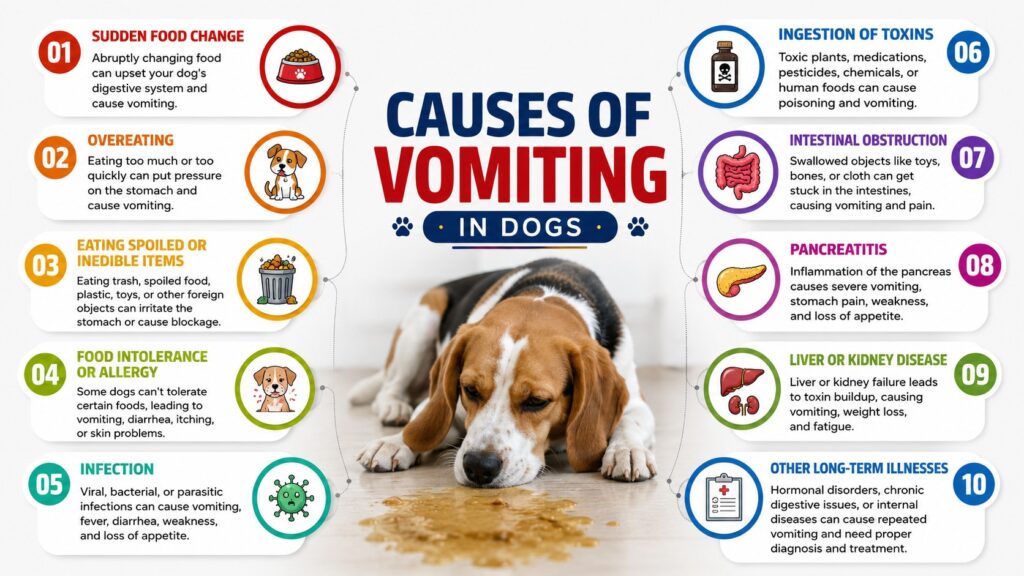
There can be multiple reasons behind vomiting in dogs. Some causes are temporary and easily controlled, while others require serious treatment. Simply trying to stop vomiting without diagnosing the exact cause can hide the underlying problem.
Sudden food change
If you change your dog’s food all at once, his digestive system often cannot easily accept it. As a result, it can cause stomach discomfort and vomiting. It is always best to gradually mix new food with old food.
Overeating
Many dogs eat too much or too quickly. This puts pressure on the stomach and can cause vomiting before the food is digested.
Eating spoiled or inedible items
Eating food from the trash, rotten food, plastic, clothes, toys, or other inedible items can cause irritation in the stomach or intestinal blockage. Vomiting is a very common symptom.
Food intolerance or allergy
Some dogs cannot tolerate certain foods. Vomiting, diarrhea, itching, or other skin problems may also occur after eating that food.
Infection
Viral, bacterial, or parasitic infections can affect the digestive system. These infections can cause vomiting, fever, diarrhea, weakness, and loss of appetite.
Ingestion of toxins
Poisoning can occur when certain plants, medications, pesticides, chemicals, or foods that are safe for humans but harmful to dogs. In such cases, vomiting is usually one of the first symptoms.
Intestinal obstruction
If a toy, bone, cloth, or other object is swallowed, it can become stuck in the intestines. This can lead to repeated vomiting, stomach pain, loss of appetite, and rapid deterioration of physical condition.
Pancreatitis
Inflammation of the pancreas can cause severe vomiting, stomach pain, weakness, and loss of appetite. This is a condition that requires immediate treatment.
Liver or kidney disease
When the liver or kidneys fail, waste products begin to accumulate in the body. This can lead to symptoms such as vomiting, loss of appetite, weight loss, and fatigue.
Other Long-Term Illnesses
Repeated vomiting can also be caused by certain hormonal disorders, chronic digestive problems, or other internal illnesses. In such cases, it is most important to identify and treat the underlying disease, not just the treatment of vomiting.
How does a veterinarian diagnose the cause?
It is not enough to simply look at the symptoms to determine the exact cause of a dog’s vomiting. If necessary, the veterinarian will perform various tests to find the source of the problem.
Initial physical examination
First, detailed information is taken about the dog’s age, diet, time, number, color, and any other symptoms of vomiting. Then, a physical examination is performed to evaluate for dehydration, abdominal pain, fever, or other unusual symptoms.
Laboratory tests
Blood tests, stool tests, or urine tests may be performed as needed. These tests can provide information about infection, organ function, and other physical problems.
Imaging tests
If an intestinal obstruction, foreign body, or other internal problem is suspected, X-rays, ultrasound, or more advanced tests may be performed as needed. The results of these tests are used to determine the next treatment plan.
Treatment for Dog Vomiting
The treatment for dog vomiting is not always the same. The type of treatment depends on the actual cause of the vomiting, the dog’s age, physical condition, and the severity of the problem. Therefore, no medication should be used before the cause is determined.
Medication
The veterinarian can prescribe the necessary medication depending on the cause of the vomiting. In some cases, medication to control vomiting is needed, while in cases of infection, parasites, or other specific diseases, treatment is given to the problem.
It can be dangerous to give your dog medications that are intended for humans. Therefore, medications should always be used as directed by your veterinarian.
Supportive care
Repeated vomiting can cause the body to lose a lot of water and essential minerals. In this case, eliminating dehydration and restoring the body’s normal balance are important parts of treatment.
Depending on the dog’s condition, fluid administration, monitoring, and other supportive care may be necessary.
Supplementary care
In some cases, additional supportive measures may be taken to restore normal digestive function or maintain a normal intestinal environment. However, these are not always necessary for all dogs.
Food management
After the vomiting has subsided, the dog is gradually returned to a diet that is easily digestible. It is often more beneficial to feed small amounts of food several times a day rather than feeding a large amount at once.
If a change in diet is necessary, it should be done gradually, so that the digestive system can adapt to the new food.
Additional Treatment
If the cause of vomiting is intestinal obstruction, severe poisoning, or other serious illness, special treatment or surgery may be necessary. Such decisions are made based on the results of the dog’s tests and physical condition.
Recovery and Aftercare
It is important to monitor the dog’s condition regularly after treatment begins. Even after vomiting has stopped, appetite, water intake, bowel movements, and normal behavior should be monitored.
The medication should be used for the full duration as prescribed by the doctor. In many cases, the problem may return if the medication is stopped midway.
If vomiting continues after treatment, new symptoms appear, or the dog’s condition worsens, the veterinarian should be contacted again immediately.
Ways to prevent dog vomiting
While it is not possible to prevent all types of vomiting, some habits can help reduce the risk significantly.
- Avoid sudden changes in diet.
- Feed a balanced and safe diet.
- Keep away from rotten or spoiled food.
- Make sure that plastic, clothes, toys, or small objects cannot be swallowed.
- Keep poisonous plants, chemicals, and medicines out of the dog’s reach.
- Get regular health checkups.
- Give vaccinations and deworming on time.
- Slow down if you are overly hasty while eating.
- Take quick action if you notice unusual changes in behavior or appetite.
These simple precautions can help reduce the risk of digestive problems and vomiting in many cases.
FAQs About Dog Vomiting Causes
When should you be concerned if your dog vomits?
If the dog vomits repeatedly, has blood in the vomit, cannot eat or drink anything, becomes very weak, has a swollen abdomen, or is accompanied by diarrhea, fever, or severe pain with vomiting, then it should be taken to the veterinarian immediately.
What can be done for dog vomiting at home?
If the dog vomits once and there are no other problems, then it can be observed for some time. Provide clean water and observe the dog’s behavior. However, if vomiting occurs repeatedly or other symptoms occur, consult a veterinarian without self-medication.
What does yellow vomit in dogs mean?
Yellow vomit usually contains bile. This can happen if the stomach is empty for a long time. However, if this happens repeatedly, accompanied by loss of appetite, fatigue, or other symptoms, it may be an indication of a digestive problem and you should seek veterinary advice.
What should I do if my dog vomits white foam?
If it vomits white foam once and it is normal, it can be observed for some time. But if it vomits white foam repeatedly, stops eating, or becomes weak, take it to the veterinarian immediately.
What can happen if my dog vomits repeatedly?
Repeated vomiting can be a sign of various serious problems, including infection, poisoning, intestinal obstruction, pancreatitis, liver or kidney disease. It is important to diagnose the cause quickly without waiting a long time.
When should I feed my dog after vomiting?
After the vomiting stops, if the dog’s condition is normal, small amounts of easily digestible food can be given gradually. It is better to feed it in small portions rather than giving too much food at once. If vomiting starts again, contact your veterinarian.
What should I do if vomiting is accompanied by diarrhea?
Vomiting and diarrhea together can quickly lead to dehydration. This is especially dangerous for puppies and older dogs. Therefore, you should seek veterinary advice as soon as possible rather than trying to treat it at home.
What symptoms can a dog show if it eats something poisonous?
After eating a poisonous substance, vomiting, excessive salivation, tremors, weakness, shortness of breath, diarrhea, or abnormal behavior may occur. If you suspect this, take it to the veterinarian immediately.
Is dog vomiting always a sign of a serious illness?
No. Sometimes vomiting can also occur due to overeating, eating too quickly, or temporary indigestion. However, if vomiting occurs repeatedly, blood is seen, the dog stops eating, or any other unusual symptoms occur, then the matter should be taken seriously and treated promptly.
Conclusion: Understand dog vomiting and take proper care
Dog vomiting can sometimes be a common issue, but it may also indicate an underlying health problem. Understanding the type of vomiting, how often it happens, related symptoms, and changes in your dog’s behavior is essential for providing proper care. Taking the right action at the right time can help prevent serious complications and support your dog’s overall well-being. As a part of pet health care, responsible observation, timely attention, and regular care play an important role in keeping your furry companion healthy and happy.