What Are Dog Skin Diseases and How They Develop Naturally in Pets

dog skin diseases

Skin diseases in dogs actually refer to various problems that occur in their skin, fur, and internal tissues. These problems never appear suddenly, but in most cases develop gradually. In many cases, they can also be caused by bacterial infections, fungal problems, parasite infestations, or allergies.

Sometimes, a dog suddenly starts itching a lot, loses its fur, or develops red patches on the skin. Skin infections, excessive itching, and canine dermatitis are common among such problems. Although the problem may not seem serious at first, it can gradually turn into a bigger problem. In fact, in most cases, there are some common reasons behind these problems.

For example, not keeping them clean, not bathing them regularly, not taking proper care, or not cleaning them properly from insects and mites outside. On the other hand, some dogs have very sensitive bodies, so they develop skin allergies at a very young age. Initially, the symptoms are very mild—slight itching or slight redness. Many people ignore this problem.

But if not taken care of on time, this small problem gradually turns into a big infection and the itching and discomfort of the dog increases a lot. That’s why maintaining proper pet health care is essential, as regular attention and simple daily care can help prevent many serious health problems before they start.

What Are Dog Skin Diseases and How They Develop Naturally in Pets

Dog skin diseases basically refer to various types of problems that occur in the skin, fur and tissues under the body of dogs. It can occur due to bacterial infections, fungal problems, parasite attacks or allergies at different times.

Sometimes it is seen that dogs suddenly start itching a lot, hair falls out or red spots form on the skin. Among such problems, skin infection in dogs, dog itching problems and canine dermatitis are very common.

In fact, in most cases, this problem develops gradually. For example, lack of cleanliness, not bathing regularly, not following a proper grooming routine or not doing flea infestation and tick removal in dogs properly from outside. Again, some dogs have very sensitive bodies, so skin allergies in dogs appear easily.

Initially, skin irritation signs are very mild—mild itching or slight redness. But if not taken care of in time, it can turn into a major infection and dog scratching behavior will increase.

Why Dog Skin Diseases Matter for Long-Term Pet Health Care Success

Dog skin problems are not just a small external issue. Sometimes they can also indicate a major internal problem. Although it may seem like a mild itch or rash at first, if not taken care of in time, it can gradually take on a complex shape.

In this situation, dog health issues often increase. For example, long-term hair loss, skin infection or pain—these make the dog’s normal life very difficult. In some cases, if there is skin allergy in dogs, the problem returns repeatedly, which becomes difficult to control.

This is directly related to pet grooming care. Because regular cleanliness, proper care, and timely care are very important for the overall well-being of the dog.

In fact, if the skin health is good, the dog’s entire body immunity is good. So it is not right to ignore such problems. Taking care of your dog’s skin not only reduces discomfort, but also reduces the risk of recurring problems in the long run.

Step-by-Step Guide to Treating Dog Skin Diseases Effectively at Home

dog skin diseases

Step 1 – Identify Early Symptoms of Skin Problems

Early signs should never be ignored. If your dog begins scratching more than usual, develops red spots, loses fur, or shows an unusual odor, these may indicate an underlying skin issue. Careful monitoring is important, because even mild itching can worsen over time. Swelling, rashes, or irritation should be addressed as soon as possible.

Step 2 – Clean and Maintain Proper Hygiene Routine

Keeping your dog’s body clean is the most important part of this problem. Regular bathing and maintaining a clean environment are essential.

Mild or medicated dog shampoo can be used if necessary, which helps reduce skin infections. In addition, following a specific grooming routine greatly reduces the risk of recurring problems.

Step 3 – Control Fleas, Ticks, and External Parasites

Often, the main cause of skin diseases in dogs is flea and tick infestations. These cause irritation, itching, and infection on the dog’s skin.

In this case, it is important to control flea infestation quickly. In addition, if regular tick removal in dogs is not done, the problem can worsen.

Step 4 – Improve Diet for Skin Healing

Dog food directly affects skin health. A good diet helps the skin heal faster.

Adding omega 3 for dogs to their diet reduces inflammation and improves skin health. At the same time, proper dog nutrition and skin health also reduce the chances of new problems.

Step 5 – Use Vet Prescribed Treatment When Needed

If the problem is more serious, then home care may not be enough. In that case, medicine prescribed by the vet should be used.

Veterinary skin treatment is often necessary to control the infection. Again, dog infection medicine plays a very effective role in bacterial or fungal problems.

If not treated on time, the problem can become chronic.

Best Practices to Improve Dog Skin Disease Recovery Naturally

Medication is not the only way to solve dog skin problems—if you follow some daily habits correctly, your dog’s skin condition will improve much faster and the chances of the disease returning will also be reduced. Regular care, cleanliness, and following the right lifestyle improve the healing process of the entire body.

It is actually a part of overall pet healthcare. Regular grooming plays a big role in this. Timely combing, nail trimming, and bathing help maintain a dog’s skin health. In addition, using dog skin moisturizers can greatly reduce skin dryness and itching, resulting in faster recovery.

Common Mistakes That Worsen Dog Skin Diseases Fast

Dog skin problems often worsen quickly due to small mistakes, which later become difficult to control.

Common mistakes:

  • Over bathing dogs →Many people think that bathing too much will reduce the problem, but in fact, too much bathing destroys the skin’s natural oil, resulting in the skin becoming more dry and irritated.
  • Wrong shampoo use →Using human shampoos or products with harsh chemicals can cause skin irritation, allergies, and infections, further complicating dog skin conditions.
  • Delaying treatment →Ignoring a small itch or rash can turn into a major infection.
  • Using human products →Dog skin is different from human skin, so using the wrong product can worsen the condition.
  • Ignoring symptoms →If you don’t pay attention in the beginning, a chronic infection can develop later.

Sometimes, small mistakes can quickly lead to dog skin problems. If not properly cared for, dog skin conditions can become more complex and develop into chronic infections.

Expert Tips for Faster Recovery from Dog Skin Diseases

According to experts, one method alone is not enough to quickly cure dog skin problems. Proper care, food, and treatment are needed together.

Expert Tips:

  • Immune support for dogs →If the dog’s immune system is strong, skin infections can be cured quickly and new problems are less likely.
  • Skin healing supplements →Vitamins and supplements help the skin recover quickly, especially in the hair and skin repair process.
  • Veterinary diagnosis →Starting treatment without an accurate diagnosis can lead to mistakes, so a correct diagnosis is very important.
  • Consistent care routine →Regular grooming, cleanliness, and proper diet can help reduce skin diseases in dogs quickly.

Proper treatment, nutrition, and care are required together to cure skin problems in dogs quickly. Regular monitoring plays a major role in controlling skin diseases in dogs.

Types of Dog Skin Diseases Every Pet Owner Should Know

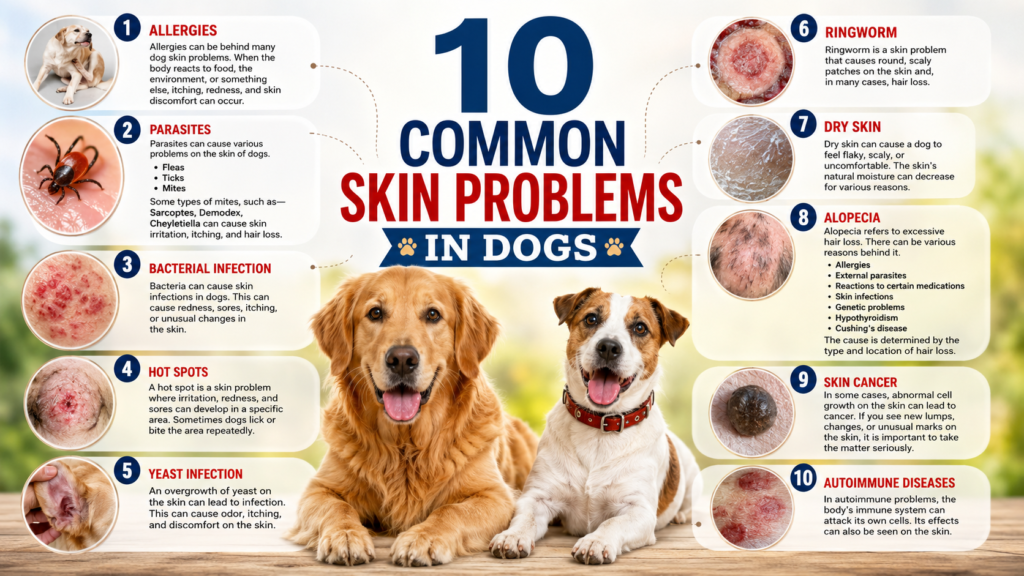
  • Mange in dogs →This is a type of parasitic problem, where the skin is severely itchy, hair falls out, and the skin becomes thick.
  • Ringworm infection →A fungal infection, which causes round spots and can spread quickly.
  • Hot spots in dogs →Suddenly red, wet and painful areas appear on the skin, which the dog licks or bites a lot.
  • Yeast infection dogs →More common in moist areas, where there is a bad smell, itching and the skin becomes darker.
  • Bacterial dermatitis →A skin infection caused by bacteria, where pus, redness and pain may appear.

Symptoms of Dog Skin Diseases You Should Never Ignore

  • Constant scratching → The dog itches repeatedly, increasing discomfort
  • Red patches → Red spots appear on the skin, which is an indication of infection
  • Hair loss → Hair falls out in places
  • Bad odor → An unusual odor comes from the skin
  • Scabs or sores → Dry wounds or sores form

In this condition, dog skin rash often appears and itching and inflammation gradually increase, which becomes more complicated if neglected.

Causes Behind Dog Skin Diseases Explained Simply

Dog skin problems can be caused by multiple reasons. Sometimes multiple reasons work together.

Main causes:

  • Parasites in dogs → fleas and ticks cause itching and infection on the skin
  • Food allergies → The body reacts to certain foods and increases skin problems
  • Environmental allergens → Dust, pollen or pollution also cause problems
  • Fungal infection causes → Fungus spreads quickly in humid environments

In many cases, poor hygiene and weak immunity work together, due to which the problem increases even faster.

How Diet Affects Dog Skin Diseases and Recovery Speed

Diet has a direct relationship with a dog’s skin health. Improper diet often exacerbates skin diseases in dogs.

Important aspects:

  • Hypoallergenic dog food → Helps reduce allergies
  • Omega fatty acids benefits → Keeps the skin moisturized and reduces inflammation
  • Protein deficiency dogs → Skin becomes weak if protein is low

Proper nutrition reduces inflammation and speeds up the healing process, resulting in a much better recovery speed.

Preventing Dog Skin Diseases with Daily Care Routine

Most skin diseases in dogs can be prevented with regular care.

Daily habits:

  • Following regular dog grooming tips
  • Maintaining a flea prevention routine
  • Maintaining skin cleanliness and skin health maintenance

Treatment Options for Severe Dog Skin Diseases Cases

When the problem is more severe, home care is not enough.

Treatment options:

  • Antibiotic treatment dogs → to reduce bacterial infection
  • Antifungal therapy → to control fungal problems
  • Steroid treatment dogs → to reduce severe inflammation

However, before using any medication, you should definitely consult a vet, otherwise the problem may worsen.

When to Visit a Veterinarian for Dog Skin Diseases

If some symptoms appear, you need to go to the vet without delay.

When to go:

  • Symptoms last more than 7 days
  • Blood or pus is visible on the skin
  • The dog is very uncomfortable

In this situation, emergency vet care may be necessary, as there is a risk of developing a chronic skin infection.

Natural Remedies That Support Dog Skin Healing Safely

Some natural remedies can help with skin healing, but they are not a substitute for basic treatment.

Natural solutions:

  • Coconut oil for dogs → keeps the skin soft and moisturized
  • Aloe vera treatment → reduces irritation and redness
  • Herbal skin care dogs → calms mild inflammation

These remedies are only supportive, not the main treatment.

Dog Skin Diseases Prevention Checklist for Owners

Many problems can be prevented by taking regular care.

Checklist:

  • Regular grooming
  • Balanced diet
  • Parasite control
  • Clean environment

These are part of preventive dog care and maintaining a proper hygiene routine for pets can greatly reduce skin problems.

FAQs

What are the most common dog skin diseases?

The most common skin diseases in dogs are allergies, scabies, fungal infections, and bacterial dermatitis. These are usually caused by dirt, parasites, or a weakened immune system. Early detection makes treatment easier.

Can dog skin diseases spread to humans?

Some skin diseases in dogs, such as ringworm, can also be transmitted to humans. Therefore, it is very important to wash your hands and practice good hygiene after coming into contact with an infected dog.

How long does treatment take?

Mild infections usually resolve within 1-2 weeks. However, if the infection is severe or has been ongoing for a long time, it may take longer for your dog’s skin condition to resolve.

Is home treatment enough for dog skin diseases?

Minor problems can be treated at home. However, serious infections definitely require veterinary treatment, otherwise the problem may worsen.

How can I prevent recurring skin problems?

Regular grooming, lice control, and a balanced diet can greatly reduce the risk of recurrence of skin diseases in dogs. A clean environment also plays a very important role in this.

Conclusion: Dog Skin Diseases Care for Long-Term Healing Success

Skin problems in dogs may seem minor at first glance, but if not treated on time, they can turn into serious health problems. Regular care, proper diet, and prompt treatment are the most important things in controlling skin diseases in dogs. Proper care, cleanliness, and following the advice of a veterinarian can greatly reduce the risk of recurrence. Therefore, conscious care is the most powerful way to ensure the long-term health and comfort of your dog.

Related Articles

Dog Weight Loss Causes: Why Is Your Dog Suddenly Losing Weight?

What Are Dog Skin Diseases and How They Develop Naturally in Pets

Dog Not Eating Reasons: Causes and Solutions for Dogs Not Eating

Dog Ear Infection: Easy To Understand And Solve

Dog Eye Infection Treatment: Quick and Safe Solution Guide

Dog Diarrhea Treatment Helps Restore Your Dog’s Digestive Health Faster