

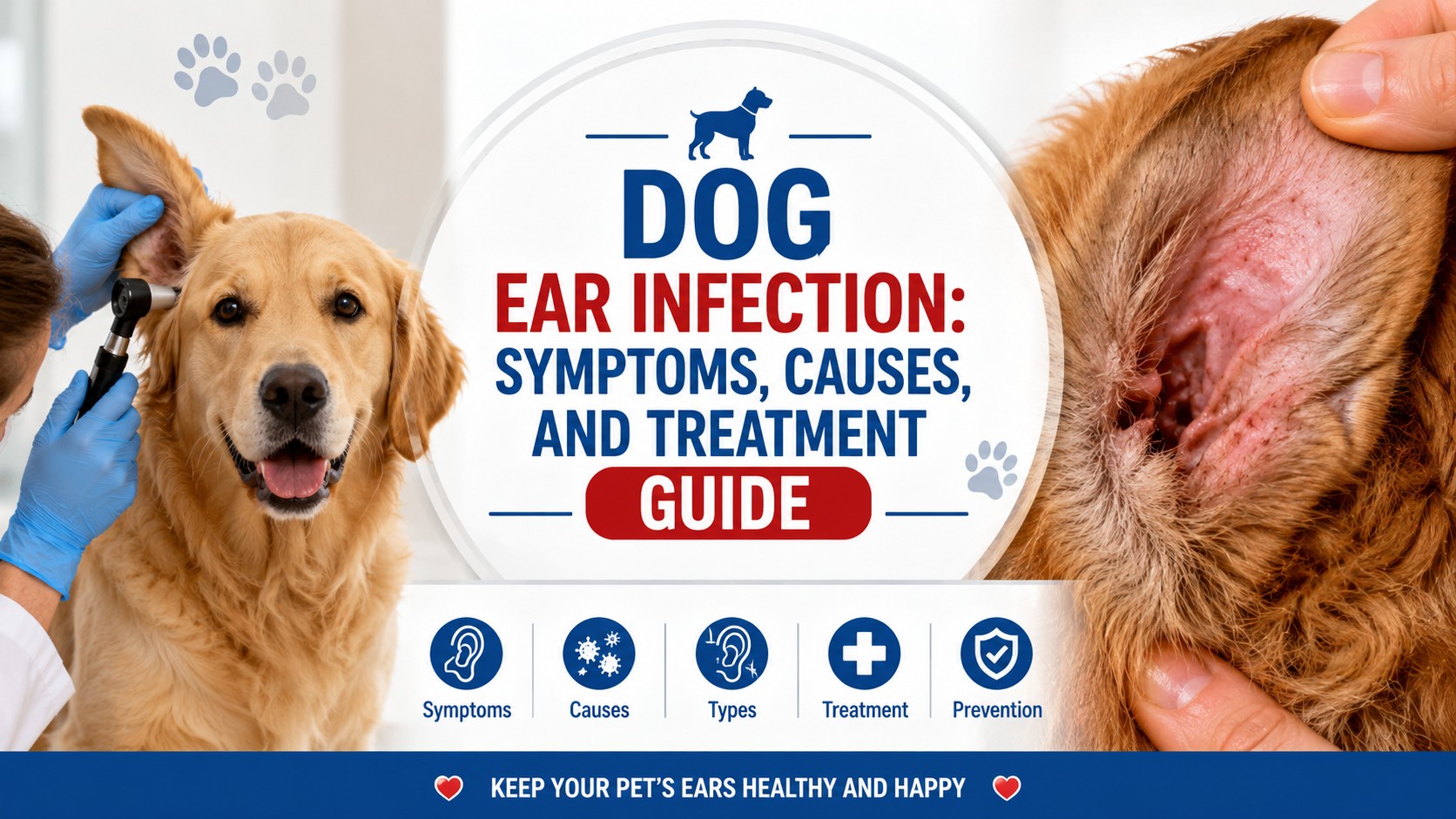
Ear infections in dogs can be caused by bacteria, yeast, allergies, or dirt buildup inside the ear. Common symptoms include itching, head shaking, bad odor, and pain. Identifying the problem at the right time and seeking veterinary advice can help keep your dog healthy.
What is a dog ear infection?
Dog ear infections are inflammation or infection of various parts of the ear. Usually, this problem is more common in the outer part of the ear, but sometimes it can spread to the deeper part of the ear.
This problem occurs when there is an overgrowth of bacteria or yeast inside the ear. The risk of infection can be increased if dirt, moisture, or other objects are trapped inside the ear. Dogs with floppy ears or poor air circulation are more likely to develop this problem.
Symptoms of ear infections in dogs
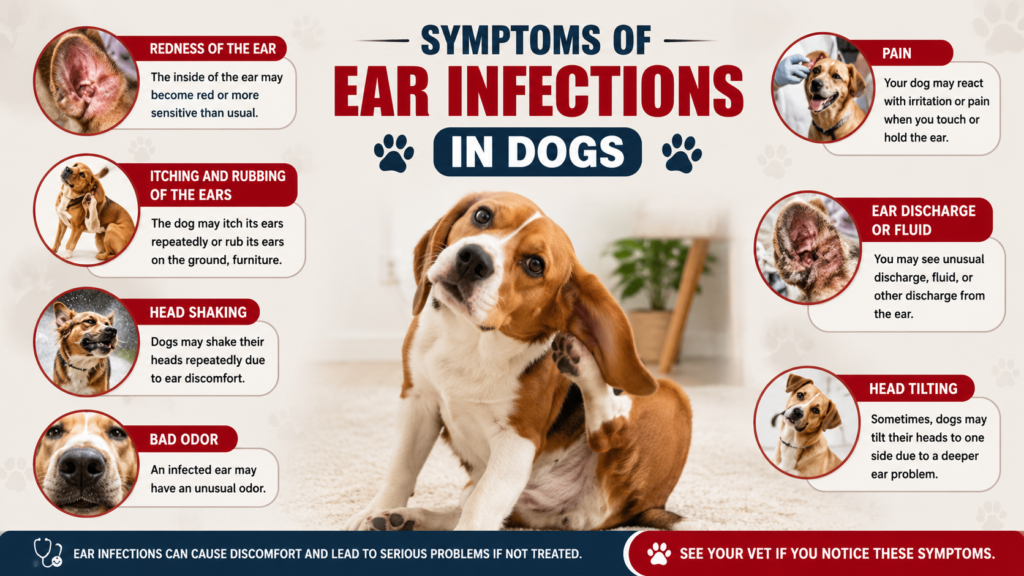
Some common symptoms may be seen if a dog has a problem with its ears.
Redness of the ear
The inside of the ear may become red or more sensitive than usual.
Itching and rubbing of the ears
The dog may itch its ears repeatedly or rub its ears on the ground, furniture.
Head shaking
Dogs may shake their heads repeatedly due to ear discomfort.
Bad odor
An infected ear may have an unusual odor.
Pain
Your dog may react with irritation or pain when you touch or hold the ear.
Ear discharge or fluid
You may see unusual discharge, fluid, or other discharge from the ear.
Head tilting
Sometimes, dogs may tilt their heads to one side due to a deeper ear problem.
Types of ear infections in dogs
Otitis Externa
This is an infection of the outer ear. It is most common in dogs.
Otitis Media
This type of infection occurs in the middle ear. It can be caused by an external infection.
Otitis Interna
This is a problem deep inside the ear. It can be relatively more serious.
Causes of ear infections in dogs
- Bacteria: An infection can occur when the number of bacteria inside the ear increases.
- Yeast: Overgrowth of yeast can cause ear problems.
- Allergies: Some dogs may have recurring ear problems due to allergies.
- Ear mites: Small parasites in the ear can also cause ear discomfort and infection.
- Moisture and dirt buildup: Water or dirt buildup in the ear creates an opportunity for bacteria to grow.
How a vet diagnoses an ear infection
To diagnose an ear problem, a vet will usually examine the condition of the ear.
- Ear exam: The inside of the ear is looked at and checked for any abnormalities.
- Ear canal exam: The inside of the ear is checked for dirt, inflammation, or other problems.
- Determining the type of infection: The treatment method is determined by understanding the type of problem.
Treatment of ear infections in dogs
- Cleaning the ears: Cleaning the ears of dirt and accumulated substances may be part of the treatment.
- Medication: The veterinarian can prescribe the necessary medication depending on the type of problem.
- Treatment of the underlying cause: It is necessary to not only reduce the infection, but also find the cause behind the recurring problem.
Preventing ear infections in dogs
- Regular Ear Care: Regular ear care can reduce the chances of problems.
- Keeping the ears clean and dry: Reducing the risk of ear infections if there is no excess moisture inside the ears.
- Controlling other problems: If there are allergies or other causes, they need to be controlled.
FAQs
Does a dog ear infection get better on its own?
In many cases, the problem may not go away on its own. Knowing the exact cause and getting the necessary treatment is important.
How do I know if my dog has an ear infection?
Itching, head shaking, bad odor, redness, or discharge from the ear can be symptoms.
Can dog ear infections be treated at home?
If you have ear problems, it is best to consult a veterinarian rather than trying to treat them yourself.
When should you see a veterinarian?
If your dog has ear pain, a bad odor, unusual discharge, or a change in behavior, you should seek medical attention.
Conclusion: Ways to Protect Your Dog From Ear Infections
Ear infections in dogs are a common but serious problem. Early recognition of the symptoms and timely intervention are essential for your dog’s comfort and well-being. Many ear problems can be avoided with regular ear care, cleaning, and proper maintenance as part of pet health care.