

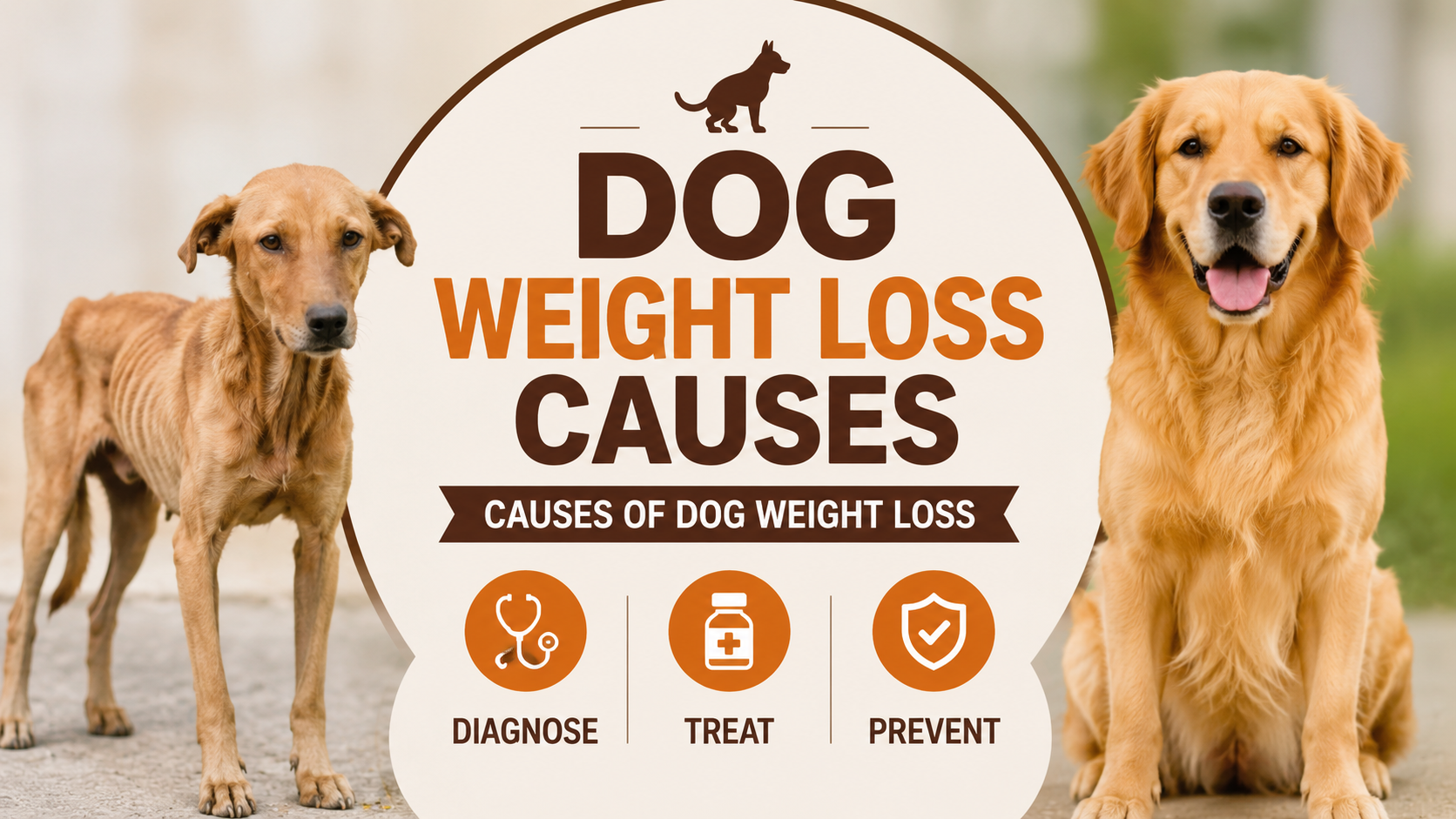
Dog Weight Loss Causes: The main causes of dog weight loss include malnutrition, intestinal worms, digestive problems, dental diseases, hormonal disorders, infections, cancer, and stress. Even if your dog is eating normal food, continuous weight loss should not be ignored. It may indicate an underlying health issue that requires prompt attention. Consulting a veterinarian as soon as possible is essential, as a timely examination can help identify the exact cause and ensure appropriate treatment is started without delay.
Causes of Dog Weight Loss: A Complete Guide to Symptoms, Causes, Treatment, and Prevention
In many pet dogs, sudden or gradual weight loss is observed. Although the issue may not seem that important at first, it can sometimes be an indication of an ongoing problem inside the body. If the dog continues to lose weight even after eating normal food, or has decreased interest in eating, it is important to find out the cause.
Regular monitoring of your dog’s weight is an important part of pet health care. Noticing changes in weight can help identify many diseases early.
Dog Weight Loss Causes
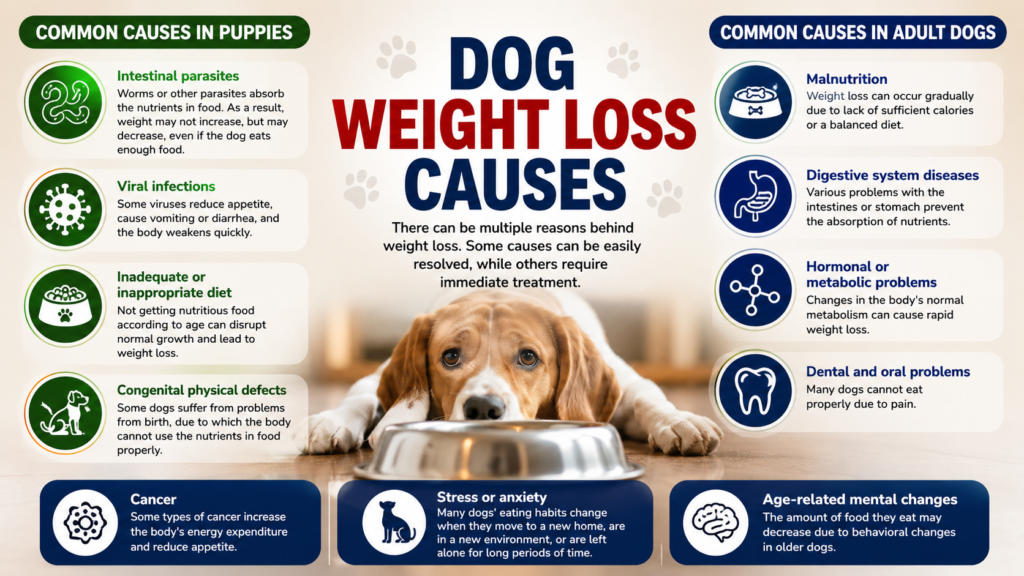
Common causes in puppies
- Intestinal parasites: Worms or other parasites absorb the nutrients in food. As a result, weight may not increase, but may decrease, even if the dog eats enough food.
- Viral infections: Some viruses reduce appetite, cause vomiting or diarrhea, and the body weakens quickly.
- Inadequate or inappropriate diet: Not getting nutritious food according to age can disrupt normal growth and lead to weight loss.
- Congenital physical defects: Some dogs suffer from problems from birth, due to which the body cannot use the nutrients in food properly.
Common causes in adult dogs
- Malnutrition: Weight loss can occur gradually due to lack of sufficient calories or a balanced diet.
- Digestive system diseases: Various problems with the intestines or stomach prevent the absorption of nutrients.
- Hormonal or metabolic problems: Changes in the body’s normal metabolism can cause rapid weight loss.
- Dental and oral problems: Many dogs cannot eat properly due to pain.
- Cancer: Some types of cancer increase the body’s energy expenditure and reduce appetite.
- Stress or anxiety: Many dogs’ eating habits change when they move to a new home, are in a new environment, or are left alone for long periods of time.
- Age-related mental changes: The amount of food they eat may decrease due to behavioral changes in older dogs.
When to see a vet
If you notice any of the following symptoms, you should seek medical advice without delay.
- Rapid weight loss
- Reluctance to eat
- Repeated vomiting or diarrhea
- Excessive weakness
- Difficulty breathing
- Excessive water drinking
- Unusual changes in behavior
How the disease is diagnosed
A veterinarian may perform various tests to determine the exact cause.
Blood tests
Evaluate infection, organ function, and other physical changes.
Urine tests
Give information about kidney and other metabolic problems.
Fecal tests
Detecting parasites or infections.
X-rays or ultrasound
Evaluate the condition of internal organs.
Treatment
Dietary changes
High-nutrient or special diets may be given as needed.
Supportive care
Severe conditions may require fluids, nutrition, or hospitalization.
Antibiotics
Used for bacterial infections.
Anti-inflammatory medications
Some diseases may require medications to control inflammation.
Deworming
If parasites are identified, appropriate deworming is given.
Dental treatment
If you cannot eat due to mouth or dental problems, treatment is provided.
Treatment of specific diseases
A separate treatment plan is prepared according to the type of disease.
How to prevent weight loss in dogs
Regular care can reduce the risk in many cases.
- Use deworming regularly.
- Vaccinate on time.
- Get a health check-up at least once a year.
- Measure your weight regularly.
- Feed a balanced diet according to your age.
- Take prompt action if there are changes in behavior or eating habits.
Regular health check-ups and ensuring a balanced diet as part of pet health care play an important role in keeping your dog healthy in the long run.
FAQs
Why do older dogs lose weight despite eating?
There may be reasons such as age-related diseases, hormonal problems, digestive system diseases, or cancer. Tests are needed to find the exact cause.
What types of cancer can cause dogs to lose weight quickly?
Various types of cancer can increase the body’s energy needs and cause weight loss. A veterinary examination is essential to be sure.
Should you be concerned if your dog loses weight?
Yes. Especially if the weight loss is significant in a short period of time or if there are other symptoms.
Do dogs lose weight when they are sick?
Many illnesses cause a loss of appetite or the body cannot use nutrients properly, resulting in weight loss.
Conclusion: Dog Weight Loss Causes Explained for Long-Term Health Success
Dog weight loss is not always caused by the same reasons. Sometimes it is a dietary problem, and sometimes it can be a sign of a serious illness. Therefore, if you experience sudden or persistent weight loss, it is the safest decision to consult a veterinarian without delay. Regular monitoring, a balanced diet, and timely health checkups help ensure a healthy and active life.