

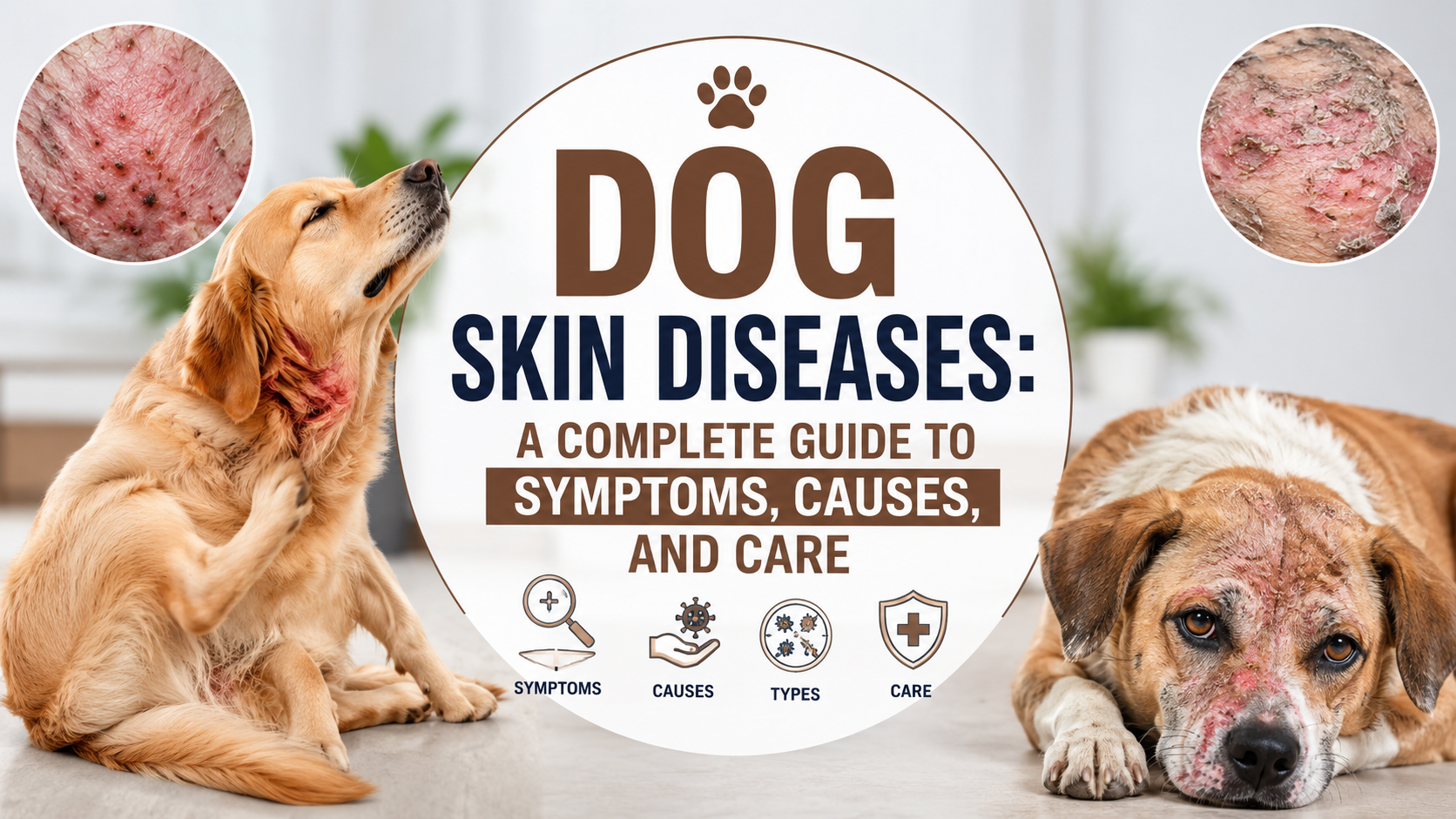
Dog skin diseases refer to various problems that affect the skin, fur, or outer layer of a dog’s body. These issues can arise from allergies, parasites, infections, dry skin, or other underlying causes. Identifying the symptoms early helps ensure proper pet health care and makes treatment more effective.
Dog Skin Problems: How to Recognize, Causes, and Care
The skin is the largest organ of the dog’s body. It not only covers the body, but also plays an important role in protecting it from external damage. Often, any changes in the skin can be an indication of an internal problem in the dog. Therefore, it is important to pay attention to unusual skin symptoms at the beginning.
Symptoms of Dog Skin Problems
A variety of changes can be seen when a dog has a skin problem. Common symptoms include—
- Scaly or flaky skin
- Redness
- Hair loss
- Skin color change
- Bad odor
- Excessive itching
- Oily skin
- Scaling or sores
- Small bumps
- Water or fluid coming out of the sores
If you regularly observe such changes, it is easier to understand the problem quickly.
10 Common Skin Problems in Dogs
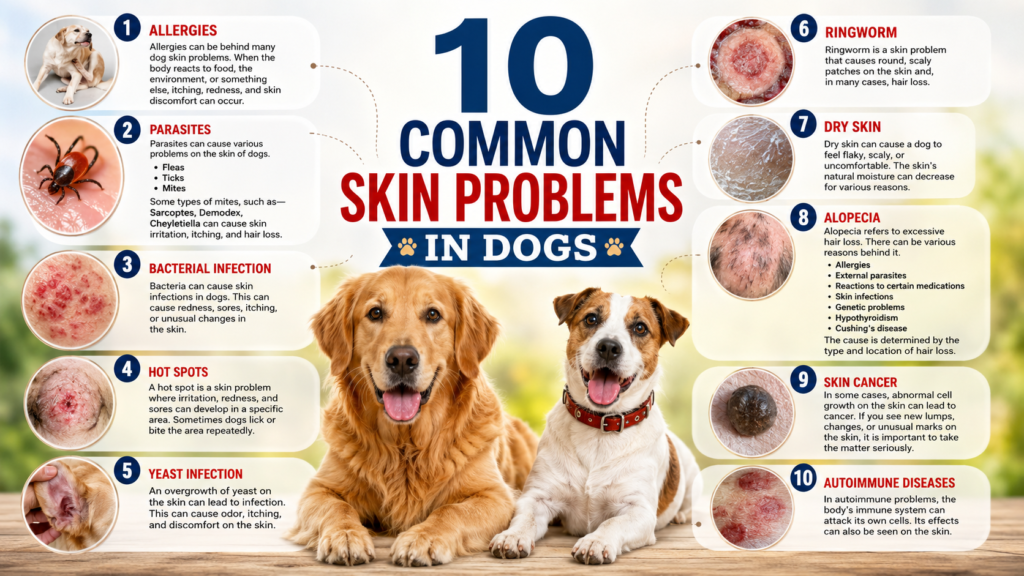
1. Allergies
Allergies can be behind many dog skin problems. When the body reacts to food, the environment, or something else, itching, redness, and skin discomfort can occur.
2. Parasites
Parasites can cause various problems on the skin of dogs.
These include—
- FleasTicks
- Mites
Some types of mites, such as—
- Sarcoptes
- Demodex
- Cheyletiella
Can cause skin irritation, itching, and hair loss.
3. Bacterial Infection
Bacteria can cause skin infections in dogs. This can cause redness, sores, itching, or unusual changes in the skin.
4. Hot Spots
A hot spot is a skin problem where irritation, redness, and sores can develop in a specific area. Sometimes dogs lick or bite the area repeatedly.
5. Yeast Infection
An overgrowth of yeast on the skin can lead to infection. This can cause odor, itching, and discomfort on the skin.
6. Ringworm
Ringworm is a skin problem that causes round, scaly patches on the skin and, in many cases, hair loss.loss
7. Dry Skin
Dry skin can cause a dog to feel flaky, scaly, or uncomfortable. The skin’s natural moisture can decrease for various reasons.
8. Alopecia
Alopecia refers to excessive hair loss.
There can be various reasons behind it, such as—
- Allergies
- External parasites
- Reactions to certain medications
- Skin infections
- Genetic problems
- Hypothyroidism
- Cushing’s disease
The cause is determined by the type and location of hair loss.
9. Skin cancer
In some cases, abnormal cell growth on the skin can lead to cancer. If you see new lumps, changes, or unusual marks on the skin, it is important to take the matter seriously.
10. Autoimmune diseases
In autoimmune problems, the body’s immune system can attack its own cells. Its effects can also be seen on the skin.
FAQs
What are the most common symptoms of skin diseases in dogs?
Itching, redness, hair loss, peeling skin, bad odor, and small bumps are common symptoms of skin problems in dogs.
Do skin diseases in dogs get better on their own?
Not in all cases. Some mild problems may subside, but many skin diseases require proper diagnosis and treatment.
Why does the skin of dogs itch excessively?
Dogs can have excessive itching on their skin for a variety of reasons, including allergies, parasites, bacteria, or yeast infections.
Can fleas and ticks cause skin diseases in dogs?
Yes. Fleas, ticks, and various types of mites can cause irritation, itching, and other problems on a dog’s skin.
What are the symptoms of dry skin in dogs?
Dry skin, flaking, and discomfort are common symptoms of dry skin.
Is dog hair loss always a sign of skin disease?
No. However, abnormal hair loss can occur due to allergies, infections, parasites, or certain physical conditions.
Does ringworm affect dogs’ skin?
Yes. Ringworm can cause round spots on the skin and hair loss in some areas.
What should you do if your dog has a lice infestation?
If you notice new lice or unusual changes on the skin, you should consult a veterinarian immediately.
What can be done to prevent skin diseases in dogs?
Regular skin and coat examinations, maintaining cleanliness, and paying attention to overall pet health care are beneficial.
When should you visit a veterinarian if your dog has skin problems?
If itching persists, wounds form, hair falls out rapidly, or a foul odor or unusual lumps appear, you should seek veterinary advice as soon as possible.
Conclusion
There can be many types of skin diseases or problems in dogs. It is important to pay attention to symptoms such as itching, hair loss, skin discoloration, or wounds without ignoring them. Understanding the cause and taking action at the right time makes it easier to maintain the comfort and well-being of your dog. Regular attention to pet health care is necessary as part of the overall well-being of your dog.