

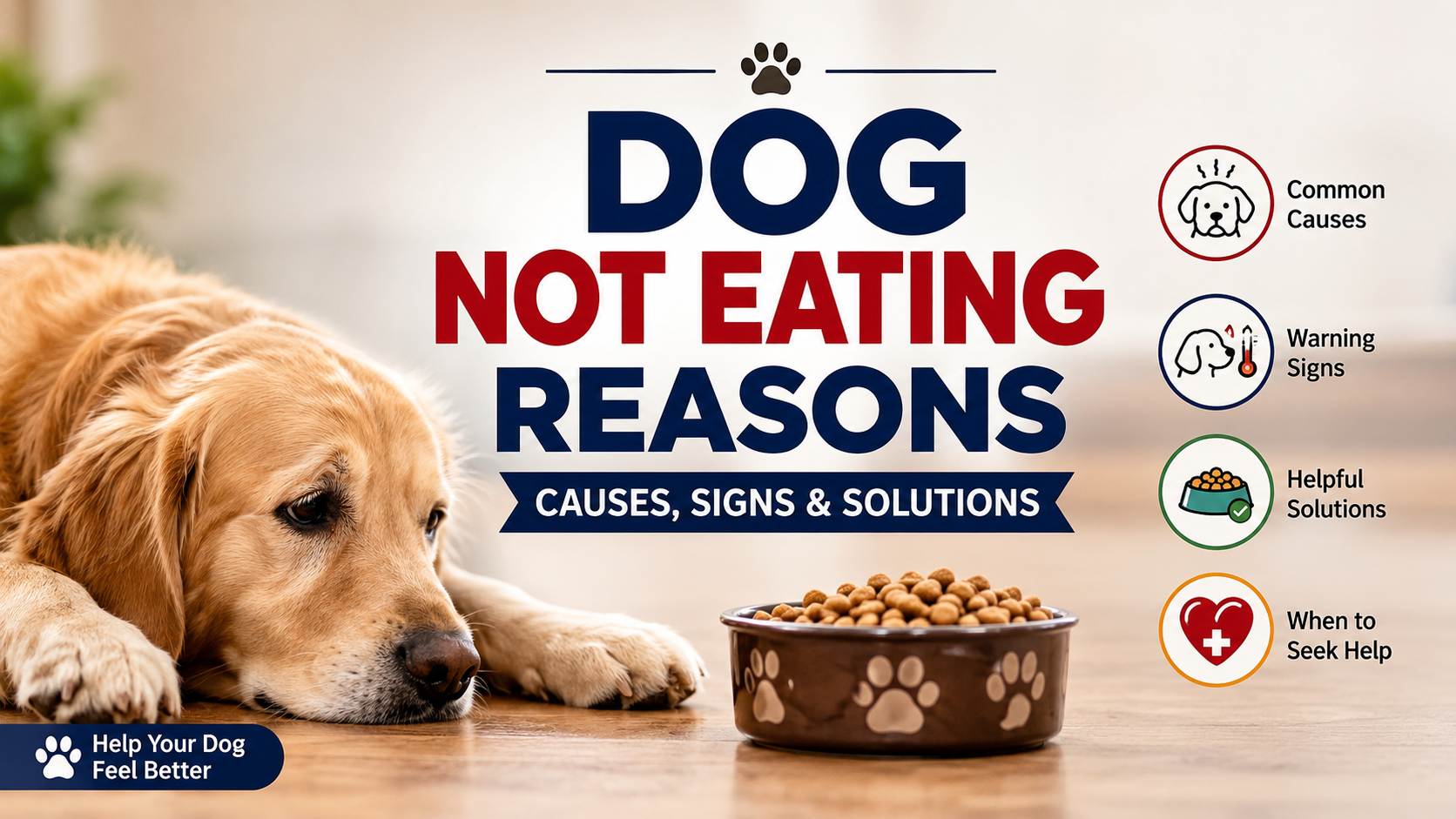
Dogs may stop eating because of stress, food changes, dental problems, stomach issues, illness, or changes in routine. Some dogs are simply picky eaters, while others may have a health concern. Watch for signs like weakness, vomiting, or refusing water, and contact a vet if the problem continues.
Reasons why dogs don’t eat: Why is your dog not eating?
Dogs are usually excited about food, so when a dog suddenly refuses to eat, it can be worrying for any pet owner. There can be several dog not eating reasons, ranging from minor temporary issues to more serious health problems.
Sometimes, a change in environment, stress, or a new diet can reduce a dog’s appetite. In other cases, underlying medical conditions, dental pain, digestive issues, or infections may be responsible. Even simple things like changes in routine, weather, or unfamiliar surroundings can affect a dog’s eating behavior.
Understanding the exact dog not eating reasons is important because it helps you decide whether the situation can be managed at home or needs veterinary attention. If your dog continues to refuse food for more than a day or shows other symptoms like vomiting, lethargy, or weight loss, it is best to consult a veterinarian immediately.
Why is my dog not eating?
There can be multiple reasons why a dog doesn’t eat. First, you need to notice whether the dog is just avoiding food or has also reduced its water intake.
Sometimes dogs can lose interest in food for a while due to new places, new people, or new routines. They may also stay away from food even if they are uncomfortable. It is important to observe your dog’s behavior, energy, interest in playing, and other changes.
My dog is not eating both food and water, what should I do?
If your dog is not drinking water along with food, it is important to take this into consideration. Not drinking water can lead to dehydration.
Note how long your dog has been without food or water. Also, see if he is walking normally, seems weak, or is behaving abnormally.
If the condition persists or your dog seems unwell, it is best to consult a veterinarian.
Physical reasons why dogs don’t eat
Sometimes dogs turn away from food due to a physical problem.
Mouth pain or dental problems
If there is pain in the teeth, gums, or inside the mouth, dogs may feel uncomfortable chewing food. Problems are especially common when eating hard foods.
Stomach problems
Even if the dog has an upset stomach, digestive problems, or discomfort, they may not want to eat.
Body pain
Many dogs lose interest in food if they have pain anywhere in the body. They may be quiet or not as active as before.
Illness
It is normal for appetite to decrease during various illnesses. It is also important to note whether there are other changes in the dog’s behavior.
Effects of medications
A dog’s appetite may change after taking some medications.
Behavioral reasons for dogs not eating food
Aversion to food is not always caused by physical problems. Sometimes it can also be due to psychological reasons.
Change in environment
A new home, new place, or changes in surroundings can make dogs uncomfortable.
Changing daily routines
Changes in mealtimes, walks, or household habits can also cause changes in some dogs’ eating habits.
Fear or stress of being alone
Many dogs can feel stressed when they are alone or separated for long periods of time. This can affect their eating habits.
Is your dog picky?
Some dogs naturally show a little preference when it comes to food. They may want to eat one type of food and avoid other foods.
Sometimes dogs understand that if they don’t eat, they will get some of their favorite foods later. Therefore, it is important to maintain proper eating habits and routines.
However, if they suddenly start not eating, it is not right to consider it just a picky eating habit. It is important to note whether there are any other changes in behavior.
The effect of giving extra food
Sometimes dogs don’t want to eat their main meal because they are getting a lot of other foods, treats, or extra food during the day.If their stomachs are full, their interest in food may naturally decrease. It is necessary to monitor the amount and timing of dog food so that they can maintain a regular eating habit.
Dogs not eating due to food problems
Sometimes dogs may be reluctant to eat due to food.
- Food becoming old or stale: Food that has been open for a long time may change its smell and taste. This may cause some dogs to avoid food.
- Expired food: Old or expired food may not be attractive to dogs.
- Food quality or change: Some dogs may not want to accept new food if the type of food changes suddenly.
What food can be given to a dog that is not eating?
Food should be selected based on the reason why the dog is not eating food. In some cases, making the food a little more attractive can make the dog interested. However, it is necessary to keep the dog’s health in mind before adding anything new.
How to make dog food more attractive?
Interest in food can be increased in some simple ways.
- Adding lukewarm water: Mixing a little lukewarm water with dry food can increase the smell.
- Warming up food a little: Warming up some foods a little can make them smell better, which can increase your dog’s interest.
- Mixing with familiar foods: In some cases, mixing new foods with familiar foods can make it easier to accept them.
Should you force feed a dog that won’t eat?
Force-feeding is not always a good idea if your dog doesn’t want to eat. Force-feeding can make your dog feel scared or uncomfortable. First, you need to try to understand why he’s avoiding food. If he doesn’t eat for a long time or shows signs of illness, you should seek medical advice.
When should you worry if your dog doesn’t eat?
In some situations, it may be necessary to take immediate action.
For example:
- Not eating for a long time
- Not drinking water
- Weak or unusual behavior
- Weight loss
- Pain or signs of illness
In such situations, it’s best to contact your veterinarian without waiting.
FAQs
Why is your dog’s stomach rumbling and not eating?
Stomach rumbling can sometimes be normal, and sometimes it can be related to digestive problems or discomfort. If it is accompanied by a lack of food, weakness, or any other changes, then the matter should be taken seriously.
Why is my dog not eating food but eating treats?
Some dogs only want to eat their favorite food or treats instead of their main meal. This can be related to food preferences, habits, or some other reason. It is important to observe whether the dog is avoiding regular food and relying only on treats.
Why is my dog not eating dry food?
Some dogs may not like the taste, smell or texture of dry food. Eating solid food can be uncomfortable, especially if they have dental problems.
Why is my dog not eating from a bowl but eating from my hand?
Some dogs may feel uncomfortable because of the bowl, location or feeding method.They may feel more comfortable taking food from a familiar person.
My dog is not eating but is behaving normally, what should I do?
If the dog is playing, moving normally and has no other problems, the cause may be temporary. However, it is necessary to keep an eye on the issue if it has not eaten for a long time.
How to feed a dog under stress?
Creating a calm environment for a dog under stress can help. Feeding at regular times and maintaining a familiar environment is often beneficial.
Why has my dog suddenly stopped eating?
There can be many reasons why a dog suddenly stops eating. This can be due to a new environment, a change in diet, stress, dental problems, stomach upset, or illness. It is also important to note any changes in the dog’s other behaviors.
How long should a dog not eat for?
A dog not eating once does not always indicate a major problem. However, if it does not eat food, does not drink water, becomes weak, or exhibits unusual behavior for a long time, it should be taken seriously.
Is the dog not eating food but drinking water, is this normal?
In some cases, this may be temporary. However, you need to understand why it is avoiding food. If it does not eat even after feeding it several times or if any other symptoms appear, it is best to consult a doctor.
Why does the dog only eat treats but not food?
Many dogs show more interest in their favorite foods or treats. If they get more treats regularly, their interest in the main food may decrease. It is important to maintain proper eating habits.
Can a dog stop eating if it has dental problems?
Yes. If there is pain in the teeth or gums, it may be difficult to eat, especially hard foods. Dogs may avoid food if they are uncomfortable while chewing.
What should I do if my dog doesn’t eat after giving him new food?
Many dogs don’t want to accept new food due to a sudden change in food. Some dogs can adapt more easily if you change it gradually. It is necessary to observe the dog’s reaction.
Is it okay to force-feed a dog?
Generally, force-feeding a dog if it doesn’t want to is not a good method. It can cause fear or discomfort. You should try to understand the reason for not eating food first.
Should you worry too much if your puppy doesn’t eat food?
Young puppies need regular food. So you need to keep an eye on it if they don’t eat food. It is better to seek expert advice if they don’t eat for a long time.
Why do older dogs eat less food?
As dogs age, their bodies change. Their appetite may decrease due to dental problems, discomfort, or age-related changes.
When should you go to the vet if your dog doesn’t eat food?
If a dog does not eat or drink water for a long time, becomes weak, loses weight, or shows signs of illness, veterinary advice should be sought immediately.
Final Thoughts: Understanding Why Your Dog Isn’t Eating
There can be many reasons for a dog not eating. Sometimes it can be a change in normal habits, and sometimes it can be an indication of a health problem.
Regularly monitor your dog’s eating habits, behavior, and body changes. Proper care is an important part of a pet’s well-being, which is an essential aspect of overall pet health care. If the lack of food is accompanied by signs of illness or the problem is prolonged, it is safest to consult a veterinarian.