

A pet is not just a member of the household, it is a beloved companion for many families. Small daily care, balanced diet, regular health checkups and a safe environment play an important role in keeping a pet healthy for a long time. There are many diseases that can be easily controlled if detected early. But ignoring the symptoms can make treatment difficult and expensive later.
Proper healthcare does not mean just going to the doctor when you are sick. Rather, taking preventive measures before you get sick is the most effective way. With regular monitoring, proper nutrition, vaccinations, cleanliness and mental well-being, a pet can live a healthy, active and happy life for many years.
This guide discusses every important aspect of pet health care in simply, so that both new and experienced pet owners can benefit in real life.
What is Pet Health Care?
Pet Health Care refers to all types of care that help maintain the physical, mental and behavioral well-being of a pet. This includes a balanced diet, clean water, regular health check-ups, vaccinations, parasite control, dental care, cleanliness, adequate exercise and ensuring a safe environment.
Many people think that animals only need treatment when they are sick. In fact, regular preventive care is the most effective healthcare. It reduces the risk of disease, reduces medical costs and improves the quality of life of the animal.
Why is regular health care important?
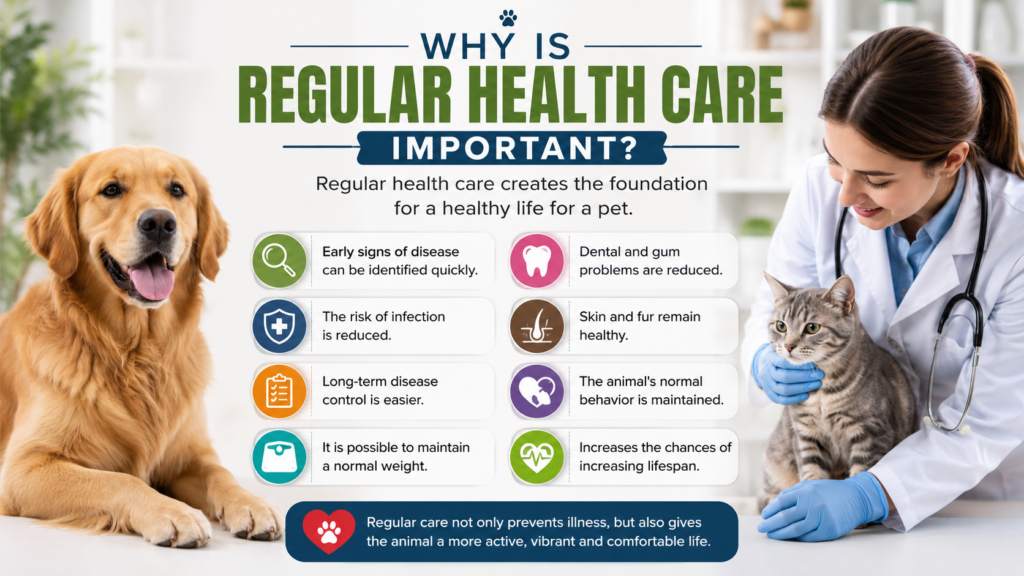
Regular health care creates the foundation for a healthy life for a pet.
Through this—
- Early signs of disease can be identified quickly.
- The risk of infection is reduced.
- Long-term disease control is easier.
- It is possible to maintain a normal weight.
- Dental and gum problems are reduced.
- Skin and fur remain healthy.
- The animal’s normal behavior is maintained.
- Increases the chances of increasing lifespan.
Regular care not only prevents illness, but also gives the animal a more active, vibrant and comfortable life.
Regular veterinary health check-ups
Even if it looks healthy from the outside, many diseases can silently grow inside the body. Therefore, regular health check-ups are very important.
A general health check-up usually looks at—
- Body weight
- Heart rate
- Respiration
- Body temperature
- Eyes
- Ears
- Mouth and teeth
- Skin
- Hair
- Joints
- Stomach
- Lymph nodes
If necessary, blood tests, stool tests or other tests may also be done. It is beneficial to have health checks at least once a year for young animals and more frequently for older animals.
Importance of vaccination
Vaccination protects against many life-threatening infectious diseases. Vaccination not only protects an animal, but also indirectly protects other animals around it.
The vaccination schedule may vary depending on the animal’s—
- Age
- Breed
- Lifestyle
- Location
- Health status
Even after vaccination, booster doses are often required after a certain period of time. Therefore, it is important to keep a record of vaccinations.
Parasite Prevention
Parasites, both internal and external, can be harmful to an animal’s health.
Common parasites include—
- Lice
- Fleas
- Ticks
- Worms
Parasites can cause—
- Itching
- Hair loss
- Skin infections
- Anemia
- Weight loss
- Digestive problems
Regular preventive measures can significantly reduce the risk of these problems.
Proper nutrition and diet plan
Food is the foundation of a pet’s health. Food should be selected according to the animal’s age, size, weight, physical activity, and special health needs.
A balanced diet usually contains—
- Protein
- Healthy fats
- Vitamins
- Minerals
- Adequate energy
- Essential fiber
It is better to gradually introduce new foods to your pet rather than changing their diet abruptly. Overfeeding or overfeeding can be one of the reasons for weight gain. In addition, not all human foods are safe for pets. Therefore, it is important to make sure that any new food is safe before giving it to them.
The Importance of Clean Water
Like food, clean water is an essential part of a pet’s daily life. Adequate water plays an important role in regulating body temperature, digestion, transporting nutrients, and eliminating waste. Not getting enough water can lead to dehydration, which can affect the normal functioning of the kidneys, urinary tract, and other organs.
Pet water bowls should be cleaned daily and fresh water should always be provided. Water requirements usually increase during hot weather. If an animal suddenly starts drinking very little water or unusually much water, then the matter should be monitored carefully.
Why weight control is important
Excess weight is harmful, but abnormally low weight can also be an indication of various health problems. Maintaining the right weight reduces unnecessary stress on the body’s organs and allows the animal to move easily.
Problems that can occur due to excess weight—
- Joint pain
- Difficulty in walking
- Excessive stress on the heart
- Increased risk of mn diabetes
- Shortness of breathLess active lifestyle
On the other hand, sudden weight loss can often be a sign of an underlying disease. Therefore, it is a good practice to measure weight regularly and observe changes.
Mental care
If oral health is not good, it can affect the entire body. Problems with teeth and gums are often not noticeable at first. Gradually, dirt accumulates on the teeth, bad breath develops, and inflammation of the gums can occur.
Important things in dental care—
- Regular teeth cleaning
- Noticing changes in the mouth
- Not allowing hard or harmful objects to be chewed
- Get a quick checkup if there are problems with the teeth and gums
If the animal has difficulty eating, shows signs of pain in the mouth, or has a strong odor from the mouth, then you should consult a doctor without delay.
Exercise and daily physical activity
Regular daily physical activity is important not only for the body, but also for mental health.
Benefits of regular exercise—
- Helps control weight
- Keeps muscles and bones strong
- Excess energy is used properly
- Reduces boredom
- Helps reduce anxiety
- Helps maintain normal behavior
The type of exercise may vary according to the age, physical ability, and species of the animal. Regular and moderate activity is more beneficial than excessive exercise.
The importance of mental health
Along with physical health, mental health is equally important. Being alone for a long time, being in a monotonous environment, or not getting enough mental stimulation can cause changes in the behavior of many animals.
Things that can be done to keep them mentally active—
- Playing for a while every dayUsing new toys
- Spending time with family members
- Easy learning activities
- Opportunities to explore in a safe environment
Mentally healthy animals usually display more confident, calm, and social behavior.
Cleanliness and grooming
Cleanliness is not only important for beauty, but also for health.
With regular grooming—
- Dead hair is removed
- The skin remains clean
- Tangling is reduced
- Skin problems can be identified quickly
- External parasites are easily visible
During grooming, the ears, eyes, nails, and the bottom of the feet should also be checked. If any unusual lumps, lesions, or skin changes are noticed during care, it is important to take them seriously.
Skin and coat care
Healthy skin and shiny coat are important indicators of an animal’s overall health.
Symptoms that should not be ignored—
- Excessive itching
- Hair loss
- Redness of the skin
- WoundsScaling
- Bad odor
- Unusual lumps
These symptoms may indicate allergies, infections, parasites, or other problems. Therefore, treatment should be sought if the problem persists for a long time.
Early signs of common health problems
Many diseases begin with small changes. If these are identified quickly, treatment is also easier.
Changes to watch out for—
- Loss of appetite
- Unusual fatigue
- Repeated vomiting
- Diarrhea
- Constipation
- Coughing
- Difficulty breathing
- Excessive drinking
- Change in urination habits
- Sudden changes in behavior
- Unusual weight loss or gain
If these symptoms persist for more than a few days, a health check-up should be done immediately.
When to see a veterinarian quickly
In some situations, it is important to seek treatment as soon as possible without waiting. Taking quick action can avoid many complications and increase the chances of the animal recovering.
Contact your veterinarian immediately if you notice any of the following symptoms—
- Severe difficulty breathing
- Repeated vomiting or severe diarrhea
- Fainting
- Seizures
- Severe bruising or excessive bleeding
- Suspected ingestion of a toxic substance
- Prolonged difficulty urinating or defecating
- Extreme weakness
- Sudden inability to stand or walk
Signs of severe painIn such cases, it is safest to seek professional medical attention immediately rather than attempting home treatment.
Home Health Care
It is beneficial for every pet owner to have some basic health care knowledge. However, it should be remembered that home health care is never a substitute for full medical care.
Things you can do at home—
- Ensure a clean and comfortable resting place
- Keep fresh water available at all times
- Monitor food and behavior daily
- Keep minor wounds clean
- Monitor weight regularly
- Keep health records
- Do not give your pet medications made for humans on your own.
This may increase the risk of harm rather than benefit.
Age-Based Health Care Plan
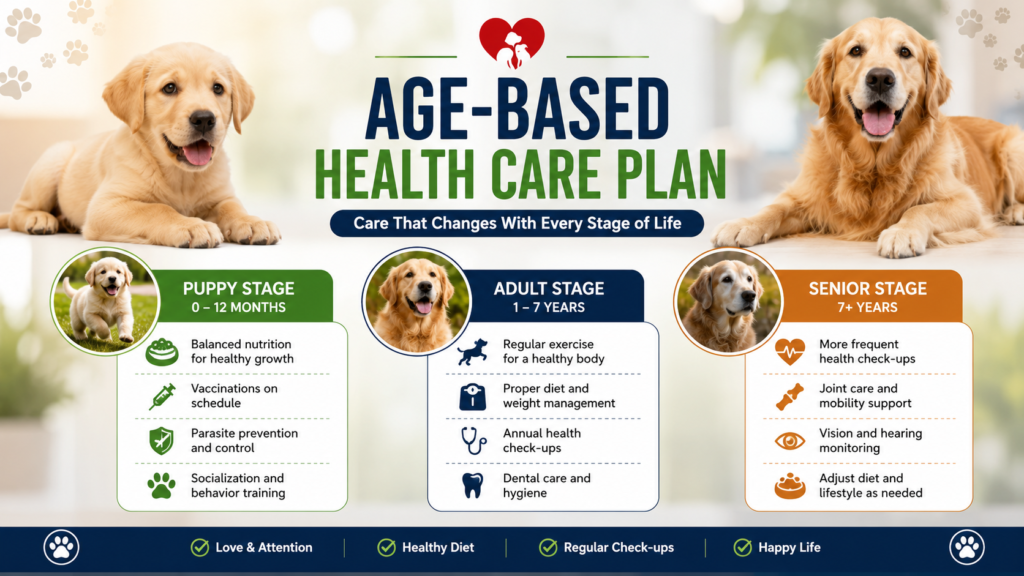
As a pet ages, its care needs also change.
Puppy Stage
The body grows rapidly during this time. Therefore, it is important to provide a balanced diet, schedule vaccinations, parasite control, and teach social behavior.
Adult Stage
Regular exercise, proper diet, weight control, and annual health check-ups are especially important to maintain good health during this time.
Senior Stage
As you get older, your risk of joint problems, vision or hearing loss, and long-term diseases may increase. Therefore, more frequent health checkups and lifestyle changes are necessary.
Seasonal health care
With the change of seasons, some changes in pet care are also necessary.
Summer time
- Provide adequate water.
- Ensure a shady and cool environment.
- It is better to avoid spending too much time outdoors during extreme heat.Watch for signs of dehydration.
Winter time
- Provide warm and dry rest.
- Take extra care of older animals.
- It is better to avoid spending too much time outdoors in the cold.
During the rainy season
- Keep the body and fur dry.
- Monitor for signs of skin infections.
- Be aware of the risk of parasites.
Keeping the house safe
A safe environment plays an important role in preventing accidents.
Things to be careful of—
- Poisonous plants
- Cleaning chemicals
- Sharp objects
- Small toys or objects that can be swallowed
- Electrical wires
- Open balconies or windows
Also, the place where food is stored should be such that the animal cannot reach it on its own.
Importance of Keeping Health Records
A well-organized health record can be an important aid in future treatment.
Information that is good to keep in the record—
- Vaccination date
- Health checkup date
- Weight change
- Medication used
- Allergy information
- History of previous diseases
- Surgery information
This information helps the doctor to make quick decisions.
Common mistakes that should be avoided
Many times, some mistakes can be harmful to the health of the pet without knowing it.
Avoid—
- Overfeeding
- Skipping regular health checkups
- Ignoring the vaccination schedule
- Not taking care of the teeth
- Not giving enough exercise
- Giving medication on your own decision
- Not giving importance to behavioral changes
- Not giving enough clean water
These small mistakes can cause big problems in the long run.
Daily habits for a healthy life
A few simple daily habits can make a big difference in the long run.
- Feed at regular times.
- Change clean water daily.
- Monitor the body, eyes, ears, and skin.
- Keep regular exercise time.
- Maintain cleanliness.
- Take immediate action if you notice any unusual changes.
Regular care is the strongest foundation for a pet’s healthy, safe, and long life.
FAQs
What is Pet Health Care?
Pet Health Care refers to the integrated process of ensuring regular health checks, balanced diet, clean water, vaccinations, parasite control, dental care, exercise, cleanliness, and a safe environment to maintain the health of pets.
How many times a year should a health check be done?
Generally, it is best for healthy adult pets to have a health check at least once a year. More frequent checks may be necessary for puppies, seniors, or animals with long-term health problems.
Do all pets need vaccinations?
Vaccination requirements depend on the type of animal, age, lifestyle, and location. It is safest to consult a veterinarian about the appropriate schedule.
Why is excess weight harmful?
Excess weight increases stress on joints, makes it difficult to move, and can increase the risk of various health problems in the long term. Therefore, a balanced diet and regular physical activity are important.
How important is dental care?
Oral health is related to the health of the whole body. Regular dental care can reduce bad breath, gingivitis, and other dental problems.
What to do if your pet is not drinking enough water?
First, make sure that clean, fresh water is always available. If your pet refuses to drink water for a long time or shows any other unusual symptoms, you should consult a veterinarian.
Is it a cause for concern if behavior changes suddenly?
Yes. Sudden behavioral changes can often be a sign of physical illness, pain, or stress. If the change lasts for a few days, it is a good idea to get a health checkup.
Why is daily exercise necessary?
Regular exercise keeps the body active, helps control weight, reduces stress, and helps maintain normal behavior.
Are all types of human food safe for pets?
No. Many human foods are not suitable for pets. Therefore, it is important to ensure that any new food is safe before introducing it.
What is the most effective way to keep it healthy in the long term?
Regular health checkups, a balanced diet, clean water, adequate exercise, vaccinations, parasite prevention, cleanliness, and daily observation of the animal’s behavior—these practices combine to form the foundation for long-term well-being.
Pet Health Care Conclusion: Healthy Pets, Happy Life
A pet’s healthy life is not built on a single day of care. Daily routines, proper food selection, adequate clean water, physical and mental care, cleanliness, vaccinations, and timely health check-ups all combine to create a complete health plan.
Each animal’s age, physical condition, lifestyle, and needs may be different. Therefore, the same rules may not apply to everyone. Be aware of your pet’s normal behavior and monitor any unusual changes carefully.
The most effective way to ensure good health in the long term is to make preventive care a part of your daily life. With regular monitoring, responsible care, and professional advice when needed, your pet can enjoy a healthier, more active, and happier life.