

Straw bedding is dry straw that is used to keep animals’ bedding dry, clean, and comfortable. Usually, the dry stalks left over after harvesting wheat, barley, or oats are used as bedding material. Straw is used as livestock bedding on many farms because it is readily available and provides good comfort at a relatively low cost. This bedding is quite popular in shelters for cows, horses, goats, sheep, and chickens.
Straw is even more effective as winter animal bedding in winter. It reduces exposure to cold ground and helps increase animal comfort.
Good straw bedding usually:
- Is dry
- Creates less dust
- Can absorb some moisture
- Helps maintain good barn hygiene
Wheat straw bedding is widely used in many dairy farms and horse stables because it is easy to spread and makes it easy to create a thick bedding layer.
Benefits of Using Straw Bedding
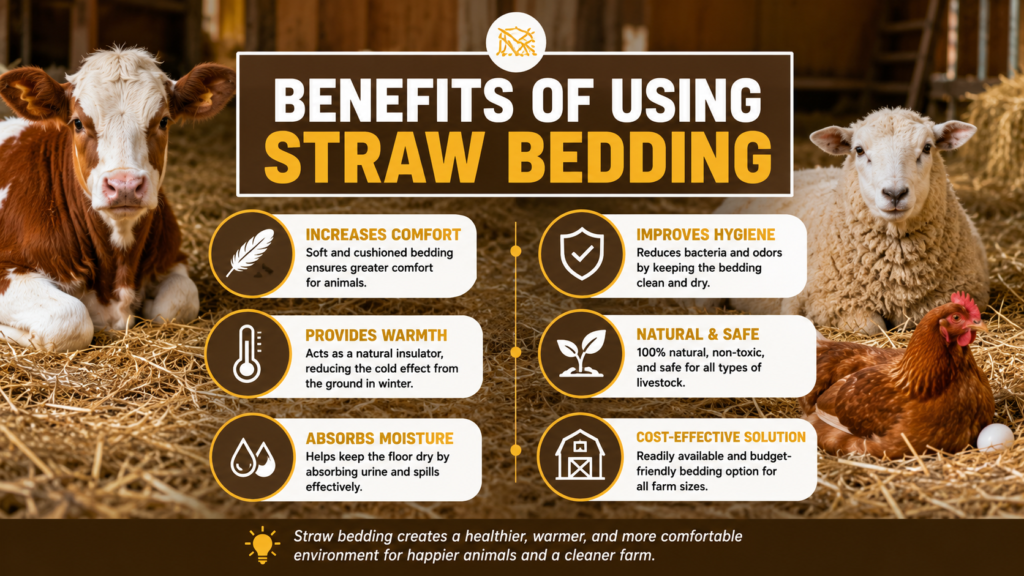
Straw bedding is not only used to soften the animal’s bedding, it also helps to maintain a good environment for the entire farm. Straw is still the most popular natural bedding solution in many small and large farm bedding systems.When used correctly, it increases animal comfort, reduces cold and helps to keep the floor relatively dry.
One of the biggest benefits is that it is very effective as winter animal bedding. During winter, the cold of the ground can directly affect the animal’s body. Straw reduces that cold to some extent.
Many farmers use straw as livestock bedding because:
It is easily available
It costs relatively low
The bedding layer is soft
It helps to maintain farm hygiene
It can be made into compost
It can be used as eco-friendly bedding
Good absorbent bedding makes moisture control easier. It reduces odor and improves barn hygiene.Straw is quite popular in both horse bedding and cattle bedding. Barley straw bedding is often used to make dry bedding for dairy cows, especially in dairy farms.
Straw is also used as poultry bedding in poultry farms. However, regular bedding maintenance is very important there. Because wet bedding can quickly cause bad odor and bacteria to form. In many real farm setups, it is seen that animals rest more comfortably if clean and dry bedding is used. This causes less stress and the shelter remains relatively clean.
Types of Straw Used for Animal Bedding
Not all types of straw are created equal. Some straw is softer, some can absorb more moisture, and some straw provides more comfort during the winter. Therefore, it is important to consider the type of animal and the farm environment when choosing bedding material.Many farmers simply use straw that is readily available. But choosing the right livestock bedding can improve both animal comfort and barn hygiene.
Wheat Straw
Wheat straw bedding is one of the most commonly used types. It is relatively dry, light, and easy to spread.Wheat straw is used in many horse bedding and cattle bedding setups because it helps create a thick bedding layer.
Advantages of Wheat Straw
- Readily available
- Relatively low cost
- Helps retain heat in winter
- Farm bedding is easy to clean
- Good as cheap bedding for livestoc
Wheat straw is used to make dry bedding for cows on many dairy farms. It is also popular in horse stables because it provides a relatively soft place for horses to stand and lie down.
Barley Straw
Barley straw is known as a relatively soft type of bedding. Sometimes it also works well as absorbent bedding. Barley straw bedding is especially popular in cattle bedding setups.
Advantages of Barley Straw
- Absorbs moisture somewhat well
- Used as winter animal bedding
- Helps increase animal comfort
- The bedding layer is soft
However, some barley straw may contain more dust. Therefore, it is important to check whether it is dry and clean before using it. Many farmers perform regular bedding maintenance to maintain barn hygiene, especially when using barley straw.
Straw vs Hay for Animal Bedding
Many people think that straw and hay are the same thing. But in fact, the two have different functions. Hay is usually used as animal feed, and straw is more commonly used as bedding material.
Straw is basically dry stalks, which have very low nutritional value. On the other hand, hay is dry grass or plants, which are stored for animals to eat.Straw is more popular as livestock bedding because it is relatively dry and is convenient to create a thick bedding layer.
| Topic | Straw | Hay |
| Main Uses | Bedding | Animal Feed |
| Texture | Dry and Hard | Soft |
| Nutritional Value | Low | High |
| Moisture Control | Good | Average |
| Price | Comparative Less | Comparative More |
In many farm bedding setups, when hay is used, the animals start eating the bedding. This causes the bedding to deteriorate quickly and makes it difficult to maintain barn hygiene.On the other hand, wheat straw bedding stays dry for a relatively long time and helps to maintain animal comfort.
Straw is widely used in both horse bedding and cattle bedding. Because it is also effective as winter animal bedding in winter.
However, when choosing bedding, you should always keep in mind:
- The straw should be dry
- There should be no mold
- There should be less dustThere should be no moisture accumulation
Using good absorbent bedding makes it much easier to maintain farm cleanliness.
Advantages and Disadvantages of Straw Bedding
Straw bedding is very effective in many farms, but it has some advantages and some limitations. Therefore, it is important to know both the pros and cons before using it as livestock bedding.
Straw is popular in many farm bedding systems because it is easily available and helps increase animal comfort. However, if bedding maintenance is not done regularly, some problems can arise.
Advantages of Straw Bedding
- Available at low cost: Straw is usually easily available in rural areas. Therefore, it is quite popular as a cheap bedding for livestock.
- Provides warmth in winter: Straw works well as winter animal bedding. It makes the ground feel a little less cold.
- Increases Animal Comfort: A soft bedding layer allows animals to sleep comfortably. This is especially important in horse bedding and cattle bedding setups.
- Eco Friendly Bedding: Used straw can later be used as compost. Therefore, many farmers prefer it as an eco friendly bedding solution.
- Absorbs some moisture: Good absorbent bedding keeps the shelter relatively dry and makes it easier to maintain barn hygiene.
Disadvantages of Straw Bedding
- Can get wet quickly: If not cleaned regularly, moisture accumulates in the bedding and creates a bad odor.
- Dust can be a problem: Low-quality straw often contains more dust, which can cause respiratory problems.
- Risk of mold: Fungus can form on wet or improperly stored straw.
- May attract pests: Insects can multiply if bedding is not changed for a long time.
| Advantages | Disadvantages |
| Low cost | Gets wet quickly |
| Provides warmth | May cause dust |
| May increase animal comfort | May cause mold |
| Can be composted | Cannot be cleaned regularly |
As seen in many dairy farm and poultry bedding setups, farm cleanliness is much better if bedding is used correctly. But if cleanliness is not maintained properly, the same bedding can quickly become a cause of problems.
Best Animals for Straw Bedding
Not all animals are always suitable for the same type of bedding. Some animals need soft bedding, while others need moisture control. So it is important to know which type of bedding works best for a given animal.
Straw is used in many farm bedding setups because it helps increase animal comfort and keeps the shelter relatively dry.
Horses
Straw is a very old and popular method of horse bedding. Horses usually stand for a long time, so soft and dry bedding is very important for them.
Wheat straw bedding is used in many horse stables because it helps create a thick bedding layer.
Why is Straw Bedding Good for Horses?
- Reduces body stress
- Keeps stable flooring soft
- Provides warmth in winter
- Increases animal comfort
- Helps keep the shelter dry
It is especially important to use clean and dust-free straw to create safe bedding for horses.
Cattle
Straw is widely used as cattle bedding, especially in dairy farms. If cows spend a lot of time in wet areas, hoof and skin problems can occur. Therefore, it is important to make dry bedding for dairy cows.
Benefits of Straw Bedding for Cows
- Helps keep the floor dry
- Improves barn hygiene
- Provides comfort in winter
- Livestock bedding is more comfortable
Poultry
Straw is also used as poultry bedding in poultry farms. However, regular bedding maintenance is very important here. Wet bedding can quickly produce ammonia and bad odor.
- Be careful when using Poultry Bedding
- Wet parts should be removed quickly
- Ventilation should be good
- Clean bedding should be used
In many poultry farms, soft dry straw is used to keep the shelter relatively clean.
Small Animals
Small animals such as:
- Rabbits
- Goats
- Sheep
Straw bedding is also used in their shelters.
Straw helps keep small animal shelters warm, especially as winter animal bedding. Oat straw is often used for small animals because it provides a relatively soft bedding feel.
Benefits for Small Animals
- Provides a soft sleeping surface
- Less coldKeeps the shelter dry
- Increases animal comfort
How to Choose the Right Straw Bedding
When choosing good straw bedding, always make sure that the straw is dry, clean, and low in dust. Using wet or musty-smelling straw can compromise animal comfort and can lead to poor barn hygiene.
The type of straw is also important when using it as livestock bedding—for example, wheat straw bedding generally works well for horse bedding and cattle bedding.
Always choose bedding material that:
- Absorbs moisture easily
- Stays clean and dry
- Creates less dust
- Can be easily changed
Choosing the right straw in this way makes farm bedding more healthy and comfortable.
Cleaning and Maintenance Tips
Regular cleaning is very important to keep straw bedding in good condition. Removing wet or dirty areas daily will help maintain barn hygiene and reduce odors.
Adding or changing new straw once a week as needed will help keep livestock bedding more comfortable. This is especially important for cattle bedding and poultry bedding.
Common Bedding Problems
Some common problems can arise when using straw bedding. If not managed properly, both animal comfort and farm hygiene can be compromised.
Mold and Dust
Wet or improperly stored straw can grow mold. On the other hand, excessive dust from poor quality straw can increase the risk of respiratory problems.
Moisture Issues
If bedding gets too wet, it can create odors, bacteria, and an unhealthy environment. Therefore, it is important to use absorbent bedding and clean it regularly.
Pest Problems
If bedding is not cleaned for a long time, insects or rodents can appear in the bedding. Regular cleaning and changing will reduce this problem.
Buying Guide for Straw Bedding
When buying good straw bedding, you must choose dry, clean and low-dust straw.
Before buying, keep in mind:
- Straw should not be wet
- Smell should be normal
- Dust should be low
- Bedding layers can be easily created
If you choose the right bedding material, farm bedding will last longer and animal comfort will increase.
FAQs: straw for animal bedding
Does straw bedding need to be cleaned daily?
Yes, wet and dirty parts should be removed daily. This maintains barn hygiene, reduces odors, and prevents bacteria from growing. Regular cleaning improves animal comfort and makes the bedding usable for a long time.
Which straw is best?
Wheat straw is usually used the most because it is easily available, soft, and relatively clean. It works well for horse bedding and cattle bedding. However, barley or oat straw can also be used depending on the type of animal.
Is straw damaged when wet?
Yes, straw deteriorates quickly when wet and mold and odors can form. This increases the health risk to the animal. Therefore, it is very important to remove wet parts quickly and add new dry straw.
Can straw be used in poultry?
Yes, straw can be used as poultry bedding. However, it must always be kept dry and clean. When wet, ammonia can be produced, which can cause respiratory problems for birds and worsen farm hygiene.
Is straw eco-friendly?
Yes, straw is an eco-friendly bedding because it is a natural material and can be easily composted after use. It is safe for the environment and can be used to make organic fertilizer in agriculture.
Choosing the Right Straw Bedding for Better Care
Choosing the right bedding is very important for the health and comfort of the animal. Using dry and clean straw makes livestock bedding much more effective. Regular cleaning and bedding maintenance reduces odor, moisture and the risk of illness. Proper straw bedding goes a long way in improving farm hygiene.