

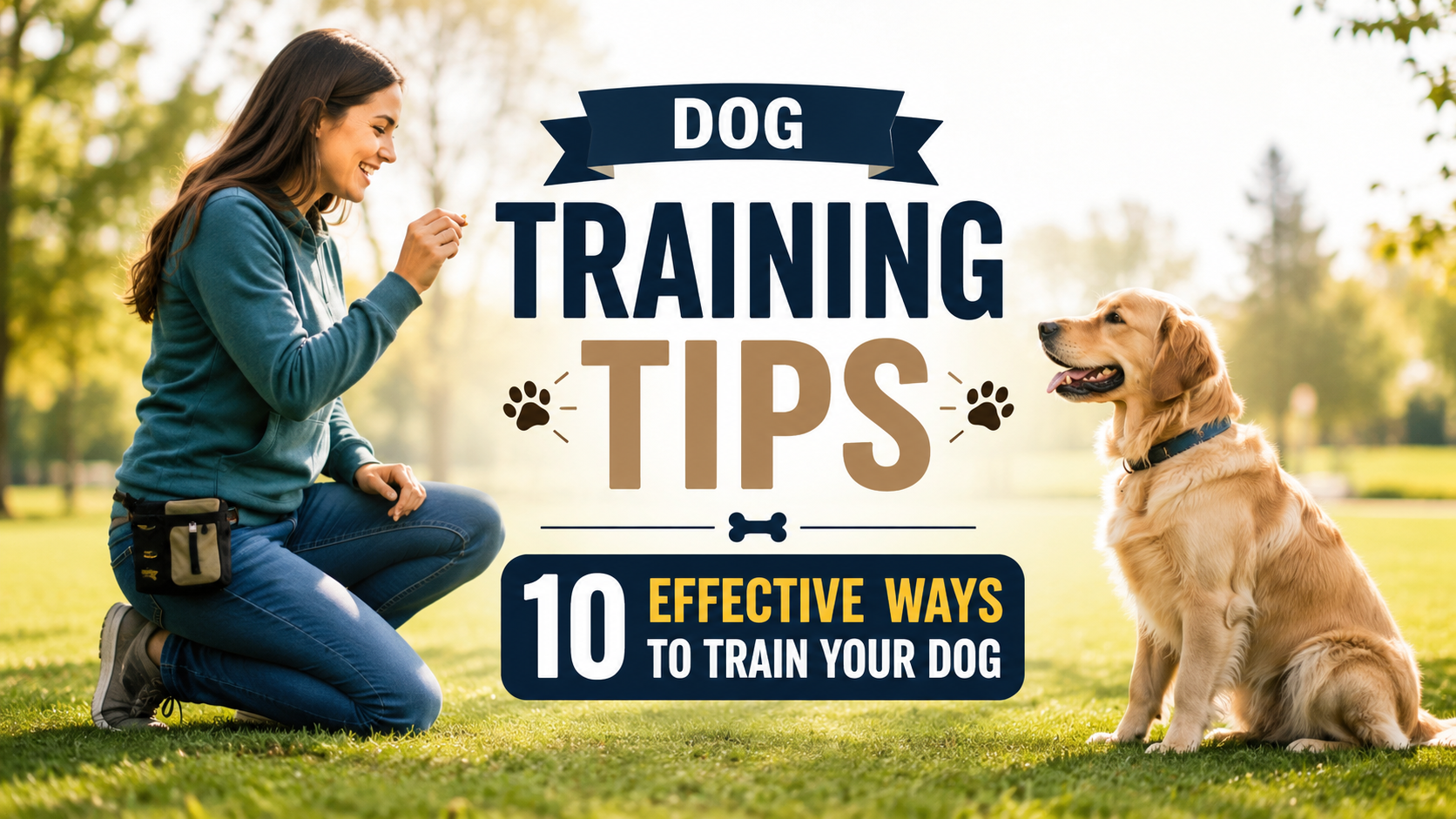
Training your dog is an important part of building a strong relationship and creating a happy, well-behaved companion. Whether you have a new puppy or an older dog, the right approach can make learning easier and more enjoyable.
Good training is not only about teaching commands. It also helps your dog understand expectations, develop confidence, and communicate better with you. Here are some practical dog training tips that can make the process smoother.

1. Use Positive Reinforcement Techniques
Positive reinforcement is one of the most effective ways to train a dog. Instead of focusing on mistakes, reward the behaviors you want your dog to repeat.
When your dog follows a command, stays calm, or shows good behavior, offer encouragement through treats, praise, play, or affection. This helps your dog connect good actions with positive results.
Avoid harsh reactions during training because fear and stress can make learning more difficult. A supportive approach helps create trust between you and your dog.
2. Find the Right Reward
Every dog responds differently to rewards. Some dogs are highly motivated by treats, while others may prefer toys, attention, or verbal praise.
Finding what excites your dog can make training sessions more successful. Use rewards that your dog values and offer them immediately after the correct behavior.
Over time, your dog will begin to understand which actions lead to positive outcomes.
3. Consistency Is Key
Dogs learn best when rules and expectations stay consistent. If a behavior is allowed one day but discouraged the next, your dog may become confused.
Use the same commands, signals, and responses every time. Make sure everyone in the household follows the same training approach.
Consistent practice helps your dog understand what you expect and builds stronger habits.
4. Train Little and Often
Short training sessions are usually more effective than long sessions. Dogs can lose focus if training continues for too long.
A few minutes of practice several times a day can help your dog learn faster while keeping training enjoyable.
Regular repetition helps reinforce commands and prevents your dog from feeling overwhelmed.
5. Build Up in Stages
Training works best when you introduce skills gradually. Start with simple steps before expecting your dog to perform in difficult situations.
For example, practice a command in a quiet area first. Once your dog understands it, slowly add distractions or new environments.
Breaking training into smaller steps makes learning easier and helps your dog succeed.
6. Make It Fun
Dogs learn better when training feels enjoyable. Keeping sessions positive can increase your dog’s interest and motivation. Using positive reinforcement training techniques can help encourage good behavior through rewards and encouragement.
Use games, praise, and playful interactions to make training something your dog looks forward to. Fun activities and can make learning easier while helping your dog build confidence.
A fun training experience can strengthen your bond with your dog and encourage your pet to participate more actively during daily practice.
7. Praise the Small Things
Progress often happens through small improvements. Rewarding little successes can encourage your dog to continue learning.
Even simple behaviors, like paying attention or responding correctly, deserve recognition.
Celebrating small steps helps build confidence and keeps your dog motivated.
8. Work Training Into Daily Life
Training does not have to happen only during planned sessions. Everyday activities can become opportunities for practice.
You can reinforce good manners during walks, mealtimes, playtime, or regular routines.
When training becomes part of daily life, your dog gets more chances to practice and improve.
9. Use Your Hands
Body language and physical signals can help dogs understand what you want. Dogs naturally pay attention to movement and gestures.
Using clear hand signals along with verbal commands can make communication easier.
Over time, your dog can learn to respond to both spoken cues and visual signals.
10. Consult a Dog Trainer or Attend a Training Class
Sometimes professional guidance can make training easier, especially when dealing with specific challenges.
A qualified dog trainer can provide support, demonstrate techniques, and help you understand your dog’s behavior.
Training classes can also give your dog opportunities to practice around other people and animals in a controlled environment.
Frequently Asked Questions About Dog Training
When should I start training my dog?
You can start training your dog as soon as they come home. Early training helps build good habits and teaches your dog how to respond to commands and daily routines.
What is the best way to train a dog?
Positive reinforcement is one of the most effective training methods. Rewarding good behavior with treats, praise, toys, or affection encourages your dog to repeat those actions.
How long should a dog training session be?
Short and regular training sessions are usually better than long sessions. A few minutes of practice at a time can help your dog stay focused and interested.
How often should I train my dog?
Daily practice is helpful for building consistency. Regular repetition allows your dog to understand commands and develop stronger habits.
Why is my dog not responding to commands?
Dogs may struggle with commands because they are distracted, confused, or need more practice. Using clear instructions and consistent training can improve their response.
Should I punish my dog during training?
Punishment-based methods can create fear and confusion. A positive approach that rewards desired behavior is generally more effective for learning.
What rewards work best for dog training?
The best reward depends on your dog. Some dogs prefer treats, while others respond better to toys, play, praise, or attention.
Can older dogs still be trained?
Yes, older dogs can learn new behaviors. Training may require patience and repetition, but dogs can continue learning throughout their lives.
How can I make dog training more enjoyable?
Keep training positive by using rewards, games, encouragement, and activities your dog enjoys. Fun sessions can improve motivation and learning.
Do I need a professional dog trainer?
A professional trainer can be helpful if you need guidance or want support with specific training challenges. Training classes can also provide structured learning opportunities.
Conclusion
Effective dog training requires patience, consistency, and a positive approach. Every dog learns at a different pace, so focusing on encouragement and regular practice can lead to better results.
With the right training methods, you can help your dog develop good habits while creating a stronger and more trusting relationship.