

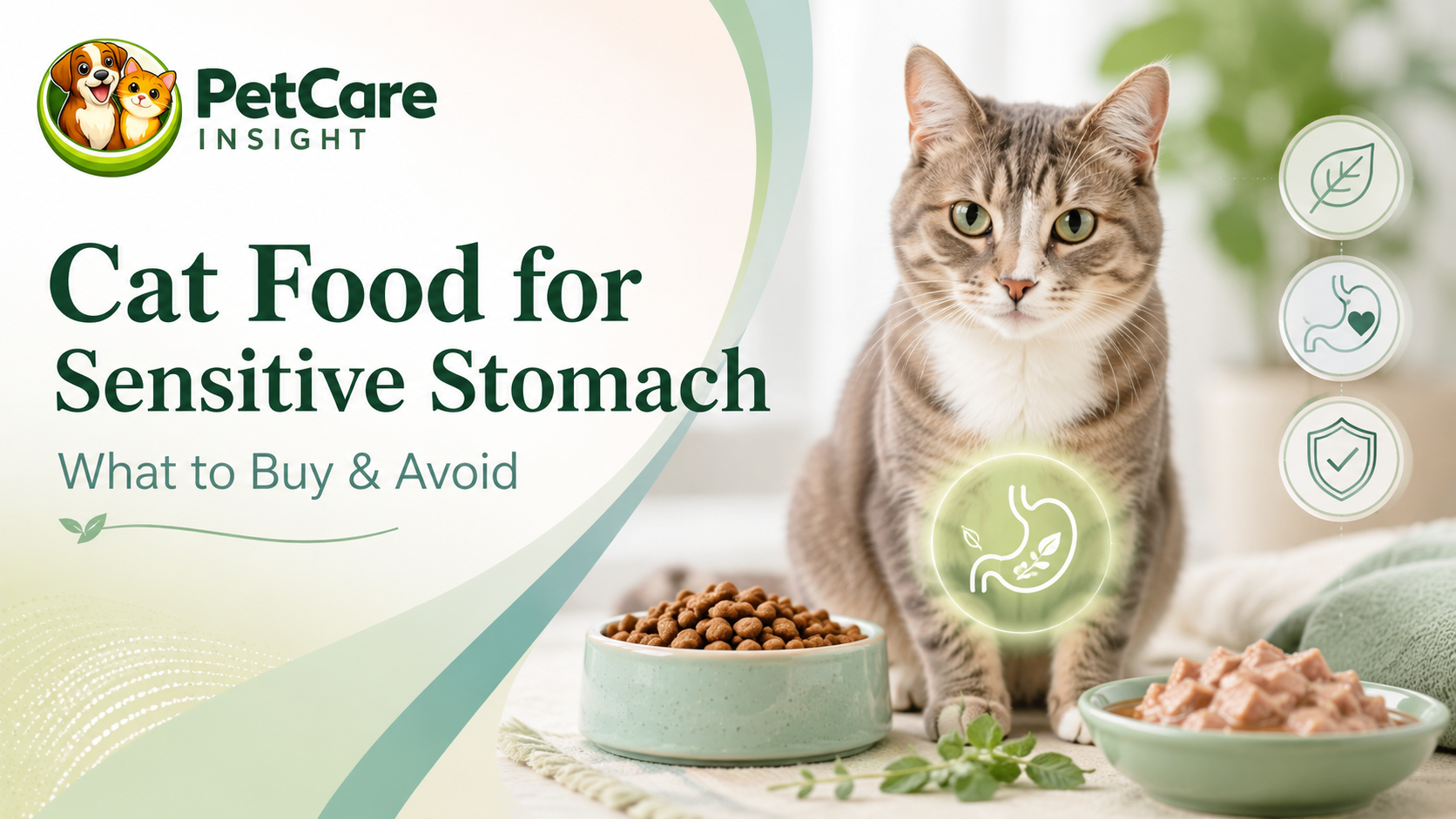
Some cats seem to react badly to certain foods. They may vomit after meals, get soft stools, refuse food, or struggle with gas and bloating. Sometimes the cause is simple, like a sudden food change. Other times, it may be linked to food intolerance, allergies, hairballs, eating too fast, or an underlying health problem.
The best cat food for sensitive stomach problems is not always the most expensive one. A good choice should be complete, balanced, easy to digest, suitable for your cat’s age, and gentle enough for daily feeding.
This guide explains what to buy, what to avoid, wet vs dry options, product types to compare, and when your cat should see a vet.
Signs Your Cat May Have a Sensitive Stomach
A cat with a sensitive stomach may show one or more of these signs:
- vomiting after meals
- soft stool or diarrhoea
- gas or bloating
- poor appetite
- frequent hairballs
- weight loss
- itchy skin with digestive upset
- food refusal after a diet change
Occasional vomiting can happen, but frequent vomiting is not normal. If your cat vomits often, has diarrhoea, loses weight, becomes weak, or stops eating, a vet check is important.
What to Buy
When choosing cat food for sensitive stomach issues, start with the label. The food should be complete and balanced for your cat’s life stage, whether adult, kitten, or senior.
Look for a recipe with a clear animal protein, moderate fat, digestible ingredients, and added support such as fibre, prebiotics, or omega fatty acids. For some cats, a limited ingredient cat food may also help because it keeps the recipe simpler.
Good signs to look for:
- complete and balanced label
- named animal protein
- simple ingredient list
- moderate fat level
- fibre or prebiotics
- omega fatty acids
- wet food option for extra moisture
- clear feeding guide
A simple food your cat digests well is usually better than a complicated recipe with too many ingredients.
What to Avoid
Sensitive cats often do better with consistency. Changing flavours or brands too often can make stomach issues worse.
Be careful with:
- sudden food changes
- very rich or fatty foods
- too many treats
- artificial colours
- added sugar
- unclear meat sources
- milk or dairy treats
- foods not suitable for your cat’s age
- using adult food for kittens
Do not switch food every few days. Give your cat time to adjust unless the food is clearly making symptoms worse.
Best Cat Food Types for Sensitive Stomach
Some cats do better on wet food, some do better on dry food, and some need a special diet from a vet. Here, you can read sensitive stomach cat food guide.
| Food Type | Best For | Watch Out |
| Sensitive stomach dry food | Easy feeding and measured portions | Lower moisture |
| Sensitive stomach wet food | Cats needing more moisture or softer texture | Usually costs more |
| Limited ingredient cat food | Cats that may react to many ingredients | Not always enough for true allergies |
| Hypoallergenic cat food | Suspected food allergy cases | Vet guidance may be needed |
| Hydrolysed protein diet | Strong allergy or sensitivity cases | Usually prescription only |
For mild cases, a sensitive digestion or limited ingredient food may help. For repeated vomiting, diarrhoea, skin irritation, or weight loss, it is safer to speak with a vet before choosing food.
Best Cat Food Options to Compare
Different cats need different support. These options are worth comparing based on your cat’s symptoms, age, budget and tolerance.
Hill’s Science Diet Sensitive Stomach & Skin
Best for: general sensitive digestion
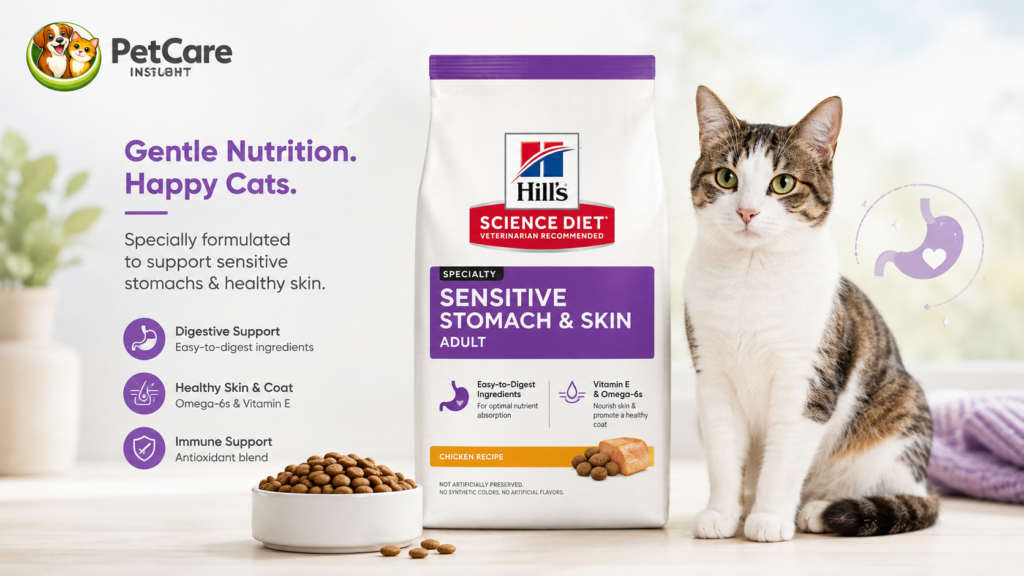
This is a common option for cats with mild digestive sensitivity. It may suit cats that need a daily food focused on digestion and skin support.
Royal Canin Digestive Care
Best for: cats with soft stool or digestion issues
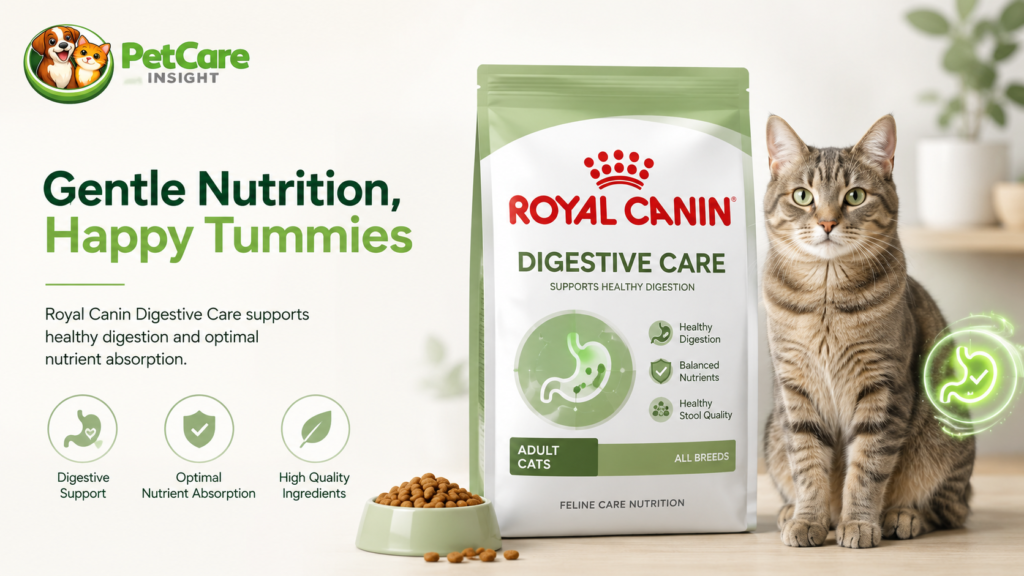
This is worth comparing if your cat often has stool quality issues or seems sensitive to regular food. It is more digestion-focused than a normal budget cat food.
Purina Pro Plan Sensitive Skin & Stomach
Best for: balanced sensitive support
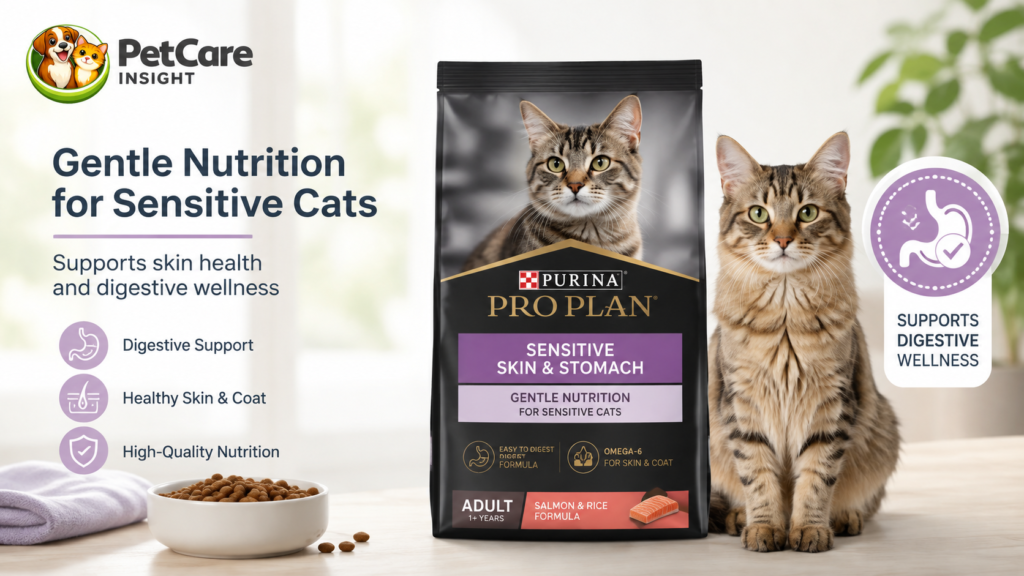
This can be a practical middle option for owners who want sensitive support without immediately moving to prescription food.
Limited Ingredient Cat Food
Best for: cats that may react to many ingredients
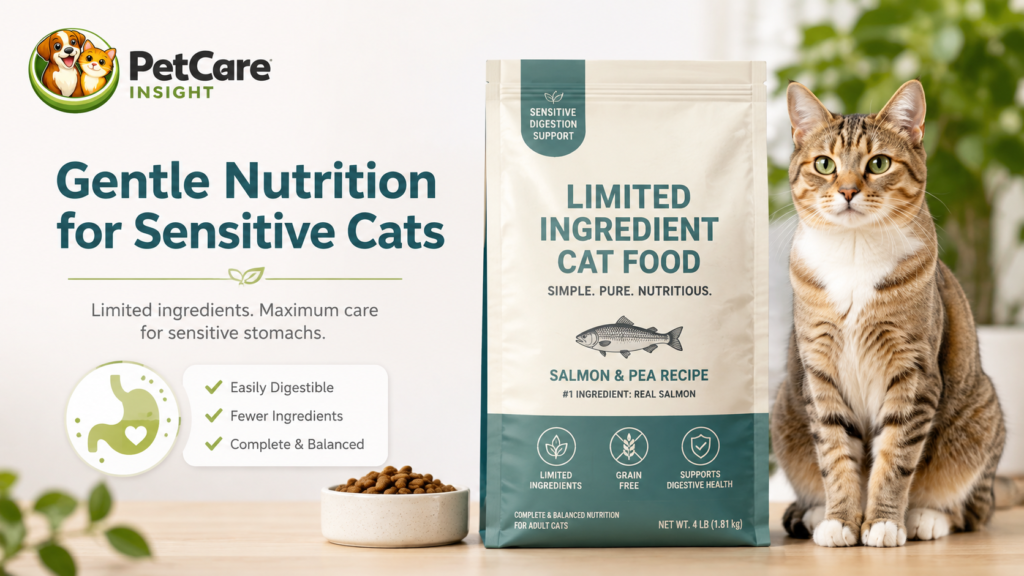
Limited ingredient food may help when a cat reacts badly to complicated recipes. Fewer main ingredients can make it easier to see what your cat tolerates.
Wet Sensitive Stomach Cat Food
Best for: cats needing more moisture
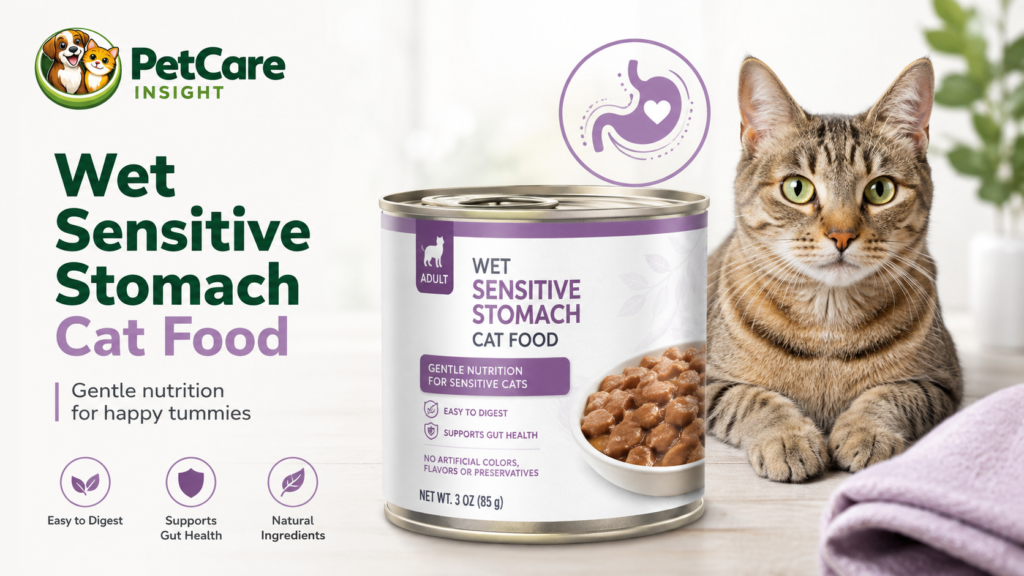
Wet food can help cats that drink little water, prefer soft texture, or vomit dry kibble. It usually costs more per meal, but the extra moisture can be useful.
Wet vs Dry Cat Food for Sensitive Stomach
Wet food is often easier for some cats because it has more moisture and a softer texture. It may help cats that do not drink much water or struggle with dry kibble.
Dry food is more convenient and usually cheaper per serving. It can still work well if your cat tolerates it, but it should be measured carefully and fresh water should always be available.
Some cats do best with mixed feeding: wet food for moisture and dry food for convenience. The best choice is the one your cat digests well.
Related guide: Wet vs Dry Cat Food
Sensitive Stomach vs Food Allergy
A sensitive stomach and a food allergy are not the same thing.
A sensitive stomach may happen because of sudden food changes, rich food, eating too fast, hairballs, or a recipe that does not suit your cat.
A food allergy can be more complex. It may cause vomiting or diarrhoea, but it can also come with itchy skin, hair loss, ear irritation, or repeated flare-ups. In those cases, random food switching is not the best plan.
Cats with suspected allergies may need a proper diet trial, limited ingredient food, hypoallergenic food, or hydrolysed protein food with vet guidance.
How to Change Cat Food Safely
Change cat food slowly over 7 to 10 days. Start by mixing a small amount of new food with the old food. Then increase the new food gradually.
A slow change can reduce vomiting, diarrhoea, and food refusal. If symptoms become worse, stop and speak with your vet.
When to See a Vet
Food can help some cats, but it cannot fix every stomach problem.
See a vet if your cat has:
- vomiting more than once a week
- diarrhoea that does not settle
- blood in vomit or stool
- weight loss
- poor appetite
- weakness
- repeated hairball problems
- increased thirst or urination
These signs may point to something more serious than simple food sensitivity.
Final Verdict
The best cat food for sensitive stomach problems is usually simple, complete, balanced, and easy to digest.
For mild issues, sensitive digestion food, wet food, or limited ingredient food may help. For repeated vomiting, diarrhoea, skin irritation, or weight loss, a vet check is the safest step.
Start with a gentle formula, change food slowly, and watch your cat’s stool, appetite, vomiting, coat condition, and energy. The right food is the one your cat can eat comfortably and consistently.
FAQs
What is the best cat food for sensitive stomach?
The best option depends on your cat. Many cats do well on sensitive digestion, limited ingredient, or wet food formulas. Choose a complete and balanced food and switch slowly.
Is wet food better for cats with sensitive stomach?
Wet food can be better for some cats because it has more moisture and a softer texture. But some cats still do well on dry food.
What ingredients should I avoid for a sensitive stomach cat?
Be careful with artificial colours, added sugar, unclear meat sources, very rich foods, too many treats, and sudden food changes.
Can cat food cause vomiting?
Yes, some cats vomit when food is changed too quickly or when a recipe does not suit them. Frequent vomiting should be checked by a vet.
Is hypoallergenic cat food necessary?
Not always. Hypoallergenic food may help cats with suspected food allergies, but it is best used with vet guidance.
How long does sensitive stomach cat food take to work?
Mild stomach issues may improve after a slow food transition, but repeated vomiting, diarrhoea, weight loss, or suspected allergy can take longer and should be checked by a vet. Keep notes on stool, vomiting, appetite and weight.