

How to socialize a dog is one of the most important skills every pet owner should learn. Proper socialization helps dogs become confident, friendly, and comfortable in different situations. Whether you have a young puppy or an adult dog, exposing them to people, animals, sounds, places, and everyday experiences can reduce fear and encourage positive behavior. In this guide, you’ll learn how to socialize a dog safely and effectively so they can develop into a well-adjusted companion.
What is Dog Socialization?
Dog socialization is the process of helping a dog become comfortable with different experiences, environments, people, animals, sounds, and everyday situations. It teaches dogs how to respond appropriately to the world around them rather than reacting with fear, anxiety, or aggression.
Socialization is not simply about introducing a dog to new things. It involves creating positive experiences that help the dog develop confidence and learn that unfamiliar situations are not necessarily threatening.
Whether you have a young puppy or an adult dog, socialization plays a major role in shaping behavior and improving overall quality of life.
Why is Socializing Your Dog Important?
Proper socialization helps dogs feel secure and confident in different situations. A well-socialized dog is generally more relaxed when meeting new people, encountering other animals, visiting unfamiliar places, or experiencing new sounds.
Socialization also contributes to better behavior at home and in public. Dogs that have been exposed to a variety of experiences are less likely to become overwhelmed when something unexpected occurs.
Benefits of socialization include:
- Increased confidence
- Better behavior around people and animals
- Reduced fear and anxiety
- Improved adaptability to new environments
- Stronger trust between dog and owner
- Easier handling during grooming and veterinary visits
When dogs learn that new experiences are safe, they are more likely to remain calm and responsive in different situations.
Behavioral Issues Resulting from Lack of Socialization
Dogs that are not properly socialized may struggle when faced with unfamiliar situations. Fear and uncertainty often lead to unwanted behaviors that can become difficult to manage over time.
Common issues associated with poor socialization include:.
- Excessive barking
- Fearful behavior
- Aggression toward people or animals
- Anxiety in new environments
- Overreacting to sounds and movements
- Difficulty handling routine activities
- Stress during walks or public outings
These behaviors are often rooted in a lack of positive exposure rather than stubbornness or disobedience. Early and consistent socialization can help prevent many of these problems from developing.
How to Socialize Your Dog
Successful socialization requires patience, consistency, and positive experiences. Every dog progresses at a different pace, so it is important to avoid forcing interactions that cause stress or fear.
Start with situations that your dog can handle comfortably and gradually introduce new experiences over time.
Allow your dog to observe and explore at their own pace. Reward calm behavior with praise, treats, or affection to create positive associations.
Keep socialization sessions short and enjoyable. If your dog becomes overwhelmed, increase distance from the situation and try again later.
The goal is to help your dog feel safe while learning that new experiences can be positive and rewarding.
Tips for Socializing a New Puppy
Puppies are generally more open to new experiences, making early socialization especially valuable.
Introduce your puppy to a variety of people, including individuals of different ages, appearances, and voices. Expose them to common household sounds and everyday activities in a calm manner.
Take your puppy to safe environments where they can observe different sights and sounds. Encourage curiosity while ensuring experiences remain positive.
Important tips include:
- Introduce new experiences gradually
- Use treats and praise for positive reinforcement
- Allow gentle interactions with friendly people
- Provide exposure to different environments
- Keep experiences enjoyable and stress-free
- Monitor body language for signs of discomfort
Positive experiences during puppyhood can help establish a strong foundation for future behavior.
Tips for Socializing an Old Dog
Adult dogs can still learn and adapt, although the process may require additional patience. Begin with low-pressure situations that allow your dog to remain comfortable. Gradually introduce new experiences without overwhelming them.
If your dog shows signs of fear or anxiety, reduce the intensity of the situation and proceed more slowly. Reward calm behavior consistently to build confidence.
Helpful strategies include:
- Start with familiar environments
- Introduce new experiences gradually
- Use positive reinforcement
- Respect your dog’s comfort level
- Avoid forcing interactions
- Practice consistently over time
With patience and encouragement, many adult dogs can become significantly more comfortable in a variety of situations.
Getting Your Dog Familiar with Everyday Experiences
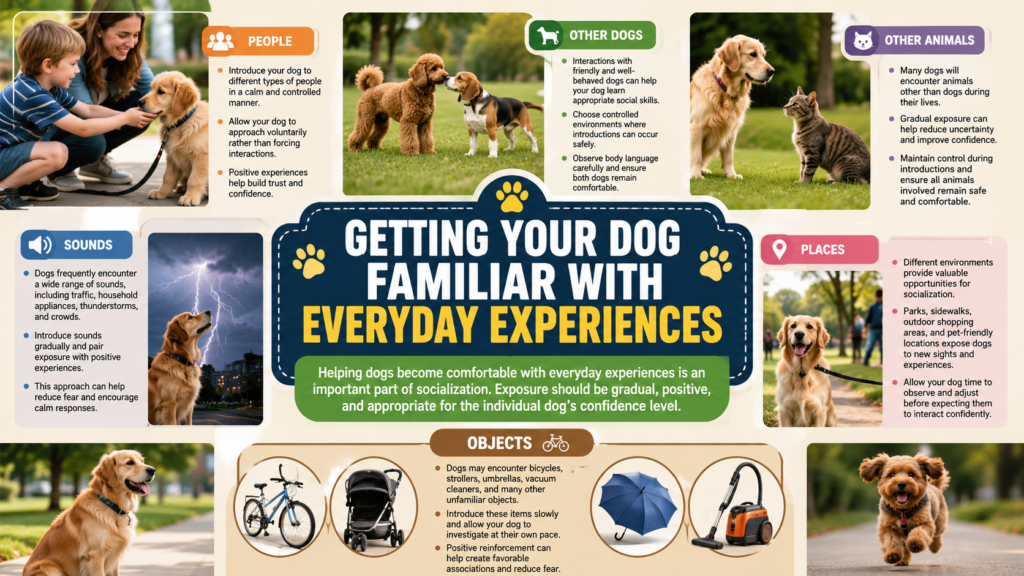
Helping dogs become comfortable with everyday experiences is an important part of socialization. Exposure should be gradual, positive, and appropriate for the individual dog’s confidence level.
People
Introduce your dog to different types of people in a calm and controlled manner. This includes adults, children, people wearing hats, individuals carrying bags, and others they may encounter regularly.
Allow your dog to approach voluntarily rather than forcing interactions. Positive experiences help build trust and confidence.
Other Dogs
Interactions with friendly and well-behaved dogs can help your dog learn appropriate social skills. Choose controlled environments where introductions can occur safely. Observe body language carefully and ensure both dogs remain comfortable throughout the interaction.
Other Animals
Many dogs will encounter animals other than dogs during their lives. Gradual exposure can help reduce uncertainty and improve confidence. Maintain control during introductions and ensure all animals involved remain safe and comfortable.
Sounds
Dogs frequently encounter a wide range of sounds, including traffic, household appliances, thunderstorms, and crowds. Introduce sounds gradually and pair exposure with positive experiences. This approach can help reduce fear and encourage calm responses.
Places
Different environments provide valuable opportunities for socialization. Parks, sidewalks, outdoor shopping areas, and pet-friendly locations expose dogs to new sights and experiences. Allow your dog time to observe and adjust before expecting them to interact confidently.
Objects
Dogs may encounter bicycles, strollers, umbrellas, vacuum cleaners, and many other unfamiliar objects. Introduce these items slowly and allow your dog to investigate at their own pace. Positive reinforcement can help create favorable associations and reduce fear.
FAQs
What is dog socialization?
Dog socialization is the process of introducing a dog to different people, animals, environments, sounds, and experiences in a positive way. It helps dogs become confident, comfortable, and well-behaved in various situations.
Why is socializing a dog important?
Socialization helps reduce fear, anxiety, and aggression while improving confidence and adaptability. A well-socialized dog is generally easier to manage and more comfortable around people and other animals.
When should I start socializing my puppy?
The best time to begin socialization is during puppyhood, ideally between 3 and 16 weeks of age. Early positive experiences can have a lasting impact on a dog’s behavior and confidence.
Can an adult dog still be socialized?
Yes, adult dogs can be successfully socialized. Although the process may take more time and patience, consistent positive experiences can help adult dogs become more comfortable in new situations.
How long does it take to socialize a dog?
The timeline varies depending on the dog’s age, personality, and previous experiences. Some dogs improve within a few weeks, while others may require several months of consistent training and exposure.
What are the signs that a dog is not properly socialized?
Common signs include excessive barking, fearfulness, aggression, anxiety around strangers, nervousness in new environments, and overreacting to unfamiliar sounds or situations.
How can I safely introduce my dog to other dogs?
Start with calm, friendly dogs in a controlled environment. Allow gradual introductions, monitor body language, and reward calm behavior to create positive experiences.
Should I force my dog to interact with people or animals?
No. Forcing interactions can increase fear and stress. Allow your dog to approach new people, animals, or situations at their own pace while providing encouragement and positive reinforcement.
What should I do if my dog seems scared during socialization?
Move away from the source of fear, give your dog space, and reintroduce the experience gradually. Reward calm behavior and avoid pushing your dog beyond their comfort level.
Can socialization help prevent aggressive behavior?
Proper socialization can reduce the likelihood of fear-based aggression by helping dogs develop confidence and positive associations with people, animals, and new environments.
Conclusion
Socialization is one of the most important aspects of raising a confident and well-adjusted dog. Through positive exposure to people, animals, sounds, places, and everyday objects, dogs learn how to navigate the world with greater confidence and less fear.
Whether you are working with a young puppy or an older dog, patience and consistency are essential. By creating positive experiences and respecting your dog’s comfort level, you can help them develop the skills needed to remain calm, confident, and well-behaved in a wide variety of situations.