

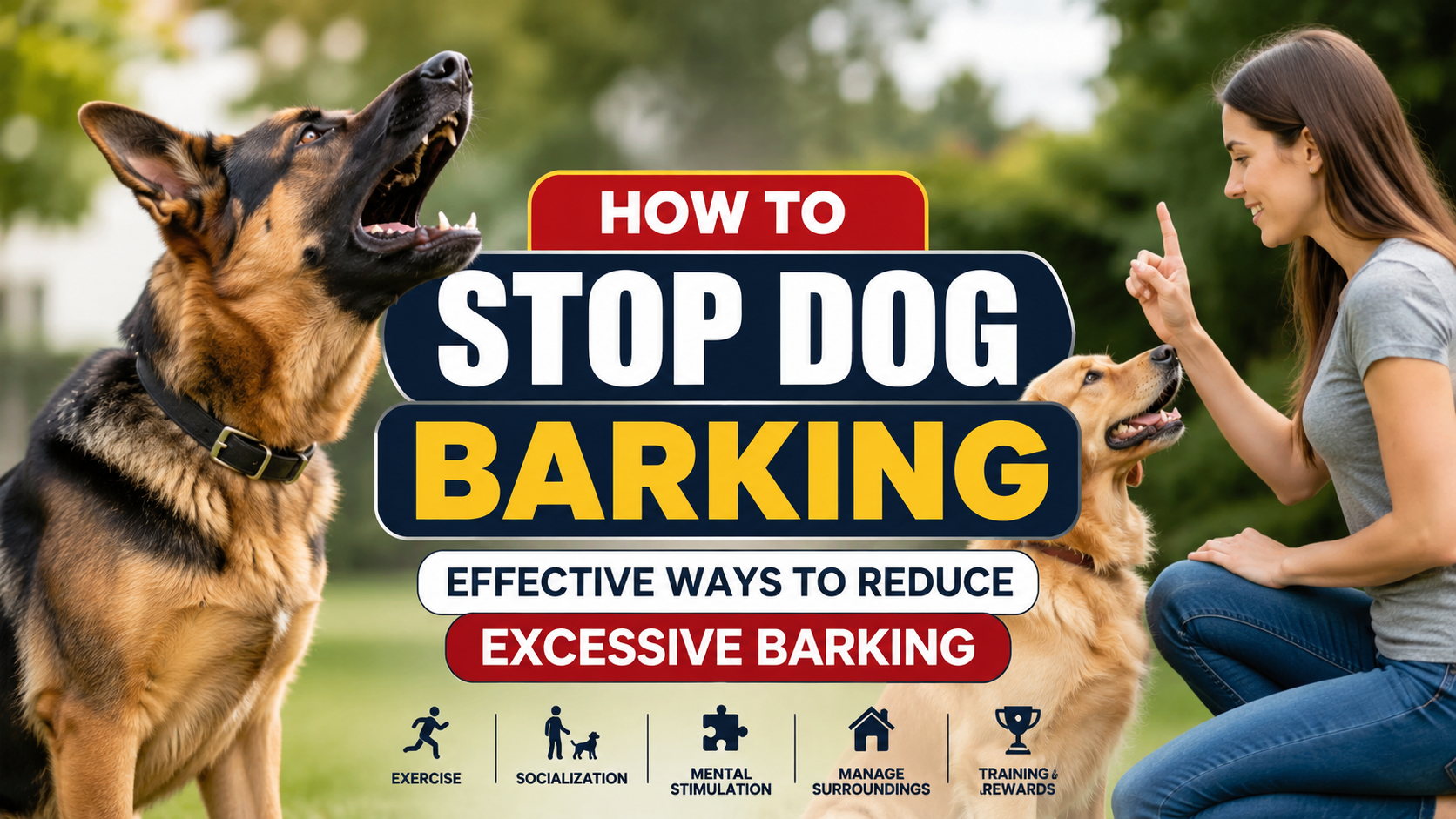
Dogs bark as a natural form of communication. They use barking to alert their owners, express excitement, seek attention, or react to unfamiliar situations. While barking is normal, excessive barking can become frustrating for both owners and neighbors. The key to solving the problem is understanding why your dog is barking and addressing the root cause rather than simply trying to silence the behavior.
This guide explains practical strategies that can help reduce nuisance barking and encourage calmer behavior.
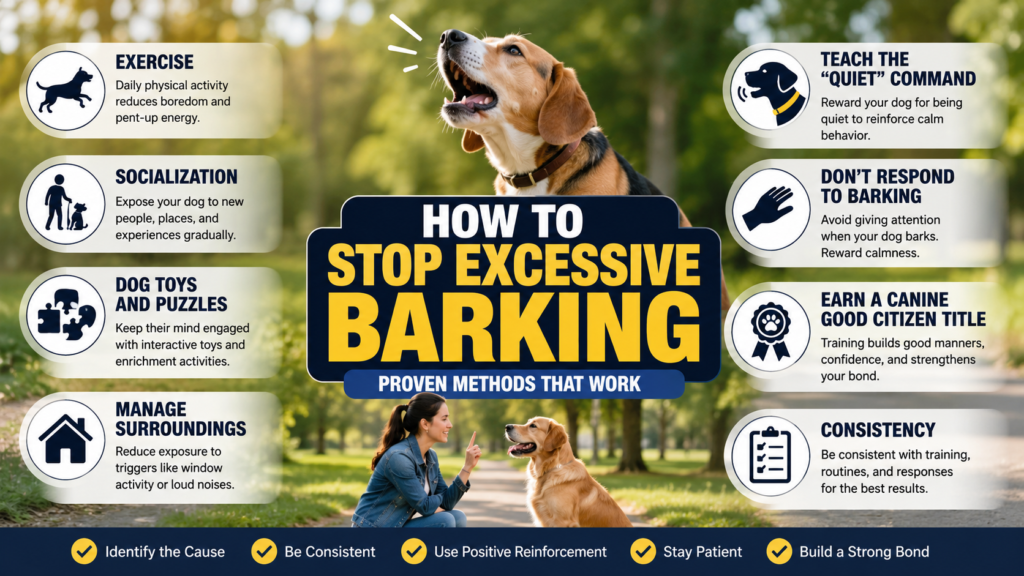
Exercise
One of the most common reasons dogs bark excessively is pent-up energy. Dogs that do not receive enough physical activity often look for ways to release their energy, and barking can become one of those outlets.
Regular exercise helps reduce boredom and improves overall behavior. The amount of exercise your dog needs depends on factors such as age, breed, size, and health condition. Active breeds generally require more physical activity than low-energy breeds.
Daily walks, games of fetch, hiking, running, and other interactive activities can help your dog stay physically and mentally satisfied. A tired dog is typically less likely to spend the day barking at every sound or movement.
Consistency is important. Providing enough exercise every day can significantly reduce unwanted vocalization and improve your dog’s overall well-being.
Socialization
Proper socialization teaches dogs how to remain calm and confident in different environments. Dogs that are not accustomed to new people, animals, sounds, or situations may react with excessive barking whenever they encounter something unfamiliar.
Introducing your dog to a variety of experiences in a positive and controlled manner helps build confidence. Gradual exposure to new environments, friendly people, and other dogs can reduce fear-based or anxiety-driven barking.
Socialization should occur at a pace your dog can comfortably handle. Reward calm behavior and positive interactions. Over time, your dog will learn that new experiences are not threatening, making excessive barking less likely.
Well-socialized dogs generally feel more secure and respond more appropriately to everyday situations.
Dog Toys and Puzzles
Mental stimulation is just as important as physical exercise. Dogs that become bored often create their own entertainment, and barking may become a habit.
Interactive toys, puzzle feeders, treat-dispensing toys, and enrichment activities can keep your dog’s mind engaged throughout the day. These activities encourage problem-solving and provide an outlet for natural canine instincts.
Rotating toys regularly can help maintain your dog’s interest. Introducing new challenges prevents boredom and keeps your pet mentally active.
When dogs have productive ways to occupy their attention, they are less likely to bark out of frustration or boredom.
Manage Surroundings
Many dogs bark because they are reacting to something in their environment. Passing people, other animals, loud noises, delivery drivers, or activity outside a window can all trigger barking.
Managing your dog’s environment can reduce exposure to these triggers.
If your dog frequently barks at activity outside, consider limiting access to windows during high-traffic times. Curtains, blinds, or strategically placing your dog in a quieter area of the home may help.
For dogs that react to outside sounds, background music, white noise, or other calming sounds can reduce sensitivity to environmental noise.
Pay attention to situations that consistently trigger barking and take steps to minimize unnecessary exposure while you work on training.
Reducing opportunities to rehearse unwanted barking behavior is often an important part of the solution.
Teach the “Quiet” Command
Training your dog to understand a “Quiet” command can be highly effective when done consistently.
Begin by allowing your dog to bark briefly in response to a trigger. Once they bark, calmly acknowledge the behavior and then introduce the command “Quiet” using a calm, clear voice.
When your dog stops barking, even for a moment, immediately provide praise and a reward. Timing is critical because your dog needs to associate being quiet with positive outcomes.
Repeat this process regularly. Over time, your dog will begin to understand that remaining quiet earns rewards and attention.
Avoid yelling at your dog to stop barking. Many dogs interpret shouting as participation in the noise, which can unintentionally encourage more barking.
Patience and consistency are essential for successful training.
Don’t Respond to Barking Dogs
Dogs often learn that barking gets results. If barking consistently earns attention, food, playtime, or other rewards, the behavior may become stronger.
When barking is used to seek attention, avoid reinforcing it. Wait until your dog becomes calm and quiet before offering attention or rewards.
Family members should follow the same approach. Inconsistent responses can confuse the dog and slow training progress.
Teaching your dog that calm behavior leads to positive outcomes while barking does not receive the desired response can help reduce attention-seeking barking over time.
Consistency from everyone in the household is one of the most important factors in changing behavior.
Earn a Canine Good Citizen Title
Structured training programs can help improve communication between you and your dog while building better behavior habits.
Programs that focus on obedience, good manners, and responsible behavior encourage dogs to remain calm in a variety of situations. These activities provide mental stimulation, strengthen the bond between owner and dog, and create opportunities for positive social experiences.
Working toward behavioral goals can increase your dog’s confidence and improve their ability to remain composed around distractions.
Training is not only about reducing barking—it also helps develop a well-behaved and reliable companion.
FAQs About How to Stop Dog Barking
How can I stop my dog from barking all the time?
Start by identifying why your dog is barking. Common causes include boredom, fear, excitement, anxiety, and attention-seeking. Addressing the root cause and using consistent training can help reduce excessive barking.
What is the best command to stop dog barking?
The “Quiet” command is one of the most effective training tools. Reward your dog when they stop barking after hearing the command to reinforce calm behavior.
Why does my dog bark at everything outside?
Dogs often bark at people, animals, vehicles, or noises outside because of territorial instincts, excitement, or alert behavior. Managing window access and training calm responses can help.
Can exercise reduce excessive barking?
Yes. Regular exercise helps release excess energy and reduces boredom, making dogs less likely to bark unnecessarily throughout the day.
Should I punish my dog for barking?
No. Punishment can increase fear and anxiety, which may worsen barking. Positive reinforcement and consistent training are generally more effective.
How long does it take to train a dog to stop barking?
The timeframe varies depending on the dog’s age, personality, and the reason for barking. Some dogs improve within a few weeks, while others may need several months of consistent training.
Why does my dog bark when left alone?
Dogs may bark when alone due to separation anxiety, boredom, loneliness, or lack of mental stimulation. Providing enrichment activities and gradual independence training can help.
Do puzzle toys help stop dog barking?
Yes. Interactive toys and puzzle feeders keep dogs mentally engaged and can reduce boredom-related barking by giving them a productive activity.
Can socialization help reduce barking?
Proper socialization helps dogs become more comfortable around new people, animals, and environments, reducing fear-based and reactive barking.
Is barking ever completely preventable?
No. Barking is a natural form of canine communication. The goal is not to eliminate barking entirely but to reduce excessive or nuisance barking and encourage appropriate behavior.
Conclusion
Barking is a normal part of canine communication, but excessive barking can become a challenge if left unaddressed. Dogs may bark because of boredom, excitement, fear, territorial instincts, anxiety, or a desire for attention.
The most effective way to stop excessive barking is to identify the underlying cause and address it with consistent training and management. Regular exercise, proper socialization, mental enrichment, environmental control, and positive reinforcement all play important roles in reducing nuisance barking.
With patience, consistency, and a clear training plan, most dogs can learn when barking is appropriate and when it is time to remain quiet.