

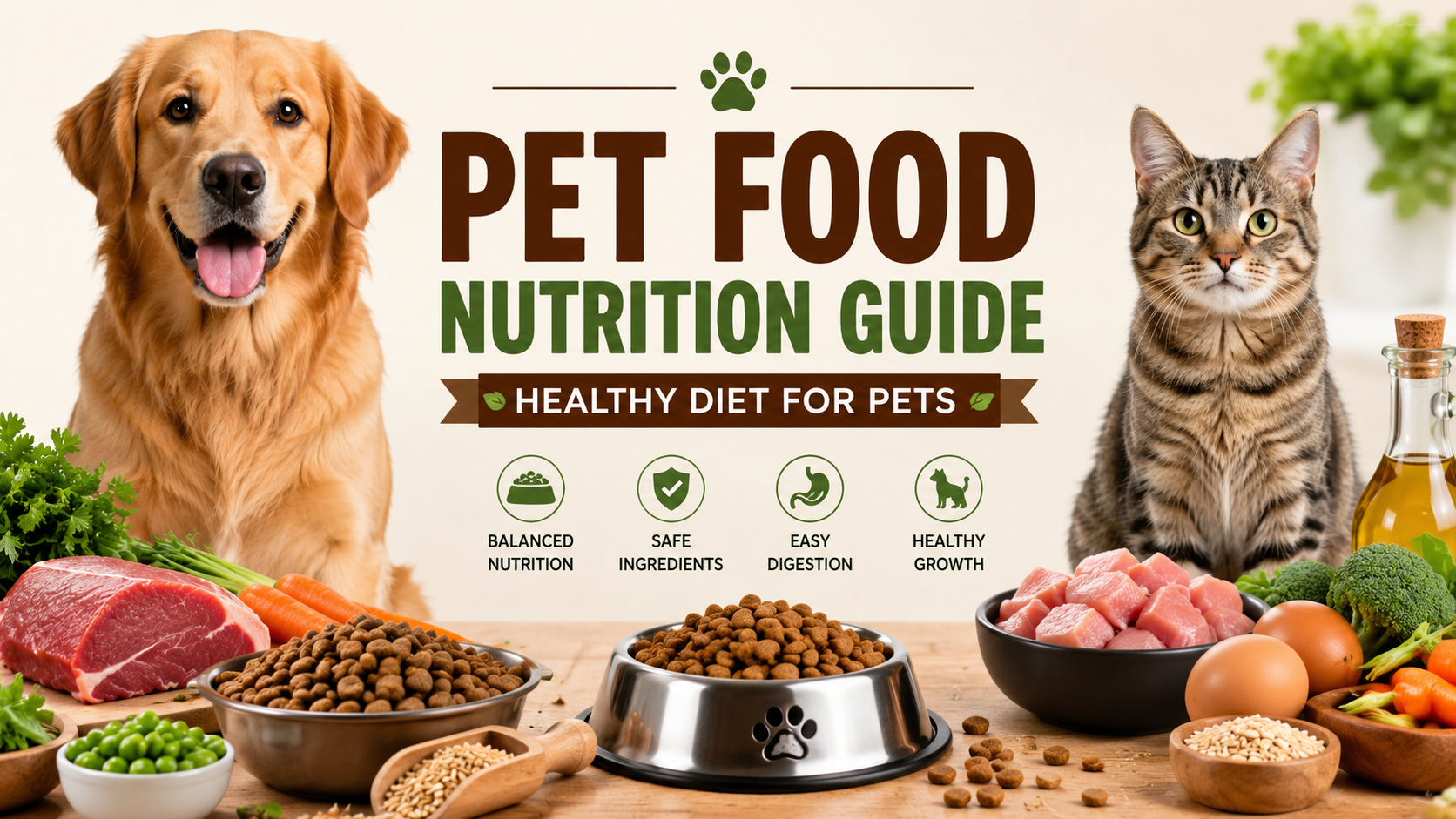
Pet food is a special food prepared for domestic animals, including dogs and cats, which provides their bodies with the necessary nutrients. Proper nutritious food helps to maintain the bones, teeth, skin and immune system of pets. Choosing the right food according to age, weight and physical needs helps pets stay healthy, active and well for a long time.
How to Choose the Right Pet Food
Choosing the right pet food is important for your pet’s health and happiness. Always consider your pet’s age, weight, breed, and health condition before selecting food. Check the ingredient list and choose food that contains quality protein, vitamins, and essential nutrients. Avoid products with artificial colors, flavors, and unnecessary fillers. For cats, selecting good cat food can help support healthy growth, energy, and overall well-bein.
Wet Food vs Dry Food vs Grain-Free Food
| Types of Food | Advantages | Disadvantages |
| Wet Food | High in water content, easy to digest and preferred by pets | Can spoil quickly and is relatively expensive |
| Dry Food | Can be stored for a long time, helps keep teeth clean | Low in water content and requires additional water |
| Grain-Free Food | May be beneficial for some sensitive pets | Not necessary for all pets and may be expensive |
Nutrition Guide by Life Stage (Puppy, Kitten & Senior Pets + Protein Sources)
| Life Stage | Nutritional Needs | Best Protein Sources |
| Puppy | Needs high protein, healthy fats and vitamins for growth and energy | Chicken, fish, eggs and lamb |
| Kitten | Requires balanced protein and calcium for healthy bones and muscles | Turkey, salmon, chicken and eggs |
| Senior Pets | Needs lower calories, joint support and easily digestible nutrients | Fish, lean chicken and turkey |
How Much Should You Feed Your Pet? (Portion Control + Weight Management)
The amount of food you feed your pet depends on its age, weight, daily activity level, and health status. Overfeeding can lead to obesity and various health problems, while underfeeding can lead to weakness. Therefore, feeding a specific amount of food according to the instructions on the food package and regularly monitoring its weight helps maintain your pet’s health.
Safe and Toxic Foods for Pets
While some foods are safe and beneficial for pets, some foods can be seriously harmful. Foods like boiled chicken, rice, carrots, and pumpkin are generally safe. However, chocolate, onions, garlic, grapes, coffee, and foods with excess salt can be toxic to dogs and cats. Therefore, it is very important to make sure that the ingredients of the food are safe before feeding it to your pet.
Allergies and Sensitivities to Pet Foods
Some pets may have allergies or sensitivities to certain foods, which can cause itching, skin rashes, vomiting, or digestive problems. Commonly, beef, dairy, soy, or certain grain ingredients can cause such problems. It is safest to introduce new foods gradually and consult a veterinarian if unusual symptoms occur.
Common Pet Feeding Mistakes
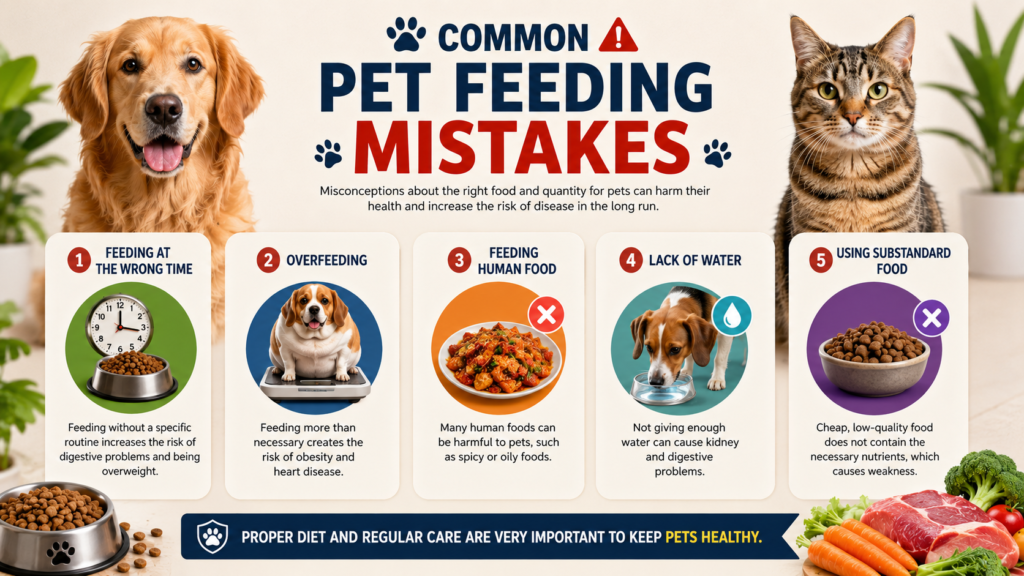
Misconceptions about the right food and quantity for pets can harm their health and increase the risk of disease in the long run.
- Feeding at the wrong time: Feeding without a specific routine increases the risk of digestive problems and being overweight.
- Overfeeding: Feeding more than necessary creates the risk of obesity and heart disease.
- Feeding human food: Many human foods can be harmful to pets, such as spicy or oily foods.
- Lack of water: Not giving enough water can cause kidney and digestive problems.
- Using substandard food: Cheap, low-quality food does not contain the necessary nutrients, which causes weakness.
Proper diet and regular care are very important to keep pets healthy.
Homemade vs Commercial Pet Food
| Topic | Homemade Pet Food | Commercial Pet Food |
| Nutritional Control | Can be controlled if known properly, but there is a risk of making mistakes | Specific nutrients are balanced and scientifically prepared |
| Preparation | Time-consuming and requires regular cooking | Easy to use, ready to serve |
| Constraints | May cause nutritional deficiencies if ingredients are not right | Generally safe if it is a quality brand |
| Cost | May be more or less depending on ingredients | Stable but relatively more expensive |
| Advantages | Natural ingredients can be used | Can be stored for a long time and is easily available |
How to Transition to a New Pet Food Safely
Suddenly changing your pet’s food can cause digestive upset, vomiting, or diarrhea. So it’s safest to introduce your pet to a new food gradually. A gradual transition process of 7-10 days is usually recommended. Start by mixing a small amount of the new food with the old food, then gradually increase the amount of the new food. This method allows your pet’s body to adjust to the new food more easily and reduces health risks.
FAQs
What is the best pet food for dogs and cats?
Best pet food is one that is balanced, age-appropriate, high in quality protein, and approved by veterinary nutrition standards.
Is wet food better than dry food?
Wet food has more moisture and is easier to digest, while dry food is convenient and helps dental health; both can be good.
Is grain-free pet food safe?
Grain-free food is safe for some pets but not necessary for all; it should be chosen based on specific health needs.
How often should I feed my pet?
Most pets should be fed 2–3 times daily depending on age, size, and activity level.
Can pets eat homemade food every day?
Yes, but only if it is properly balanced with all essential nutrients recommended by a veterinarian.
What foods are toxic to pets?
Chocolate, onion, garlic, grapes, caffeine, and alcohol are toxic and should always be avoided.
How do I read a pet food label properly?
Check the ingredient list, protein source, nutritional balance, and avoid artificial additives and low-quality fillers.
Pet Food Nutrition Guide for Healthy Pet Care
Choosing the right pet food plays a very important role in ensuring the healthy life, strength and longevity of your pet. According to this pet food nutrition guide, if you follow the age, nutrition, food type and the right amount, your pet will remain healthy, active and disease-free. Regular care, a balanced diet and following safe eating habits will make their life happier and longer, which should be the main goal of a responsible pet owner.