

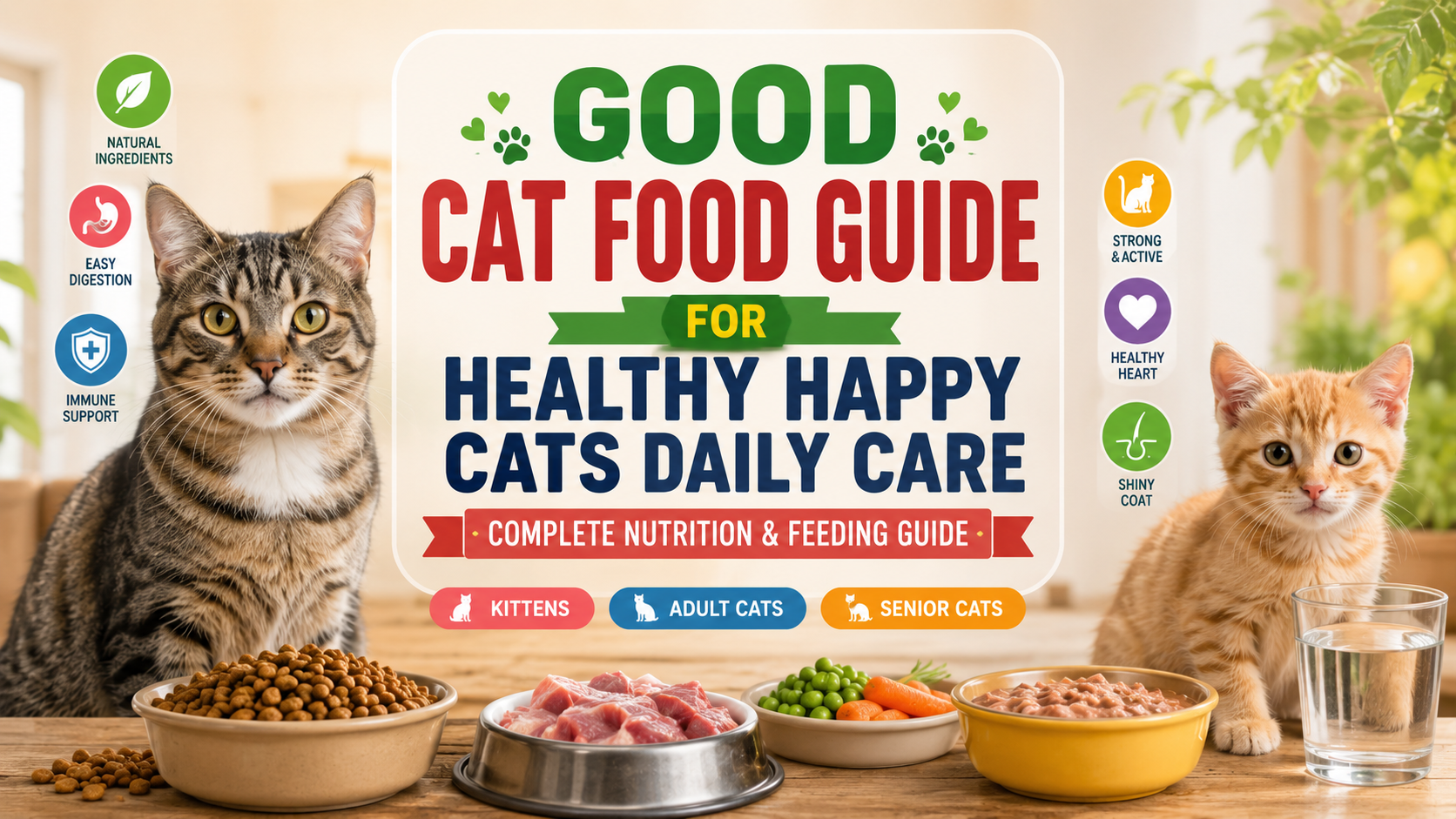
Good cat food refers to food that provides all the nutrients needed by the cat’s body in the right amounts. A good cat food usually contains high-quality protein, essential vitamins, minerals and healthy fats, which help the cat grow, maintain strength and immunity. Good food helps the cat’s digestion, keeps the fur healthy and ensures an overall healthy life.
Why Choosing the Right Cat Food Matters
Choosing the right cat food is very important because the health of the cat depends entirely on its diet. Eating the wrong or poor quality food can lead to digestive problems, weight imbalance, hair loss and various diseases in the cat. Choosing the right food in accordance with the cat’s age, health and lifestyle increases its strength, improves immunity and helps it live a long and healthy life. Therefore, it is very important to choose suitable and nutritious food for every pet cat.
Cat Nutrition, Ingredients, and Label Reading Guide
Proper nutrition plays the most important role in maintaining a healthy cat life. A good cat food usually contains high-quality protein, as cats are primarily carnivores. In addition to protein, it should contain essential fats, vitamins (A, D, E), and minerals such as calcium and taurine, which are important for heart, eye, and bone health.
Reading labels is very important when buying cat food. First, you need to look at what is written at the beginning of the ingredient list, as that indicates the main ingredient. A good food should have “meat” or “fish” as the first ingredient. Also, it is best to avoid any additional fillers, artificial colors, or added chemicals.
Types of Cat Food (Wet, Dry, Homemade vs. Commercial)
Cat food can generally be divided into several main categories, such as—wet food, dry food, homemade food, and commercial food.
- Wet food: It has a higher water content, which helps keep the cat hydrated and is usually more palatable.
- Dry food: It is easier to store and helps maintain dental health to some extent, but it has a lower water content.
- Homemade food: Homemade food can be healthy, but it is difficult to maintain the right balance of all the nutrients.
- Commercial food: Ready-made food available in stores, which is made to maintain specific nutritional values and is easy to use.
The right type of food should be selected based on the cat’s age, health, and lifestyle.
Cat food for different life stages
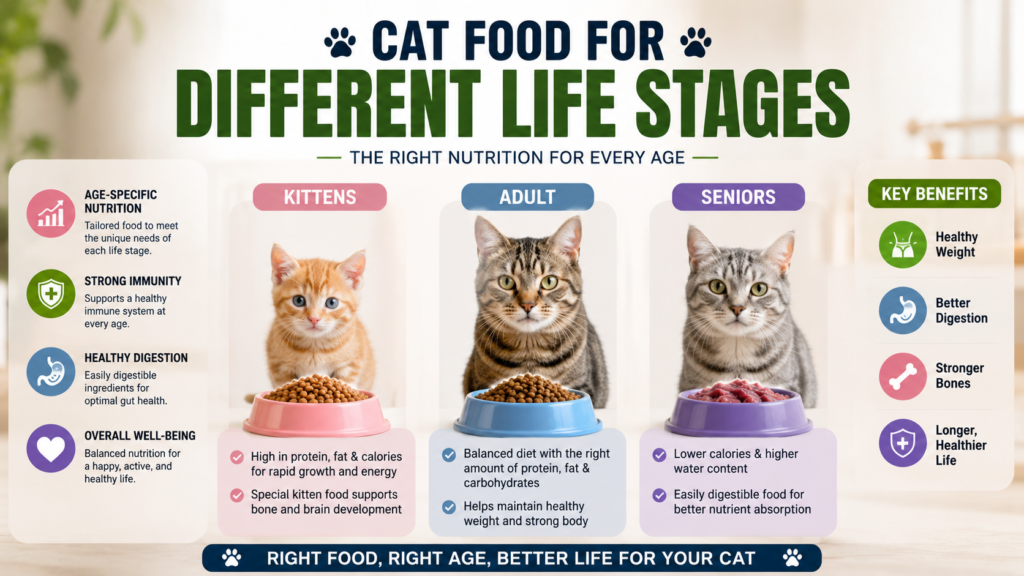
As cats age, their nutritional needs also change, so they need different types of food at each stage of their life.
- Kittens: Kittens need more protein, fat, and calories for rapid growth and energy. At this time, they should be fed special kitten food, which helps with bone and brain development.
- Adult: A balanced diet is important for adult cats. It contains the right amount of protein, fat, and carbohydrates to maintain a healthy weight and body.
- Seniors: Older cats have a reduced digestive capacity, so they need easily digestible food. Foods with fewer calories and a higher water content are suitable for them.
Grain-free cat food
Grain-free cat food is food that is made without grain ingredients such as wheat, corn, or rice. It is usually made with more meat or protein-based ingredients.
For many cats, grain-free food can be easier to digest and helps reduce the risk of allergies. However, this is not mandatory for all cats, as many cats can also digest simple grain foods well. You should consider your cat’s health, allergies, and your veterinarian’s advice when choosing the right food.
Food for indoor and outdoor cats
Indoor and outdoor cats have different dietary needs, as their lifestyles are different.
- Indoor cats: Indoor cats generally do less physical activity, so they need a low-calorie diet to prevent weight gain. Many indoor cat foods are high in fiber, which helps with digestion and helps reduce hairballs.
- Outdoor cats: Outdoor cats expend more energy, so they need more calories, protein, and energy-rich foods. This helps keep them active and strong.
It is important to choose the right food for your cat’s health, depending on their lifestyle.
Special diet cat food (sensitive, weight, hairball)
Some cats have specific health problems, so they need a different diet.
- Sensitive stomachs: Easily digestible and low-ingredient foods are best for cats with digestive problems or food allergies.
- Weight Management: Overweight cats need a low-calorie, high-fiber diet to help them lose and maintain weight.
- Hairball Control: For cats that shed hair, a fiber-rich diet can help reduce hairballs and aid digestion.
Choosing the right specialty food is important for your cat’s long-term health.
Cat Food Guide, Watering and Common Mistakes
Feeding your cat the right amount of food is very important to keep it healthy. Feeding too much can lead to weight gain, while feeding too little can lead to nutritional deficiencies. Therefore, the amount of food should be adjusted based on the cat’s age, weight and physical condition. Usually, feeding 2-3 times a day is a good habit.
- Watering (Importance of Water): It is important for cats to have enough water in their bodies, as it is important for the kidneys and digestion. Many cats drink little water, so wet food or clean water should always be kept close at hand.
- Common Mistakes: Many people feed their cats human food, which can be harmful to them. Also, not feeding at the same time, giving extra treats or changing food suddenly is wrong. These habits can have a negative impact on the cat’s health.
How to change cat food
Starting a new food suddenly can cause stomach problems for your cat. Therefore, it is best to make this change gradually. It is usually best to mix the new food with the old food over a period of 7-10 days.
Start with a small amount of the new food, then gradually increase the amount of the new food and reduce the amount of the old food. This will help your cat’s digestive system adjust more easily and prevent stomach upset. This slow transition process is comfortable and healthy for your cat.
FAQs: Good Cat Food
What is the best cat food guide for beginners?
A good cat food guide is a guide that explains the proper nutrition, food types, and diet for cats according to their age. It explains cat nutrition, wet vs. dry cat food, and feeding routines in simple terms, so that new pet owners can easily choose the right food.
What is cat nutrition in simple terms?
Cat nutrition refers to the right balance of protein, fat, vitamins, and minerals that a cat’s body needs. Good nutrition keeps a cat’s energy, coat healthy, and immune system strong. According to cat food guides, high-quality protein is considered the most important ingredient.
Wet vs. Dry Cat Food—Which is Better?
Both wet and dry cat food have different benefits. Wet food is more watery, which increases the body’s water content. Dry food is easier to store and is slightly better for teeth. According to the cat food guide, it’s best to balance the two, considering the age and health of the cat.
Is grain-free cat food necessary?
Grain-free food is not mandatory for all cats. Some cats may benefit if they have allergies or digestive problems. According to the Cat Food Guide, grain-free food is higher in protein, but regular grain food is also safe and nutritious for the average cat.
What is the best food for kittens?
Kitten food is generally higher in protein and calories, which are needed for rapid growth and energy. According to Cat Nutrition, kittens should be fed a separate formula. The Cat Food Guide says that kittens under 1 year old are always best fed kitten food.
What is the difference between indoor and outdoor cat food?
Indoor and outdoor cat food differ because they have different lifestyles. Indoor cats need a low-calorie and hairball-controlling diet, while outdoor cats need more energy and protein. According to the Cat Food Guide, it’s important to choose a food that suits your lifestyle.
What is a special diet of cat food?
Special diet cat food is a food that is formulated to address sensitive stomachs, weight management, or hairball problems. According to feline nutrition, these foods are balanced with specific health issues in mind. This is considered an important part of the cat food guide.
How to safely change cat food?
Changing cat food should be done gradually, usually over 7-10 days. Start by mixing a small amount of the new food with the old food.
Conclusion: Complete Food Guide for a Healthy and Happy Cat
A proper diet plays a very important role in ensuring the long-term health, proper nutrition and strong immunity of the cat, as it helps in choosing the right food according to the age, lifestyle and health of the cat. With a clear understanding of the cat’s nutrition, ingredients, feeding routine and the right diet, it is easier to avoid choosing the wrong food and improve the overall well-being of the cat. A balanced diet helps to give the cat a healthy and happy life by increasing its digestive strength, work capacity and daily activity.